As solar panels and wind turbines generate more electricity, one challenge is becoming increasingly difficult to ignore. What happens when renewable energy is available but nobody needs it right then? Instead of letting surplus power go unused, a growing class of thermal energy storage systems is exploring an unusually simple solution—heating sand.
Known as sand batteries, these systems convert electricity into heat and store it inside large, heavily insulated containers filled with sand or similar solid materials. The heat can then be released hours, days, or potentially months later, providing energy for district heating networks and industrial processes. Unlike conventional batteries, however, they are primarily designed to store and deliver heat rather than electricity.
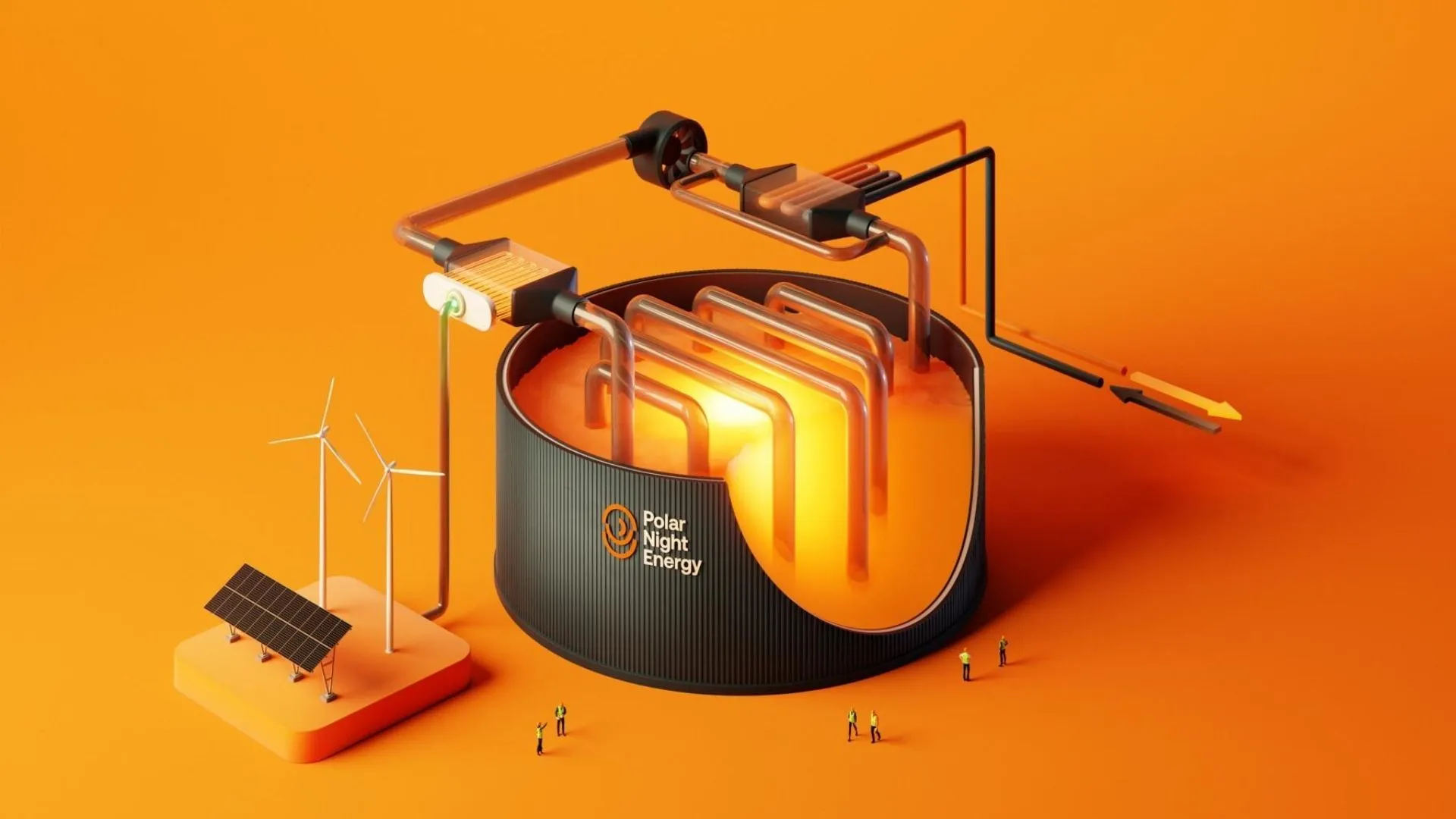
The principle behind a sand battery is relatively straightforward. When electricity is abundant or inexpensive, power from the grid or renewable sources such as wind and solar is used to operate electric heating elements. These elements heat air or another heat-transfer medium, which circulates through pipes or channels inside a sand-filled container.
As the hot air moves through the storage material, it transfers thermal energy to the surrounding sand. Some systems can heat the material to around 600 degrees Celsius (1,112 degrees Fahrenheit), depending on their design.
The container is surrounded by thick insulation that slows the escape of heat. Sand is particularly useful because it is inexpensive, widely available, chemically stable at high temperatures, and can hold substantial amounts of thermal energy. It also avoids the need for the lithium, cobalt, and other materials associated with certain electrochemical batteries .
Source link