
California has been one of hydrogen’s most enthusiastic supporters for two decades. The state has subsidized hydrogen vehicles, backed refueling networks, supported fuel-cell buses and trucks, invested in hydrogen production and kept the technology prominent in its zero-emission transportation policies. Los Angeles and Long Beach, the two enormous ports that anchor America’s Pacific container trade, have been part of that enthusiasm. So when these ports produce a comprehensive assessment of future marine fuels and leave hydrogen out of their detailed deep-sea shipping plans, it deserves attention well beyond California.
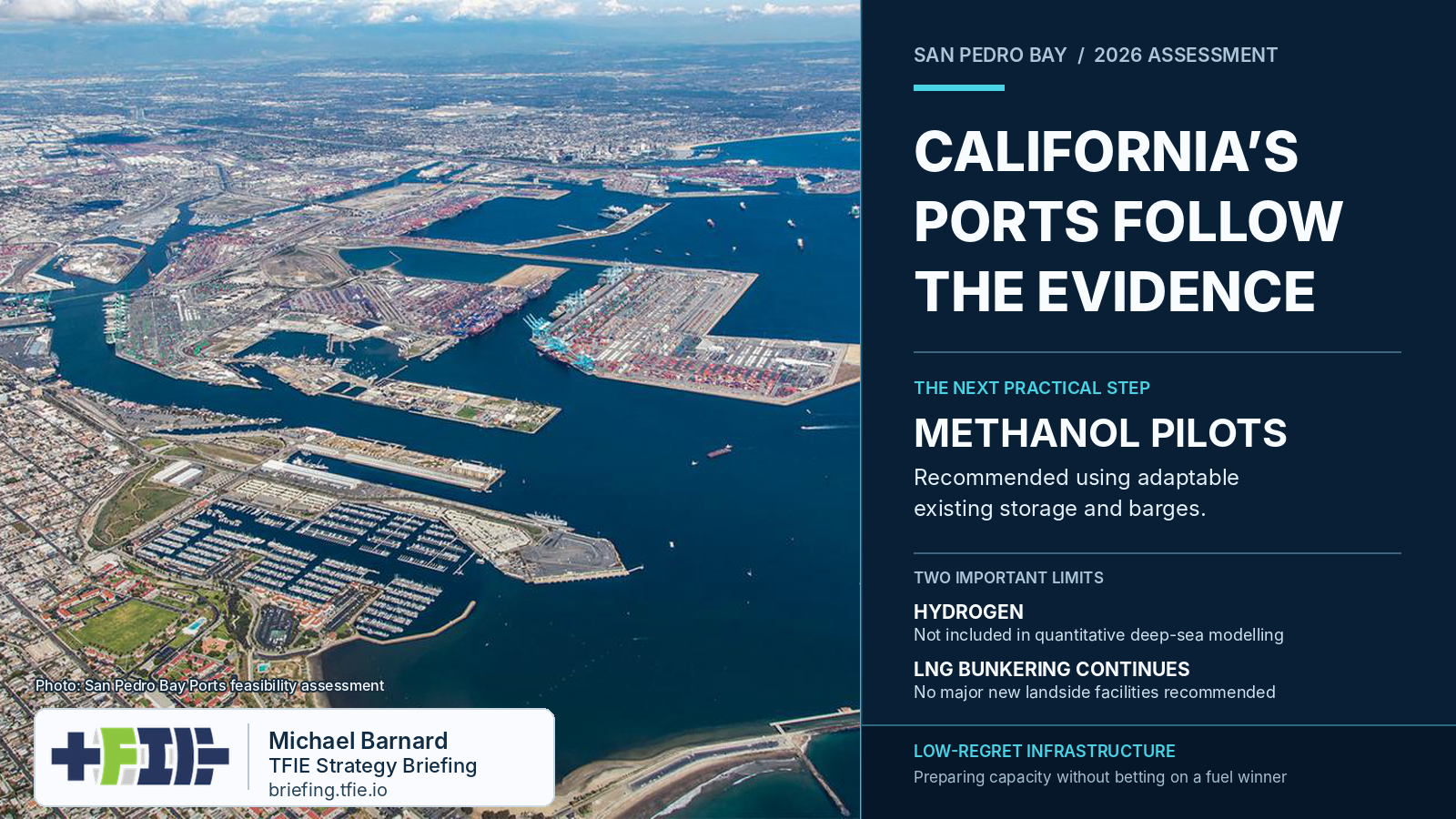
The Clean Marine Fuel Feasibility Assessment, released in October, is the product of a substantial examination of shipping fleets, carrier preferences, fuel availability and infrastructure costs. The ports recommend developing commercial methanol bunkering demonstrations, continuing existing ship-to-ship LNG bunkering arrangements and avoiding major new fuel terminals until demand becomes credible. Hydrogen, the molecule that California has spent so much money promoting for transportation, did not make the cut for detailed quantitative deep-sea fuel planning.
This isn’t a state government announcing the end of hydrogen subsidies. It is arguably more revealing. Two commercially important institutions have examined what the ships serving them are likely to use, considered the infrastructure they would have to provide and declined to spend the next decade preparing a major hydrogen bunkering business.
California’s hydrogen story has repeatedly confused technical possibility with commercial demand. Fuel-cell passenger cars proved they could operate, but struggled with expensive fuel, unreliable stations and battery-electric competition. Hydrogen buses and trucks have faced many of the same issues, often compounded by the economics of supplying fuel to fleets.
Source link