
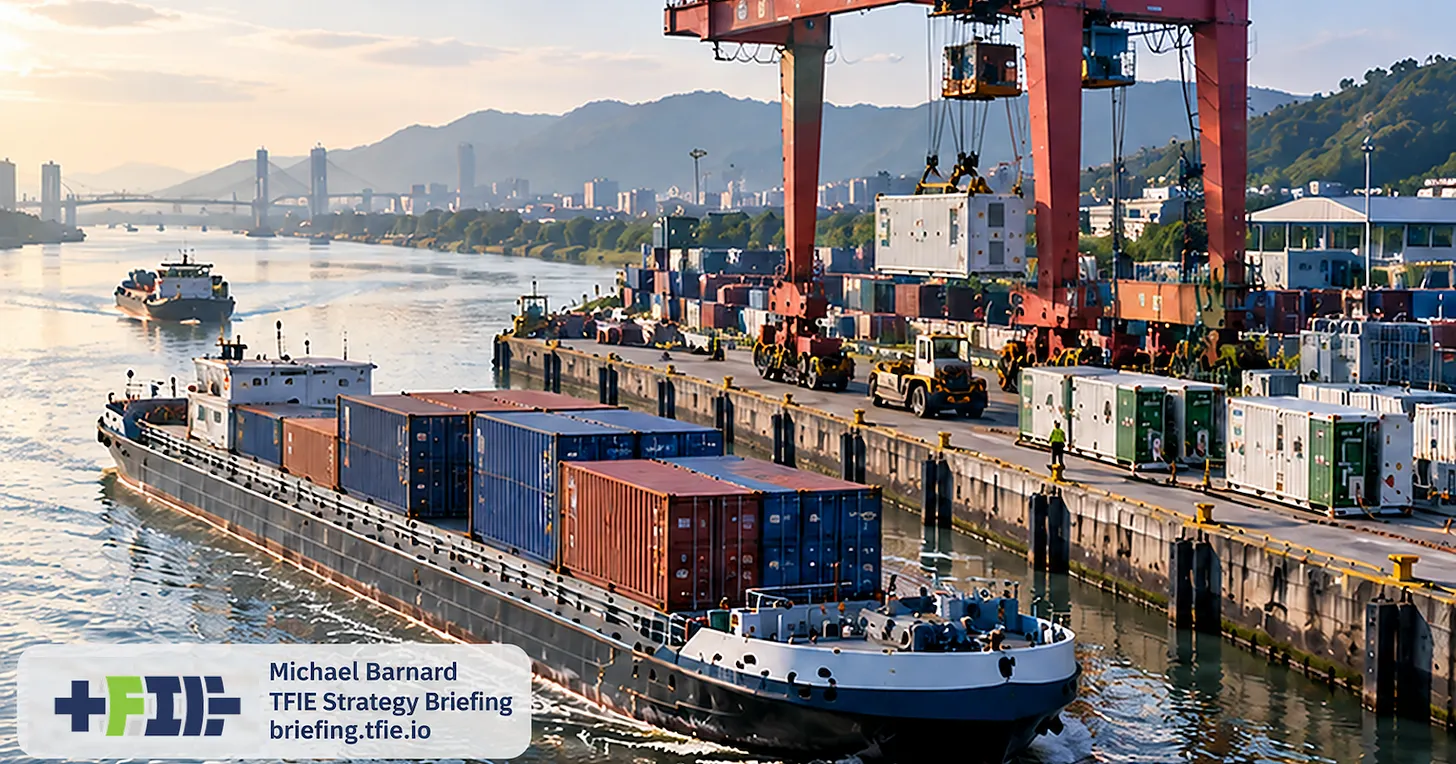
Electric ships attract attention because the vessel is the visible technology. Put a large battery into an inland cargo vessel, replace the diesel propulsion system with electric motors, and the decarbonization story appears straightforward. Inland shipping looks particularly promising because many vessels travel repeatable routes between known terminals, where large batteries can be charged or exchanged more predictably than they could on an ocean-crossing ship.
China is showing why that vessel-level view is incomplete. Its emerging electric-shipping industry increasingly includes ports, battery suppliers, utilities, logistics companies and financiers alongside shipbuilders. The interesting development is not simply that more electric vessels are appearing on Chinese waterways; it is that organizations are beginning to assemble the infrastructure and commercial relationships those vessels need to operate as freight businesses.
I examine that systems transition in China Is Turning Electric Ships Into Freight Infrastructure, the latest TFIE Strategy Briefing. China’s advantage is becoming less about any one electric ship and more about coordinating vessels, batteries, ports, electricity and finance.
The numbers require some care because three widely cited figures describe three different things. The International Council on Clean Transportation identified 42 electric cargo ships in China by the end of 2025, up from four in 2022. CATL separately reported nearly 900 battery-equipped electric vessels at the end of 2025, but that figure includes passenger vessels, ferries, harbour craft and cargo vessels rather than hundreds of Chinese electric freight ships. Hubei province, meanwhile, has a target of 1,000 green and intelligent inland vessels by 2030, a programme goal that extends beyond battery-electric cargo ships.
Source link