
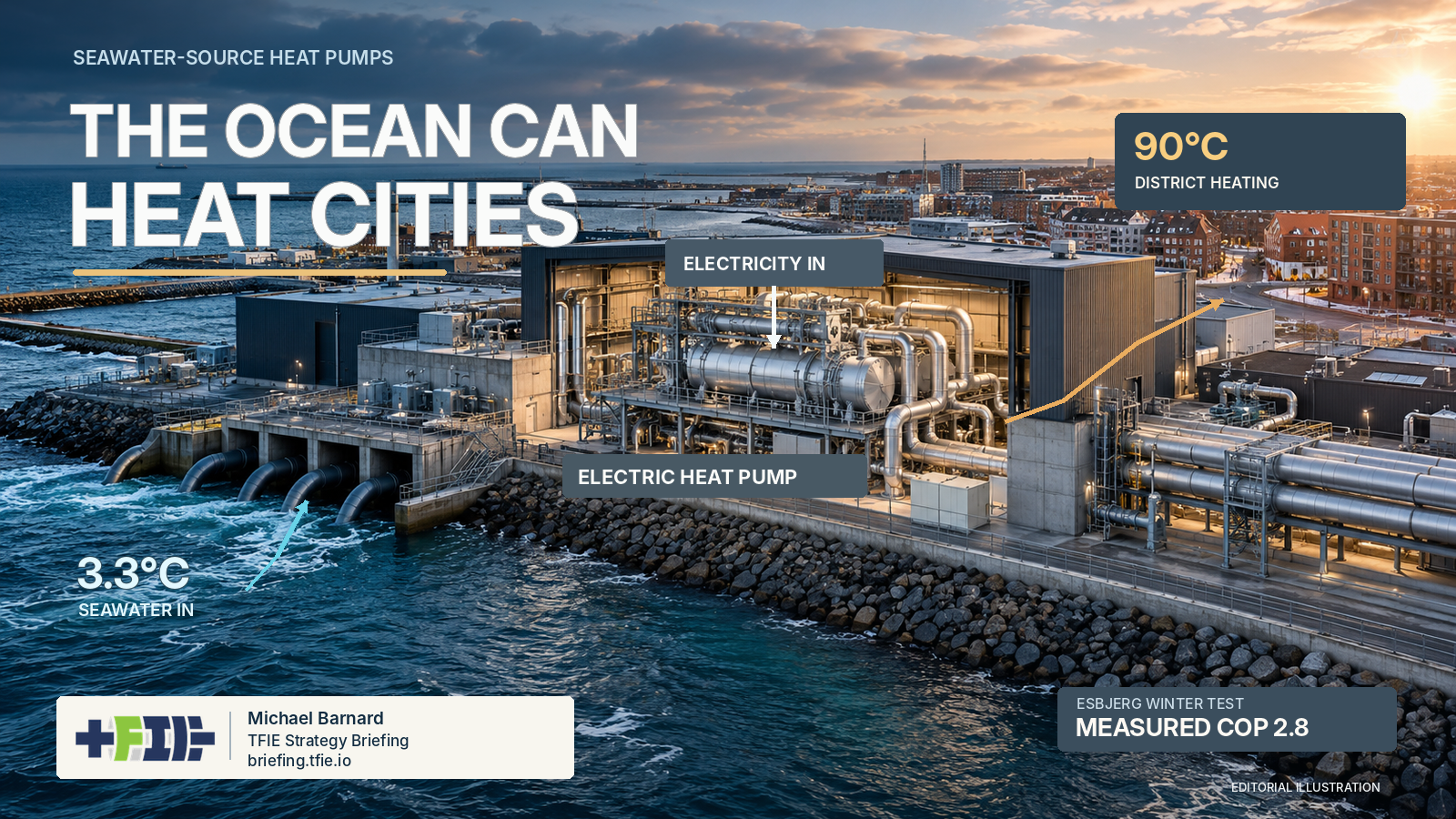
Esbjerg, Denmark, is using large electric heat pumps to extract heat from the North Sea and supply its district-heating network. During a two-hour winter test, seawater entered the system at 3.3°C and left at 1.2°C. The two heat pumps consumed 19.9 MW of electricity and supplied 55.2 MW of heat at a district-heating water temperature of 90°C. The difference, 35.3 MW, came from the seawater. The project team’s May 2025 operating report recorded a coefficient of performance, or COP, of 2.8. The figures describe that test, not annual average performance.
A heat pump transfers thermal energy from a colder source to a warmer destination. Its refrigerant absorbs heat at a temperature below that of the seawater, and an electrically driven compressor raises the temperature so the heat can enter the district network. Esbjerg uses carbon dioxide as its refrigerant in a high-pressure cycle. For each unit of electricity used by the compressors during the test, the plant delivered 2.8 units of heat. Resistance heating would have required 2.8 times as much electricity for the same heat output under those conditions.
The installation has a nominal heating capacity of 70 MW and began delivering heat in late 2024, as part of Esbjerg’s replacement of its retired coal-fired combined heat and power plant. The operating report describes controls for variable conditions and protection against freezing as seawater temperatures fall. 8 was lower than the more favourable performance figures used in the original project expectations, and full guarantee testing had not been completed when the results were published.
Source link