A Chinese energy technology company has demonstrated an airborne wind power system designed to generate electricity at altitudes of up to 2.5 miles, as it explores an alternative to conventional wind farms.
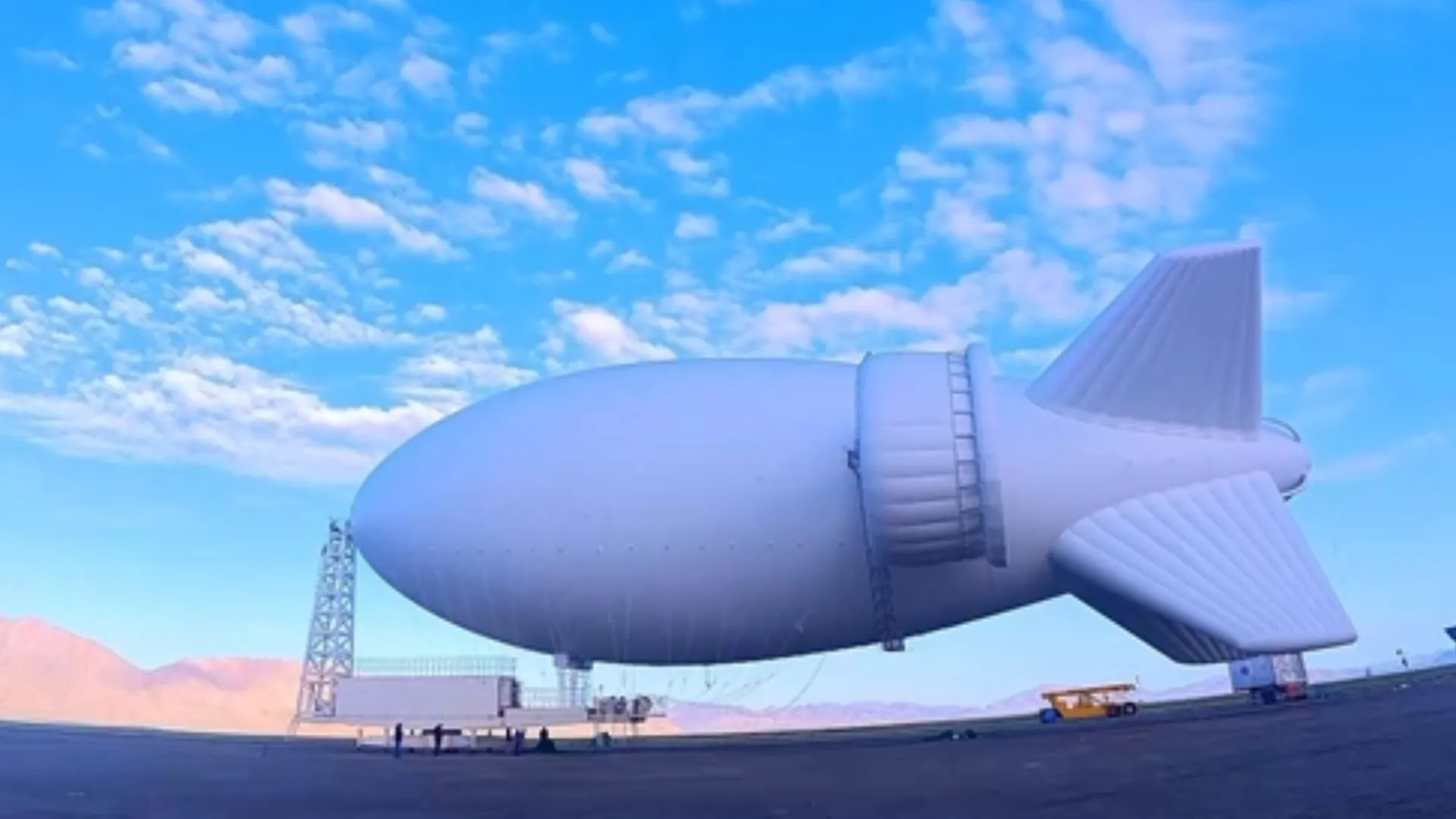
The S4000 Stratosphere Airborne Wind Energy System (SAWES), developed by Linyi Yunchuan, uses a helium-filled platform to lift lightweight turbines into stronger and more consistent winds, with a tether connecting the airborne structure to the ground and transmitting the generated electricity.
The company conducted its latest demonstration in Yueyang, Hunan Province, bringing the technology closer to an urban environment after completing a high-altitude flight verification in northwest China back in August.
The system’s launch comes after a series of increasingly ambitious tests, with earlier versions reaching altitudes of 1,640, 3,281, 4,921 and 6,562 feet. The S4000 represents the latest stage in that development, although its commercial performance and ability to provide a reliable electricity supply remain to be established.
The S4000 uses a large helium-filled airborne structure to lift its generating equipment above the ground. Measuring 220 feet long, 131 feet wide and 75 feet high, the platform resembles a large airship and is designed to carry an effective airborne payload exceeding 2,200 pounds, Chinese media reported.
Once airborne, wind passes through a duct in the structure and drives turbines that generate electricity. A tether keeps the platform connected to the ground while also providing a route for transmitting the electricity to users below. Unlike conventional wind turbines, which require tall towers and substantial foundations, the airborne system is designed to operate without permanent structures of comparable scale.
Source link