
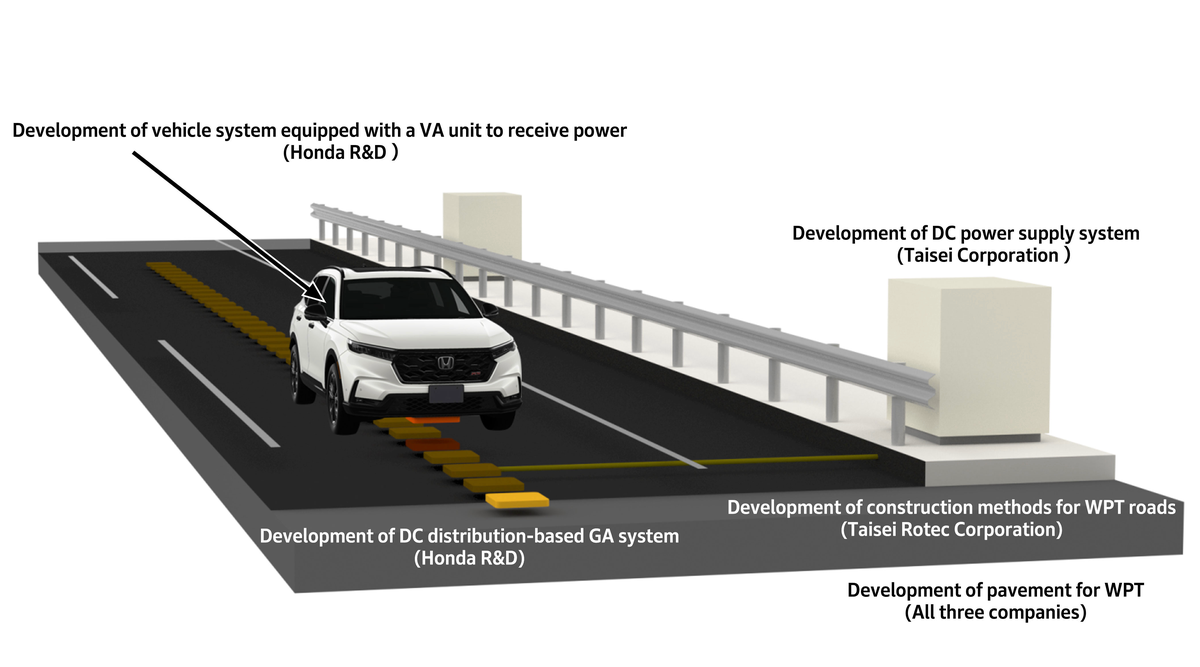
In-road wireless EV charging systems are the kiss of death for gas and diesel fuel. They enable EV drivers to recharge without stopping or exiting their vehicle, saving time and improving personal security, too. That’s a next-level convenience no gas-powered vehicle can top. While much of the activity around in-road charging is still in the R&D stage, the leading global automaker Honda is among the electrification stakeholders ready to take it to the next level.
The public EV charging station network has made significant progress in the US over the past several years. The early days were plagued by long stretches of road with few or no charging stations in sight, lack of connectivity, and unplanned down times. Now the gaps are filling and reliability has improved to the point where more EV-curious drivers are confident about switching to an EV.
Still, the next big thing would be a system that enables drivers to charge up seamlessly while in motion. That may seem somewhat futuristic, and it is. However, the technology pieces are in place. Emedded, wireless charging systems offer aesthetic benefits and are potentially more tamper-proof and durable than conventional charging stations.
Stationary wireless systems began to surface in the early 2000’s, and now in-road charging systems have begun to emerge at the demonstration stage. Back in 2023, CleanTechnica recapped the state of affairs at the demonstration phase, with Germany and Sweden in the running alongside the Pennsylvania Turnpike , Detroit, Michigan , and the state of Indiana here in the US.
Source link