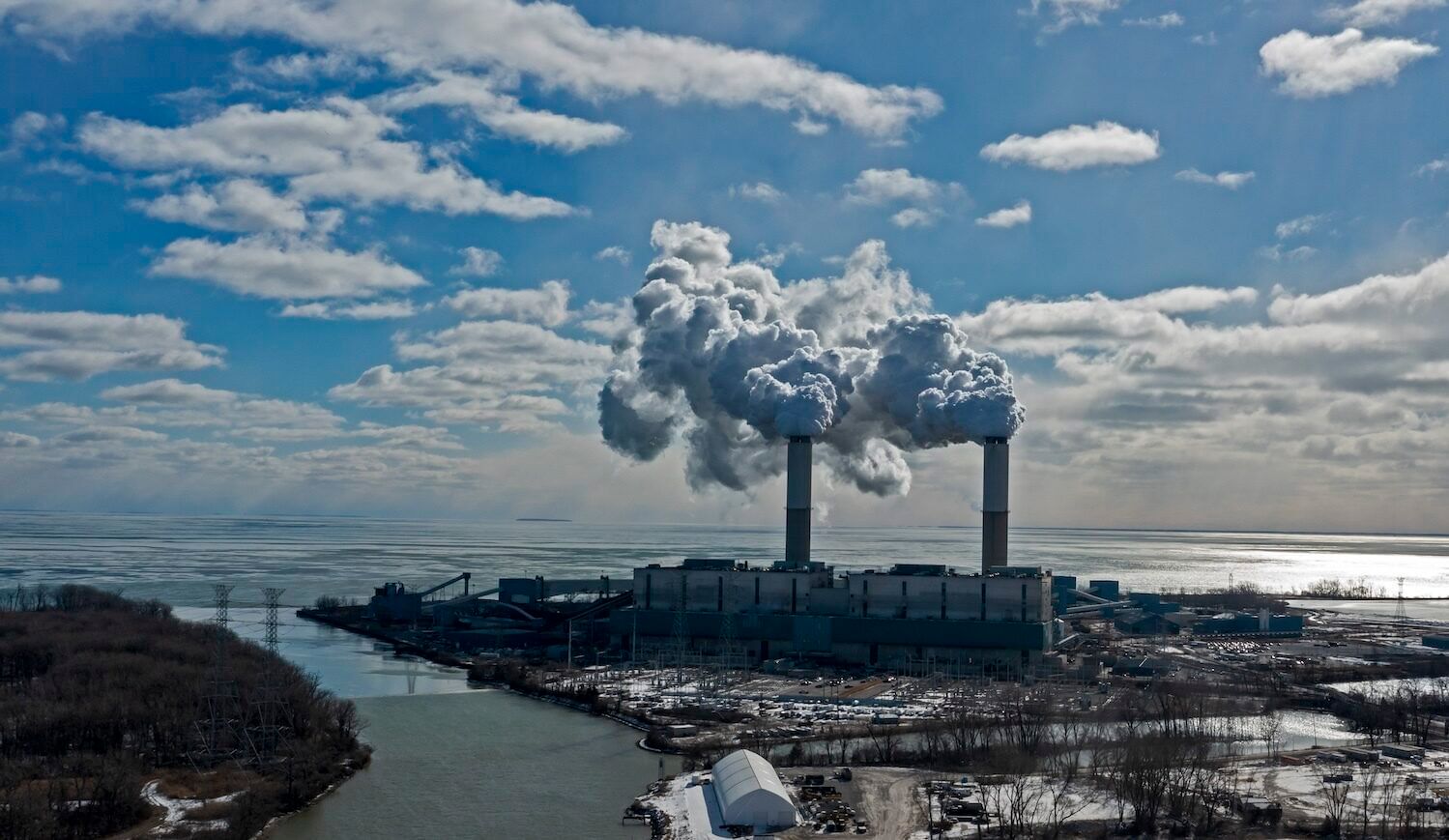
Can a utility commit to building massive gas plants and still achieve zero carbon emissions?
DTE Electric in southeast Michigan says yes, and it outlines how in a 20-year plan currently being considered by regulators. The key, the utility says, will be carbon capture and sequestration — collecting carbon dioxide emissions from two proposed gas-fired power plants and storing them underground.
Michigan state law says power generation must be carbon-free by 2040. The gas plants would go online in 2031 and 2032, and carbon capture equipment would be added by 2035, according to the long-range integrated resource plan that DTE filed with the state public service commission in September.
The problem, as critics see it, is that carbon capture and sequestration has not been successfully deployed by electric utilities in the U.S. thus far.
Even if the technology becomes economically viable, public opposition to the technology is likely to remain strong, as evidenced by the response to the Michigan Legislature’s efforts to adopt a carbon sequestration law. Public outcry has also erupted in neighboring states over plans for carbon dioxide pipelines and injection wells.
In other words, DTE proposes to invest billions of customers’ dollars in gas plants that are dependent on a nascent and uncertain solution to comply with state law on emissions that would harm the climate and public health.
Utilities across the country are grappling with the same predicament of needing to meet steep increases in energy demand driven by data centers while also transitioning to clean energy.
Source link