This article has been reviewed according to Science X's editorial process and policies. Editors have highlighted the following attributes while ensuring the content's credibility:
Understanding how ions move through solid materials is key to advancing technologies such as batteries, fuel cells and sensors. A team of scientists led by the U.S. Department of Energy's (DOE) Argonne National Laboratory has demonstrated a cutting-edge method for gauging the activity of ions, revealing a new level of detail about how they move and interact.
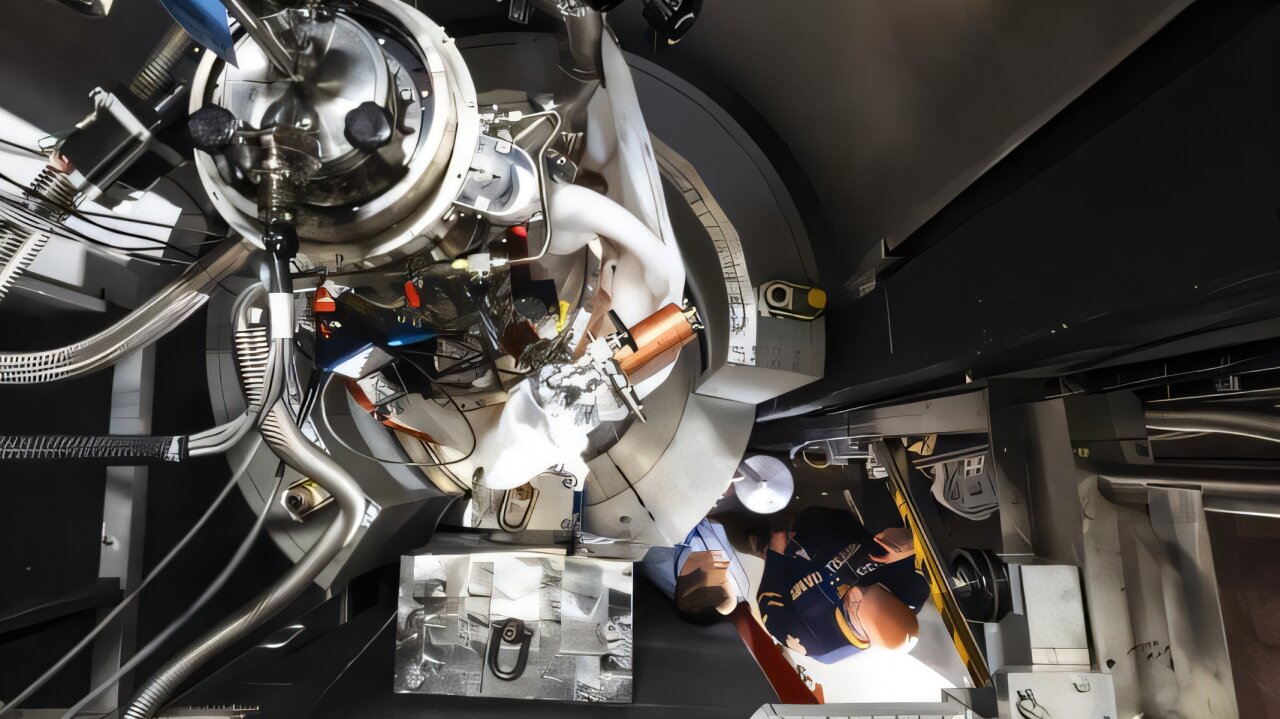
The team tested the technique, which they have called 4D quasielastic neutron scattering (4D-QENS), at the Spallation Neutron Source, a DOE Office of Science user facility at DOE's Oak Ridge National Laboratory (ORNL). The results, published in PRX Energy, show that 4D-QENS provides critical insights that will help improve the theoretical models needed to design next-generation solid-state batteries and related technologies.
Some materials allow charged atoms or molecules—called ions—to move quickly. This property makes them suitable as electrolytes in solid-state batteries, which could store more energy and offer greater safety compared to conventional batteries—most of which use liquid electrolytes to move ions during charging and discharging.
But a clearer understanding of the mechanisms underlying ionic conduction would help scientists optimize solid-state battery performance. Historically, researchers generally believed that ionic motion in solids was essentially an independent, diffusion-based process. Researchers are now exploring the idea that correlated motion—movement driven by interactions between ions—is key to ultrafast conductivity. However, direct experimental observation remains elusive.
Ionic motion is best studied by quasielastic neutron scattering (QENS), which involves directing neutrons at a material sample and measuring the changes in direction and energy as they scatter off the sample.
Source link