The UK has installed the first monitoring systems for its first commercial-scale offshore carbon capture and storage (CCS) project, a major breakthrough toward developing a facility expected to permanently store up to 100 million tons of carbon dioxide over 25 years beneath the North Sea.
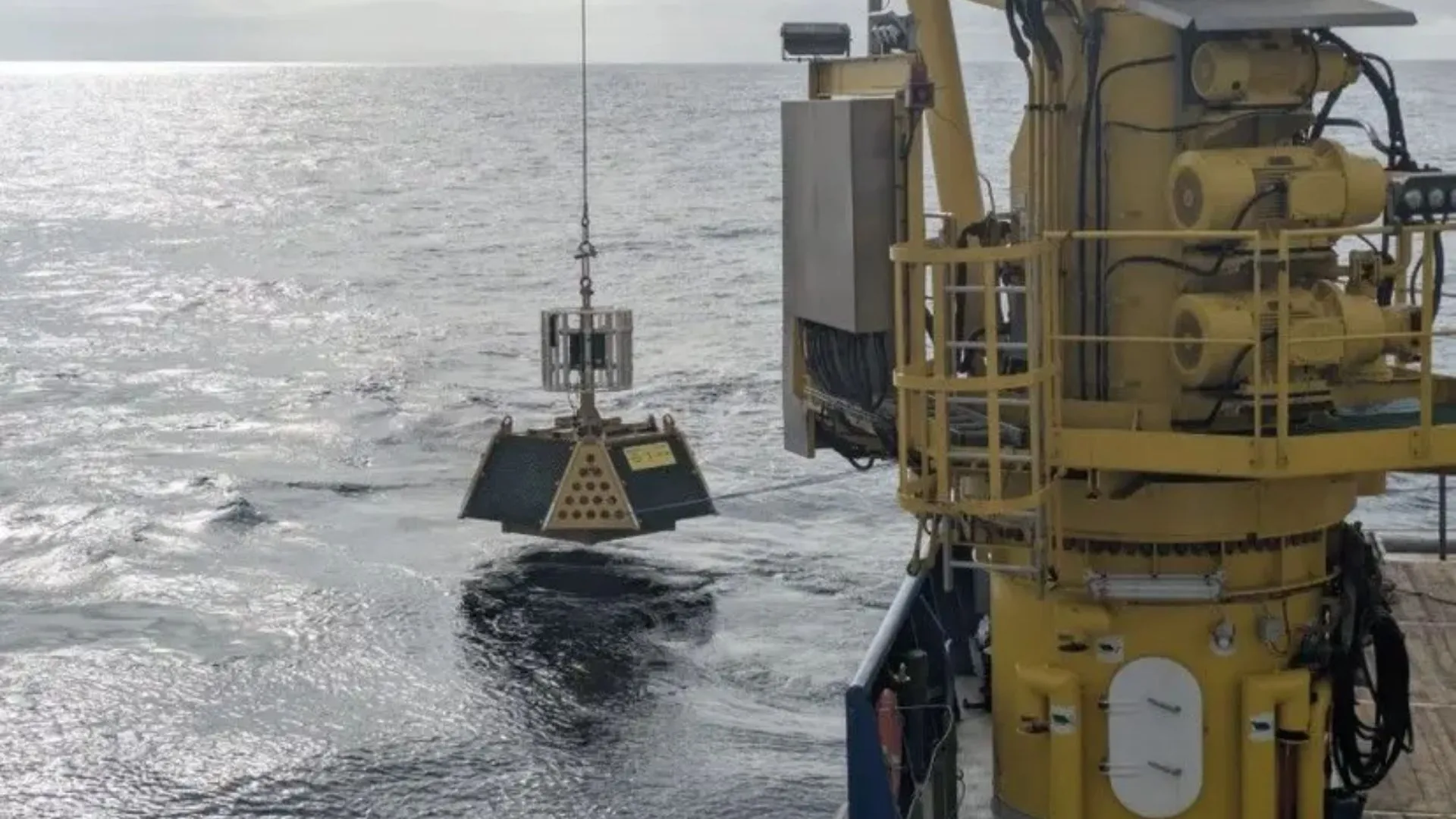
The system comprising a six seabed landers has been deployed at the Endurance CO₂ store, around 93 miles (150 kilometers) off the coast of Teesside, before carbon dioxide injection begins. According to the team, the new system will establish baseline environmental and seismic conditions and enable engineers to verify that injected CO₂ remains safely contained underground throughout the project’s lifetime.
It is deployed under the Northern Endurance Partnership (NEP) project, a joint venture between BP, Equinor, and TotalEnergies. The partnership is developing the transportation and storage infrastructure for the UK’s East Coast Cluster, one of the country’s flagship industrial decarbonization initiatives.
CO₂ injection is scheduled to begin in 2028, making Endurance the UK’s first operational commercial-scale offshore CCS project.
The monitoring campaign combines three autonomous environmental monitoring landers built by Sonardyne, now part of Kraken Robotics, with three co-located TIAMAT passive seismic monitoring systems developed by Germany’s K.U.M.
Newly deployed systems are collecting baseline measurements of seawater chemistry, ocean currents, seabed conditions, and natural seismic activity before any carbon dioxide is injected into these storage systems. These measurements will provide a reference against which future changes can be compared once storage operations begin.
Beneath the seabed, the reservoir lies approximately 3,280 feet (1,000 meters) deep.
Source link