The first molecule of green hydrogen was produced by a 30-megawatt (MW) German energy plant powered by a 50MW wind farm, according to an announcement on Tuesday, November 10.
The latest milestone marks the start of integrated system testing, with all major components now operating together ahead of the plant’s full commissioning in 2027.
Calling it “an important milestone,” Holger Kreetz, COO of Uniper, one of the companies leading the project, said, “the hydrogen economy needs more than electrolyzers…it is crucial that the entire process chain functions reliably in operation.”
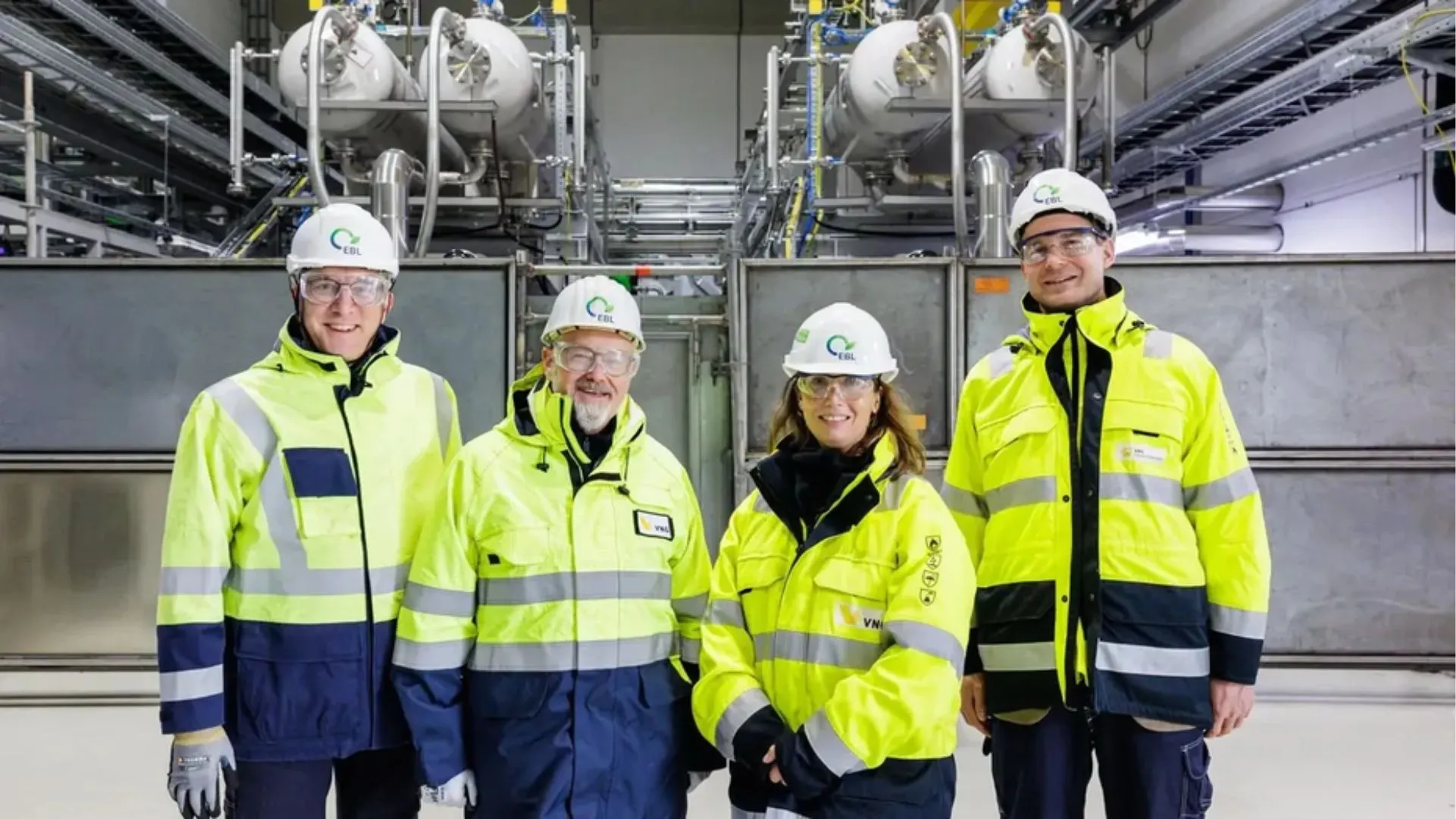
The system uses renewable electricity from the connected wind farm to split water into hydrogen and oxygen, a process called electrolysis. The process is carried out in a pressure-alkali electrolyzer comprising three modules, each with a capacity of 10 MW. The electrochemical conversion of water into hydrogen and oxygen takes place inside the stacks, two of which are present in each module.
According to the company, the green hydrogen produced as a part of this project will be fed into Central Germany’s industrial hydrogen pipeline network, supplying chemical manufacturers and, in the future, supporting hydrogen-powered urban transportation.
Green hydrogen was produced more than three years after construction began at the Bad Lauchstädt Energy Park near Leipzig. The plant is expected to become fully operational next year.
Upon completion, the project is expected to produce up to 3,000 tons of green hydrogen per year. Almost 75 percent of the annual green hydrogen production from the fully operational plant would be supplied via a 15-mile (25-kilometer) pipeline to TotalEnergies, a refining and petrochemical facility at the Leuna Chemical Complex.
Source link