When people read prepared text aloud, AI can transcribe Swahili with remarkably few errors, and Swahili speech recognition looks close to solved. A March 2026 preprint by a team including a Harvard University researcher reports a 3.24 percent word error rate on recordings from Mozilla’s Common Voice collection of volunteer-recorded speech.
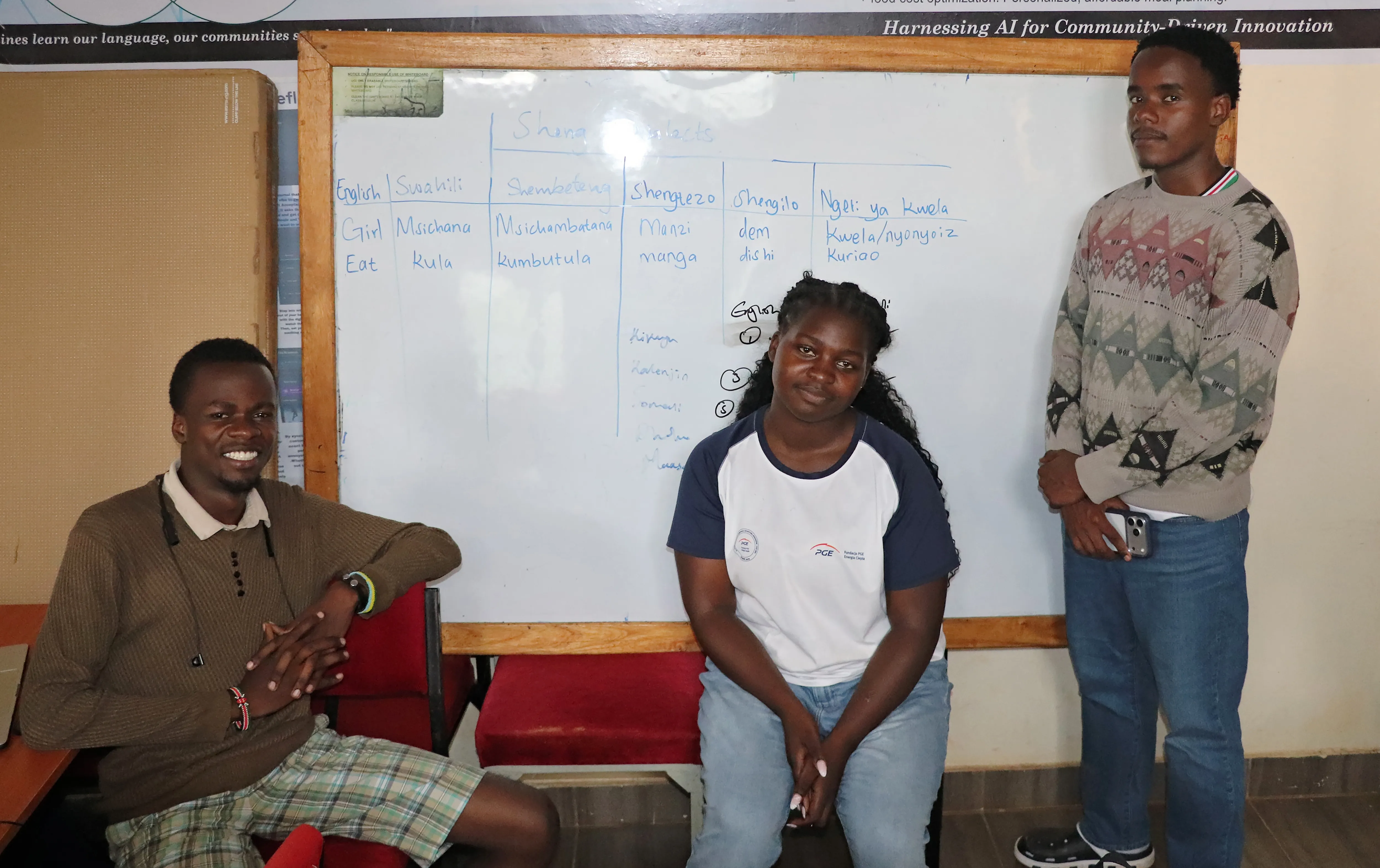
But Kenyans rarely talk like Common Voice volunteers. They switch between Swahili and English mid-sentence, drop in Sheng slang that changes by neighborhood, speak with accents shaped by their first languages, and contend with public transport noise on low-end handsets.
Another 2026 preprint, which covers 20 African languages, argues that this kind of spontaneous, noisy, overlapping audio exposes a generalization gap that scaling laws built on the English language have not closed.
Voice has become a main interface for many Kenyans, as WhatsApp voice notes and chatbot voice prompts gain popularity in a country that ranks first globally on AI usage. But if an AI model cannot parse everyday speech, it quietly excludes the people it was meant to serve.
“My iPhone’s Siri is unable to follow my voice command in Sheng or Swahili,” says Loise Lionah, a beautician in Nairobi. “ChatGPT tries to understand but gets the meaning wrong. The case is similar with Gemini and Claude.”
Swahili, also called Kiswahili, is one of Kenya’s two official languages, alongside English. A Bantu language of the East African coast, Swahili is spoken by more than 200 million people across 14 African countries. Tanzania is regarded as the home of standard Swahili.
Source link