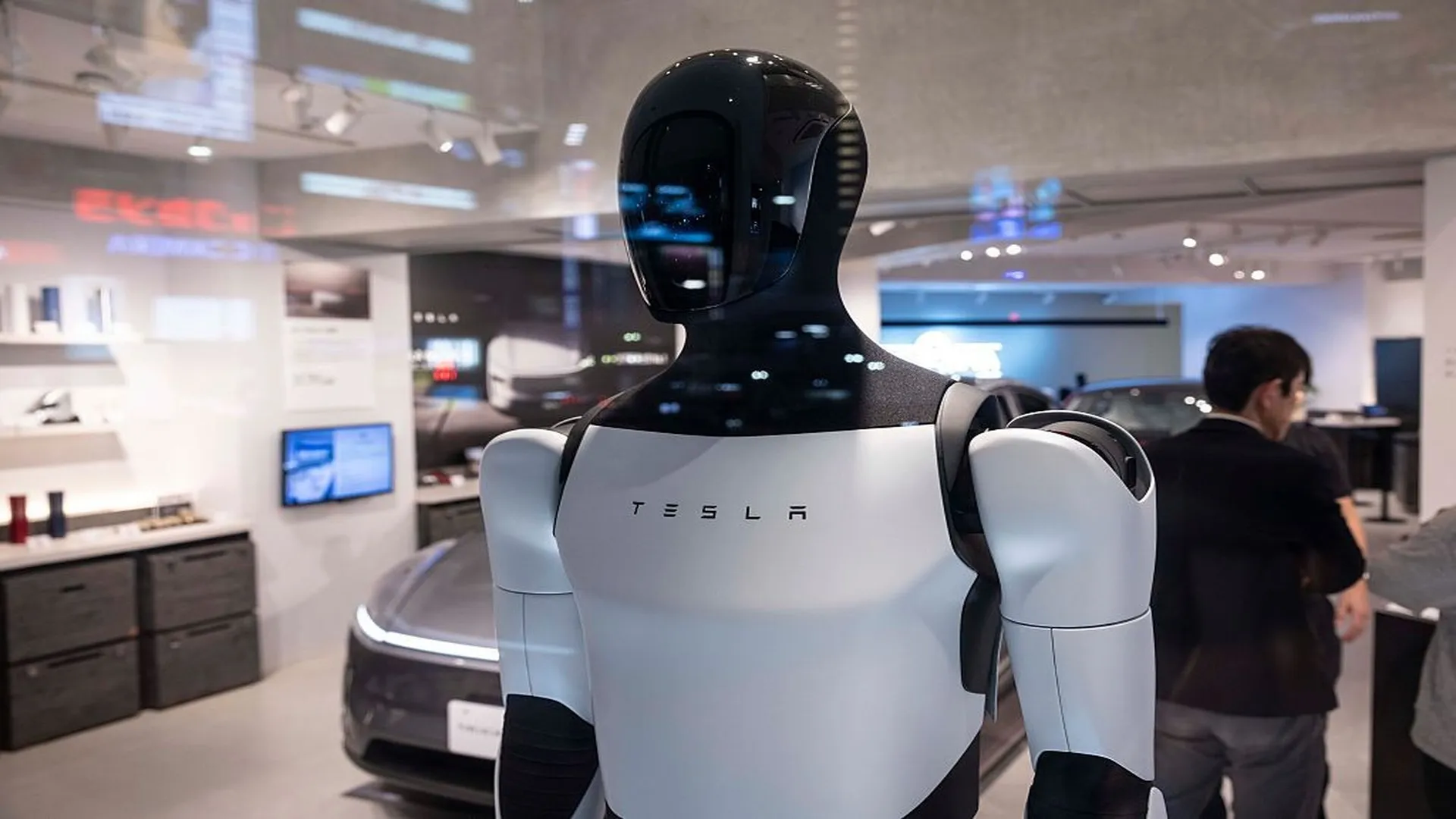
At a robotics conference in Austin, Texas, in November, Tesla’s Optimus handed out snack packets to attendees. The robot could grasp a packet and hold it out for someone to take.
A human was operating it remotely, according to footage from the event and reporting on the demonstration.
Tesla had already begun early production of the humanoid robot in Fremont, California, by the time of the demo. The company expects its first customers to put Optimus to work on repetitive or hazardous industrial jobs.
CEO Elon Musk said in October that deliveries to companies outside Tesla could begin around the end of 2027. A robot that can handle a range of chores at home is a longer-term goal.
At the World Economic Forum in Davos in January, Musk said some Optimus units were already doing simple tasks in Tesla’s factories.
He expected them to take on more complex work by the end of 2026, still in an industrial setting. He gave few details about the jobs the robots were doing or how much human supervision they needed.
The Austin demo showed how Optimus can handle a small object under remote control.
Doing the same task autonomously would require the robot to work out where to grip the packet and adjust its reach as the recipient moves. It would also need to know when to let go. Those decisions matter even when the task itself looks straightforward.
Musk expects industrial customers to use Optimus for jobs that people would prefer to avoid.
Source link