
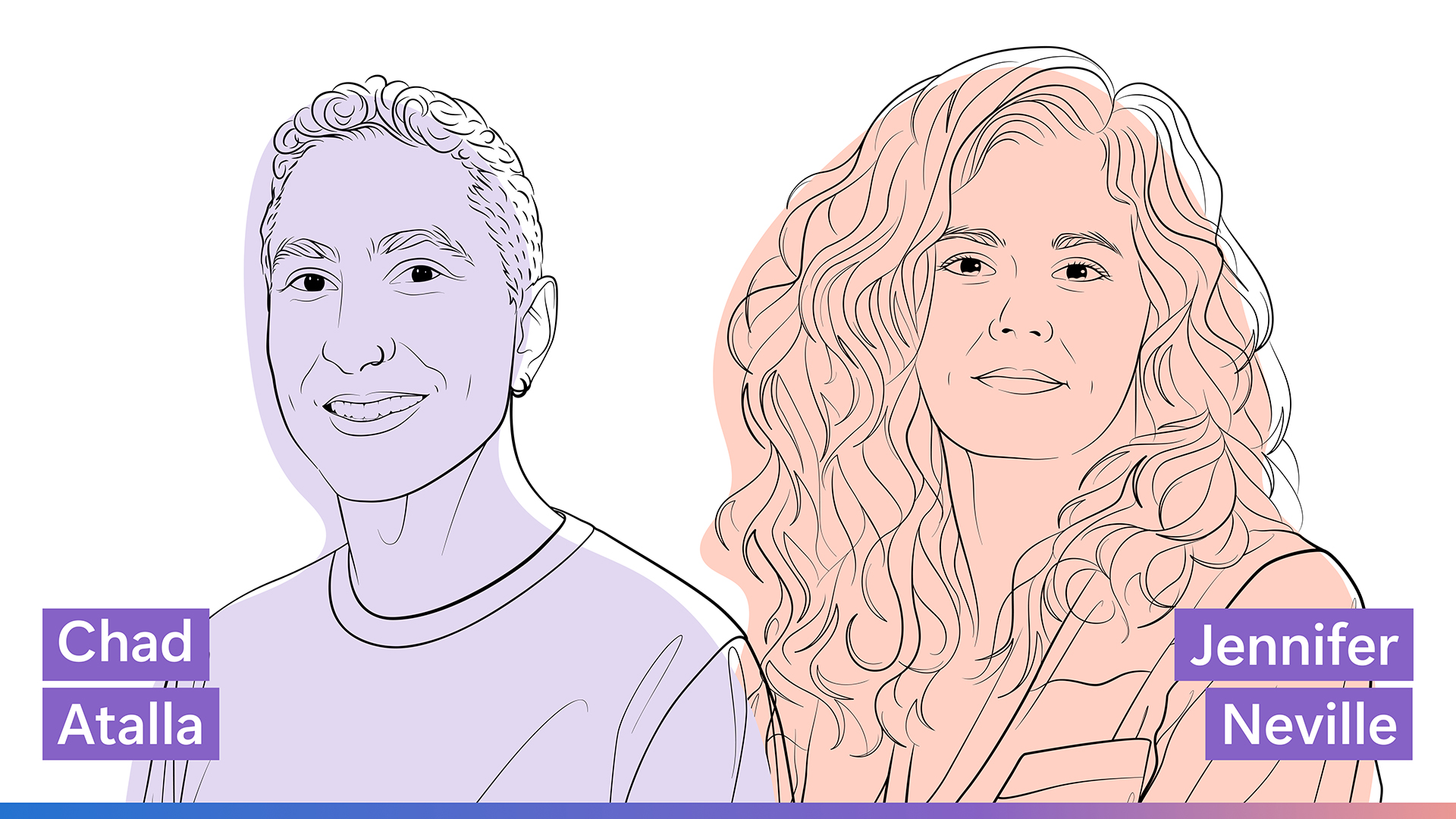
Jennifer Neville is a partner research manager at Microsoft who’s built a career around understanding and advancing AI for real-world use, and much like the human-AI interactions she’s been studying, her early-career path was multiturn: math, then physics; cognitive science, then work; and finally computer science—despite her best efforts to avoid the field.
In this conversation with Principal Applied Scientist Chad Atalla, she explores the role evaluation plays in pushing the performance boundaries of today’s AI systems to meet user needs and the “surprising failures” that emerge when models are tested beyond traditional benchmarks. Neville also shares practical guidance for working with current AI systems and discusses why looking closely at data matters when results defy expectations, and what decades of AI progress have taught her about predicting what comes next.
From an unexpected career trajectory to the frontier of AI interaction and learning, this episode asks a larger question: what can we learn when the path—whether human or artificial—doesn’t unfold the way we expect?
JENNIFER NEVILLE: There were times that I felt like I was spinning my wheels. Things weren’t working. I would get, kind of, dejected. And then we’d get to a point where we did learn something, and it was just the, the emotional thrill of that was, that was really what hooked me. The being able to, kind of, understand something that no one else understood yet …
NEVILLE: … because it’s just at the frontier of what we know about things.
STANDARD INTRODUCTION: This is the Microsoft Research Podcast , where Microsoft researchers—driving advancement through fundamental science and technology research—explore the who, how, and what’s next in computing and AI.
Source link





