Volvo Cars is training humanoid robots at its manufacturing plant in Ghent, Belgium, as the automaker explores how human-shaped machines could take on repetitive and physically demanding tasks on factory floors.
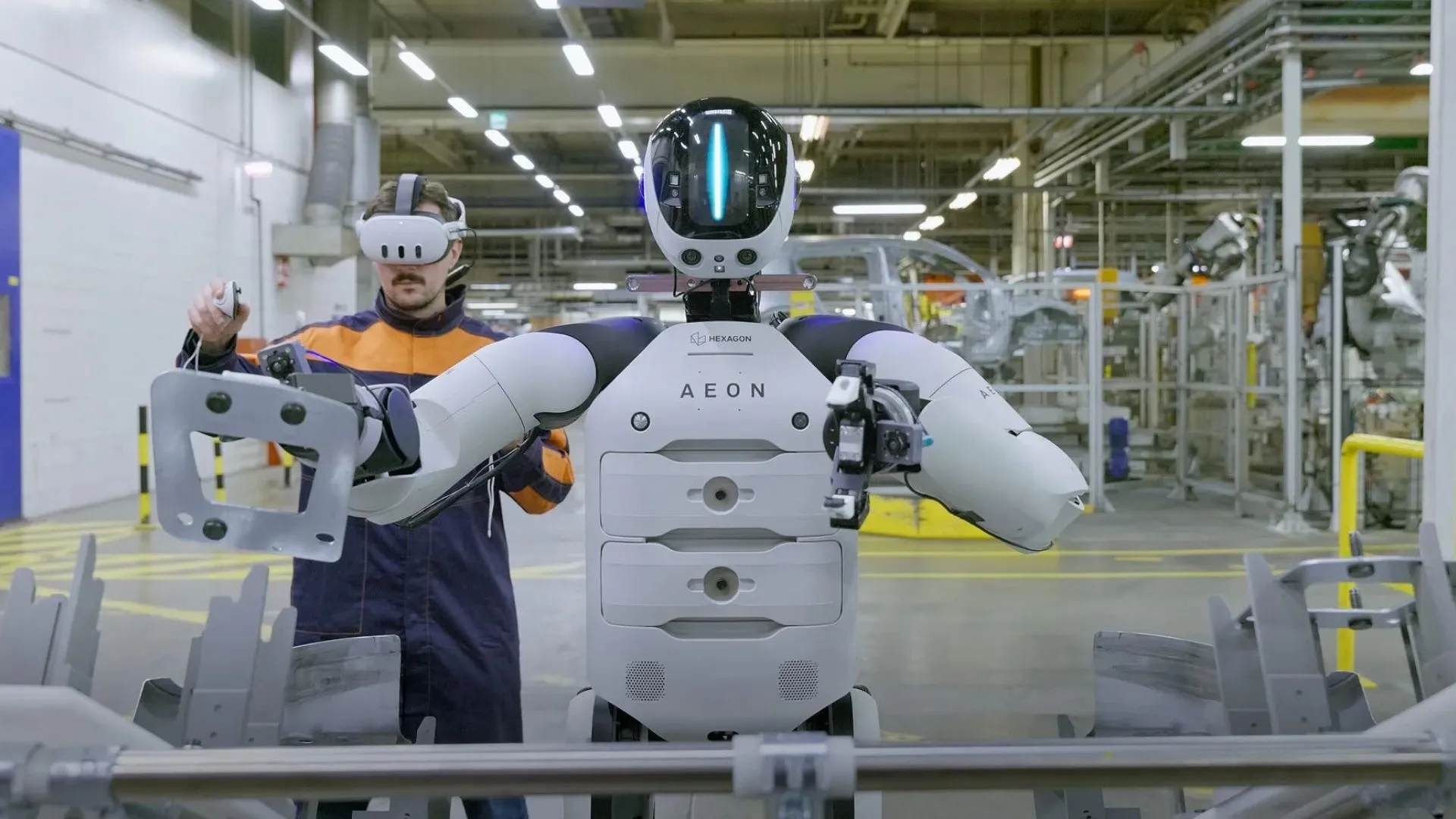
The Swedish automaker has introduced AEON humanoid robots, developed by technology group Hexagon’s Robotics division, at the facility. The machines are being trained and validated on real industrial tasks alongside employees and existing automation ahead of a planned factory pilot in 2027.
Ghent is the first Volvo Cars manufacturing plant to test the humanoid robots. The initial training focuses on placing components into two fixtures with high precision, using a technique called imitation learning. Under this approach, robots learn tasks by observing and copying how people perform them.
Volvo’s team is working with Hexagon Robotics to gradually increase the complexity of the assignments as each step is validated. Future tasks could involve handling multiple components, navigating the production area, and interacting with automated factory systems.
The introduction of humanoid robots addresses a limitation of conventional industrial automation. Fixed robotic arms are effective at performing repetitive operations in controlled environments, but they cannot easily adapt to tasks that require greater flexibility or movement between different work areas.
Volvo believes AEON’s human-like form could allow it to operate alongside workers and existing machinery without requiring extensive changes to factory layouts.
“AEON’s humanoid design means it can fit into our production as it is today, alongside our teams and existing automation,” said Magnus Nilsson, chief manufacturing officer at Volvo Cars.
The company aims to use the robots for some of the most physically demanding assignments, potentially improving workplace ergonomics and reducing employees’ exposure to repetitive tasks.
Source link