
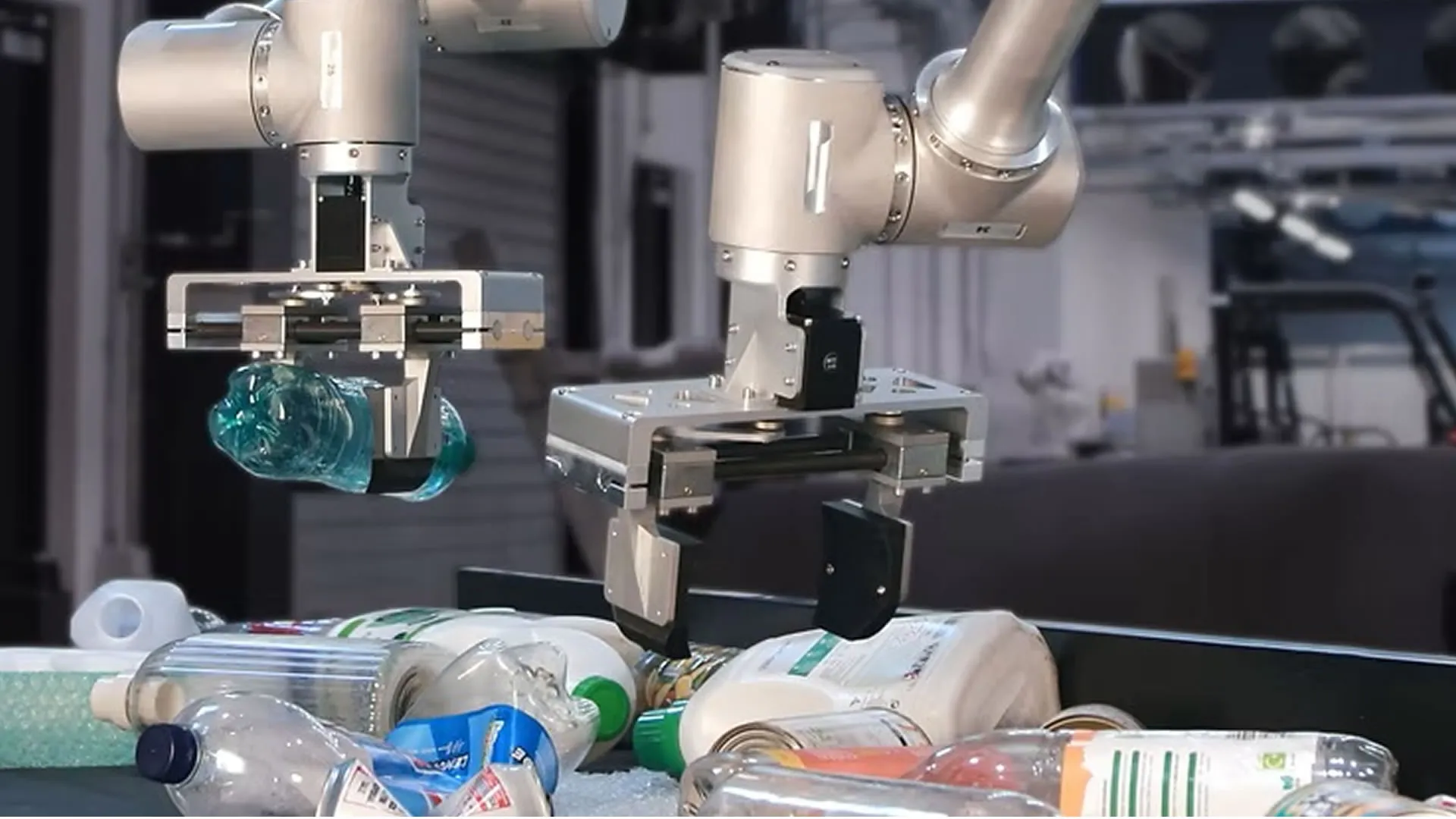
Scotland-based Danu Robotics has just received $5 million in seed funding for its novel waste sorting robot called “H.E.R.O.” Designed to autonomously identify and sort recyclable materials, systems like this promise to make recycling more profitable and efficient.
At present, when you drop something into a recycling bin, that doesn’t necessarily mean it is destined to actually be recycled. The first hurdle is whether it actually gets to a recycling plant, as, all too often, recycling waste may just be combined with regular waste streams.
But, assuming it does, the recycling plant then has several issues to overcome. The first is potential contamination.
Recyclable bulk waste is often mixed, combining plastics, paper, food waste, and other materials. To be efficiently recycled, these materials need to be sorted, cleaned (where applicable), and concentrated.
This is often carried out by trained human workers on a conveyor belt, which is not only time-consuming but also prone to error. Especially as human workers tend to get tired and bored quickly.
Robots, like Danu’s H.E.R.O., on the other hand, don’t get tired and could, in theory, work continuously. To achieve this, Danu’s robot employs a mixture of cameras, AI, and robotic arms to identify and sort waste much like a human would.
The cameras act as its eyes, able to continuously feed its onboard AI with visual data of what items are on the conveyor belt. The AI then identifies and classifies waste by its “recycling worth.”
This refers to the fact that not all materials can be economically viable to recycle, so spending energy and time to recover them is often a losing game.
Source link





