
The global building boom of power-hungry data centers is straining electrical grids, causing greater reliance on energy from polluting fossil fuels.
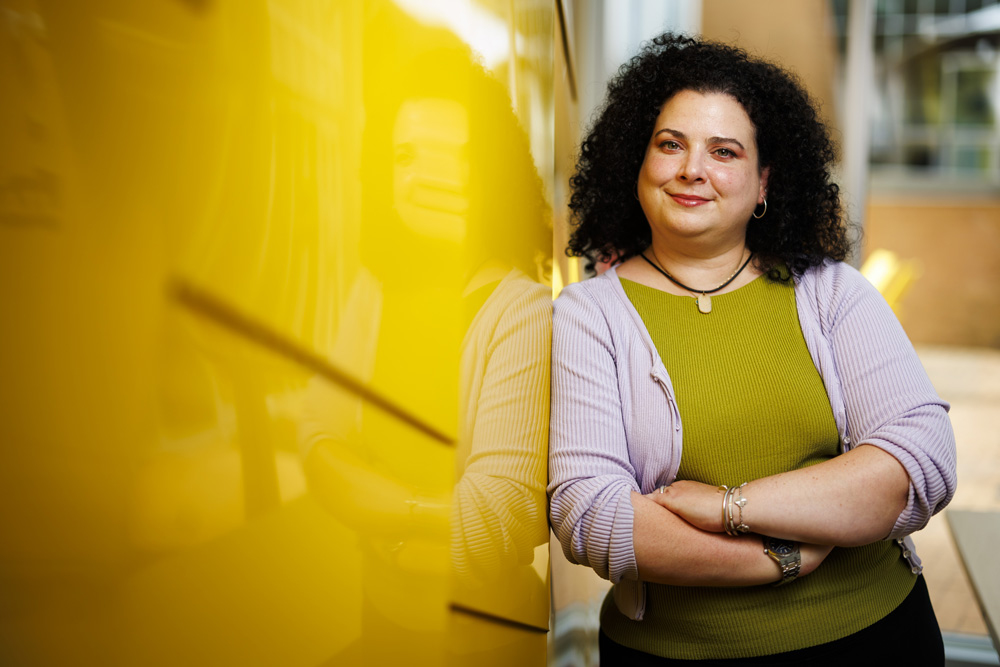
Christina Delimitrou, a newly tenured associate professor at MIT, is fighting this environmental threat by rethinking how the computer servers and networking equipment inside those data centers operate.
She and her group apply machine learning to make large-scale data centers more efficient, secure, and reliable. They redesign outdated cloud computing systems, develop methods to manage shared hardware resources, and create streamlined server architectures.
These advances allow data center operators to coax more computational power out of existing hardware.
“If data centers are not utilized to the best of their capabilities, then they will burn much more power than they need to meet growing user demand,” says Delimitrou, the KDD Career Development Associate Professor in Communications and Technology in the Department of Electrical Engineering and Computer Science (EECS) and a member of the Computer Science and Artificial Intelligence Laboratory (CSAIL). “There is a lot of bloating, especially on the software side of these systems. If we can remove that bloating in a way that doesn’t compromise performance, then we won’t need to build as many new data centers.”
She also harnesses AI to help programmers find and fix problems in cloud-based applications, like music-streaming services or video conferencing systems. This eliminates application downtime that hampers performance and drains computational resources.
“By managing resources more effectively in the cloud, the end user gets more predictable performance from the application running on their smartphone,” she adds.
Source link





