Air pollution is a serious public health risk, contributing to an estimated 30,000 deaths in the U.K. alone last year. Data-driven insights can help — but computing air quality with traditional chemistry-based models is expensive, which limits how detailed they can be and how regularly they can be run.
David Topping, a professor in the University of Manchester’s department of Earth and environmental science, saw that the NVIDIA Earth-2 family of open AI models and tools had cracked a related problem for weather forecasting — and asked whether the same generative frameworks could work for pollution fields.
“The biggest challenge is the compute required to forecast air quality,” said Topping. “Once you put chemistry into weather models, they get really, really slow. So I said, why don’t we try using the generative frameworks that NVIDIA develops for climate and weather for pollution fields?”
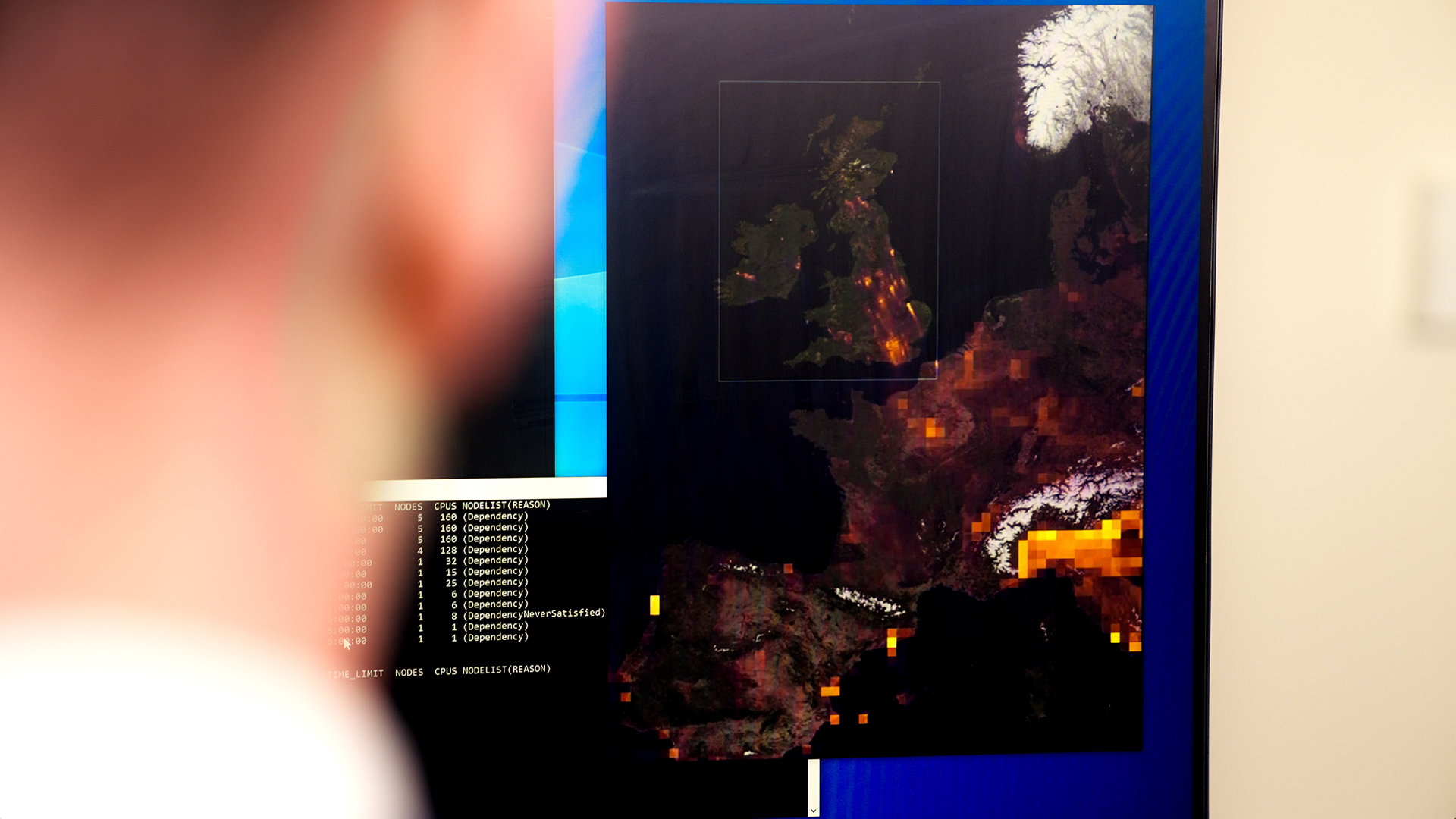
Working with the NVIDIA Earth-2 team, Topping and colleagues generated training data from existing chemistry-climate simulations, then trained Earth-2 CorrDiff — a generative downscaling model — on Isambard-AI, the U.K.’s national AI supercomputer in Bristol.
The team has since added Earth-2 StormCast, a model that enables time-dependent forecasts that directly use air quality observations, and showed the test-training and inference workflows running on the NVIDIA DGX Spark personal AI supercomputer.
“To improve human health, it’s essential that we understand the impact of environmental stressors in the air we breathe,” said Topping. -wide pollution model allows us to model potential future scenarios, such as predicting what would happen if different pollution-related government policy changes went into effect.
Source link