This article has been reviewed according to Science X's editorial process and policies. Editors have highlighted the following attributes while ensuring the content's credibility:
Screens are becoming smaller and sharper. This can be seen, for example, in augmented reality glasses and the electronic viewfinders of cameras, some of which have a screen diagonal of less than 1 centimeter (0.4 inches).
But the smaller the screen pixels, the more difficult they are to manufacture. Organic light-emitting diodes (OLEDs) show promise for particularly small pixels. Unlike conventional light-emitting diodes, they are not made of crystals but of carbon-based compounds. While conventional light-emitting diodes become dimmer as the crystals are cut smaller, organic light-emitting materials can be used to produce tiny yet bright pixels.
Until now, organic light-emitting materials were not suitable for the high-precision manufacturing methods used in the semiconductor industry. Photolithography, a method used in the industry, involves solvents and other chemicals that attack and degrade organic molecules.
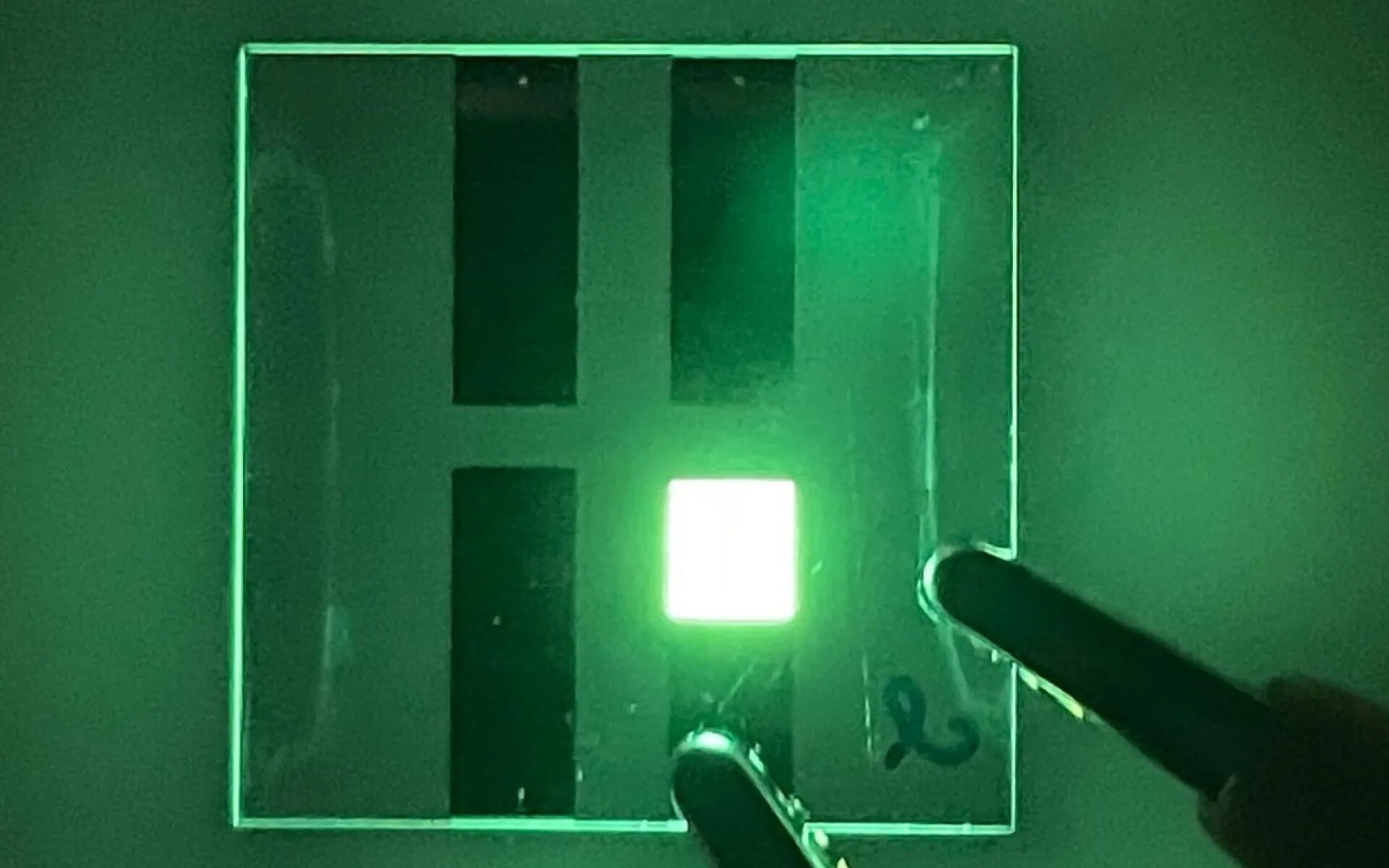
Researchers at ETH Zurich have now made organic luminescent molecules suitable for photolithography. They produced luminescent polymers in various colors that serve as photoresists while withstanding harsh chemical conditions. The polymers can be applied to a semiconductor chip. The photoresists cross-link when exposed to UV light, enabling the creation of fine-scale geometric structures.
"We've developed a new class of long-chain molecules that can be manufactured into OLED pixels using direct light exposure," says Yinyin Bao, who conducted research at ETH Zurich and is now a professor at the University of Helsinki. He led the research with ETH professor Chih-Jen Shih.
Source link