This article has been reviewed according to Science X's editorial process and policies. Editors have highlighted the following attributes while ensuring the content's credibility:
Inside the human brain, billions of individual neurons connect to form a vast network capable of rapidly processing information and electrical signals. A team of researchers and engineers at Penn State is taking inspiration from these natural computers to build soft networks of water-based droplets, connected by membranes like those found in the walls of living cells.
Their networks lay the foundation for a new kind of soft computer built for wet environments, capable of sensing and processing information with ions much like silicon chips do with electrons, but at a far lower energy cost.
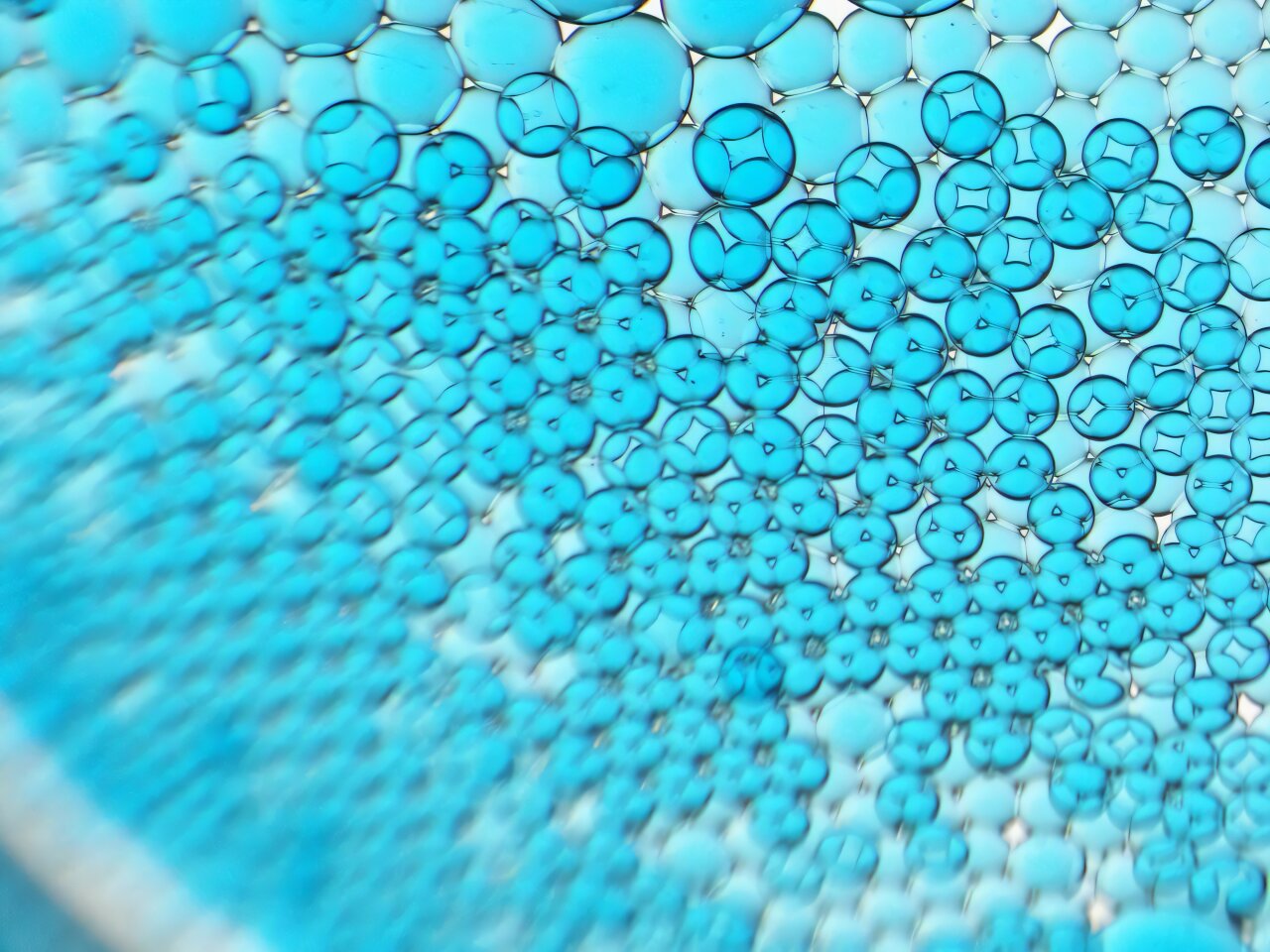
The team immerses tiny lipid-containing droplets in oil, where lipid molecules naturally arrange themselves around each droplet. When neighboring droplets touch, these lipids form a thin, two-layer membrane between them. The soft surfaces contain voltage-sensitive channels that allow electrical signals to pass between droplets through the movement of charged atoms or molecules called ions.
The membranes store charge, while the channels respond to present and recent signals. When combined, these properties allow the droplets to form a synthetic, interconnected network that the researchers call a "neuromorphic tissue."
They detailed these tissues' properties in a paper published in Science Advances, using laboratory measurements and computer simulations to show that interconnecting the droplets' membranes can significantly improve the material's ability to process complex and unpredictable signals.
According to Joseph Najem, associate professor of mechanical engineering, associate director of the Convergence Center for Living Multifunctional Materials System and co-corresponding author on the paper, integrating a computer interface or sensor in the body, for example, is not as simple as implanting circuitry because even though both electronics and biology process signals and compute, they carry information differently.
Source link