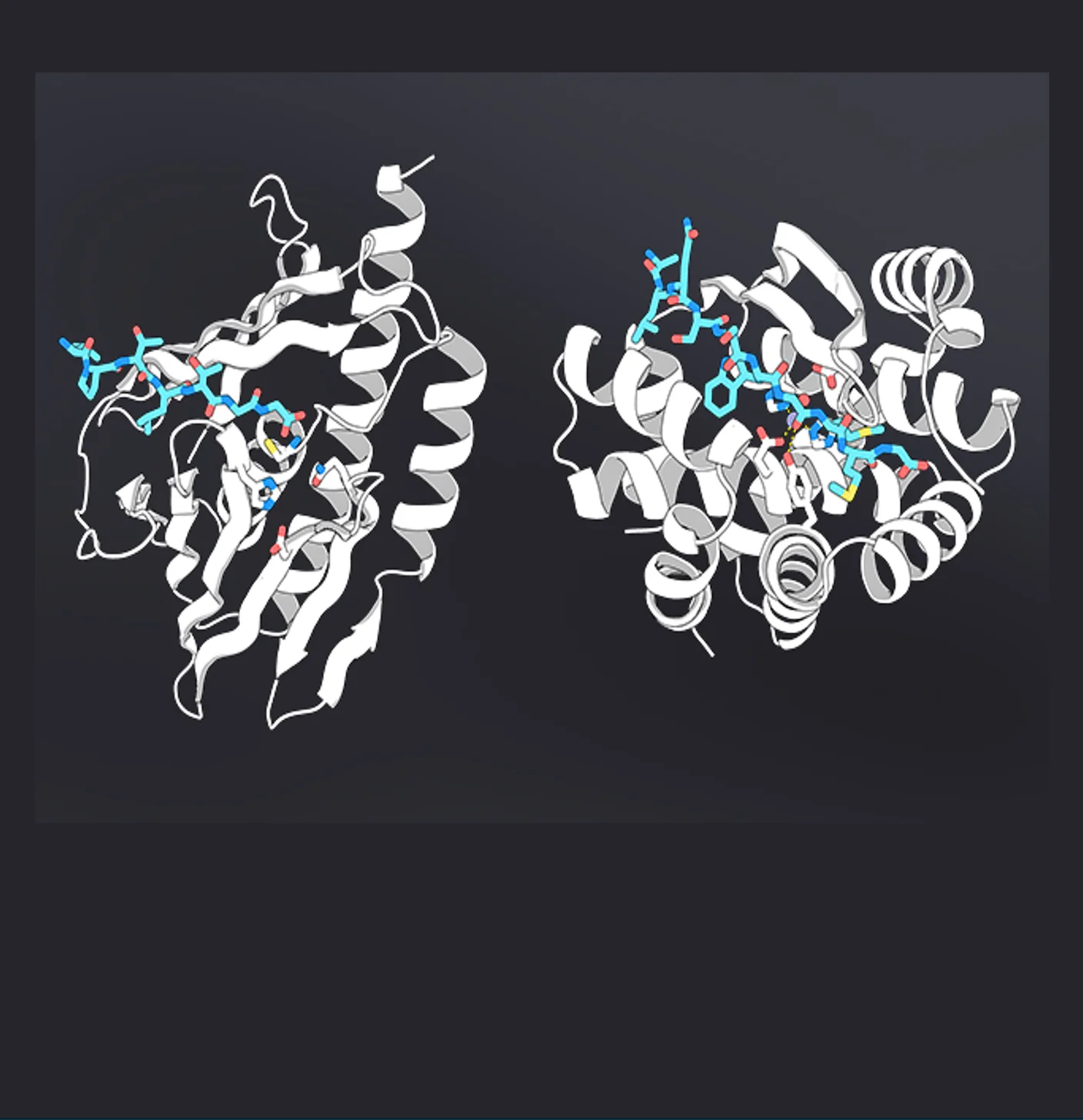
A trio of papers showcases AI-designed molecular scissors and an upgraded tool that builds proteins atom by atom.
Scientists can now use AI to build proteins never before seen in nature. These designer proteins may become therapeutics, environmental sensors, or even the building blocks of synthetic life.
Despite enormous potential, however, AI tools still struggle to design complex proteins, like enzymes, from scratch. Unlike small proteins or peptide binders that disrupt cellular signaling, enzymes are shape shifters with a catalytic core. Getting the right shape is only half of the battle. The components must also quickly move, align, and interact at just the right moment.
But effective AI-designed enzymes may be here soon. This month, Nobel laureate David Baker’s lab at the University of Washington unveiled two types of AI-designed proteases. Proteases are like molecular scissors that cut other proteins at specific sites. The enzymes are notoriously tough to engineer, but designer versions could be made into powerful medications.
In test tubes, Baker’s synthetic scissors chopped up proteins associated with Alzheimer’s and ALS, a common motor disease. In cells, they acted like switches for inflammation-related proteins, activating them only after a precise snip and, in turn, changing how the cells behaved.
The findings open the door to destroying disease-related proteins long considered undruggable. “Proteases are just the beginning,” said study author Anqi Chen in a press release.
In a separate paper , the Baker lab introduced RFdiffusion3, the lab’s latest generative AI model for protein design. Rather than mainly working at the level of amino acids, the tool zooms in on individual atoms, giving scientists finer control over their synthetic creations.
Source link