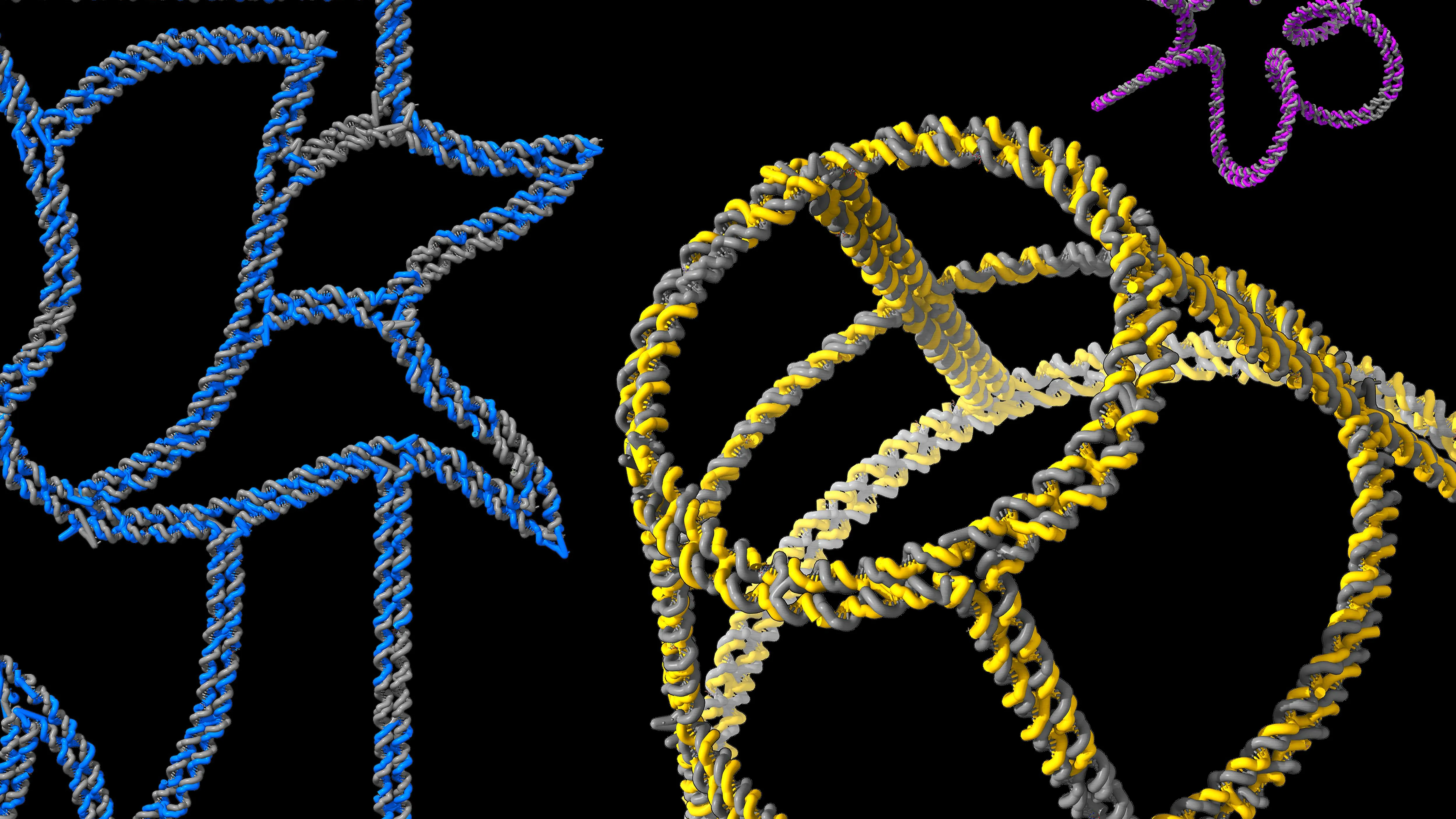
Shaped like dogs, stars, and the Mona Lisa, you could mistake these DNA structures for fun-shaped macaroni if they weren’t only nanometers wide. South Korean scientists made the constructions using a technique called DNA origami, which can bend genetic material into any form. Designing DNA strands so they’ll fold into a specific shape typically requires tedious manual work, but the researchers behind the playful fabrications have developed a shortcut using generative AI.
The AI model, called Generative SNUPI (short for Structured Nucleic Acids Programming Interface, and, yes, inspired by the dog), was created by research teams at Seoul National University (SNU) and Hanyang University. The work behind it, which was accepted for publication in Nature Communications, shows the model can conjure DNA origami designs that work in the real world for user-requested shapes. For a design like the Mona Lisa, that doesn’t mean simply tracing an outline; the model considers the chemical rules of DNA to tell researchers how unpaired DNA strands should be sequenced so that molecular forces will cause them to self-contort into the required shape.
DNA origami techniques have been around for two decades now, with potential applications ranging from nanoscale robots to therapeutic structures that interact with cells. But these innovations have been slowed by how time-consuming and expensive the DNA structure design process can be.
D. candidate at SNU. The work requires humans running algorithms and tweaking results until the desired shape is achieved and structurally stable. With Generative SNUPI, she says, users could, in theory, go straight from drawing a target shape to physically assembling the DNA.
Source link