This article has been reviewed according to Science X's editorial process and policies. Editors have highlighted the following attributes while ensuring the content's credibility:
Advances in machine learning and computational imaging are transforming not only how scientists analyze data but how they conduct entire experiments. At U.S. Department of Energy (DOE) user facilities, researchers are integrating machine learning directly into experimental workflows—using it to identify what to measure, reconstruct images as data are collected and rapidly extract scientific information.
SYNAPS-I (Synergistic Neutron and Photon Science—Intelligence), a seed project under the ModCon initiative within DOE's Genesis Mission, is bringing these capabilities together across X-ray light source and neutron facilities. Led by DOE's Lawrence Berkeley National Laboratory's Advanced Light Source, the multilaboratory collaboration includes DOE's Argonne National Laboratory, DOE's Oak Ridge National Laboratory, DOE's SLAC National Accelerator Laboratory and DOE's Brookhaven National Laboratory.
The project combines expertise across the laboratories with open-source computational intelligence models, industry partnerships and advanced computing resources to develop shared solutions for faster, more efficient imaging.
Recent demonstrations at the National Synchrotron Light Source II (NSLS-II), a DOE Office of Science user facility at Brookhaven Lab, show how these technologies can be integrated directly into beamline experiments.
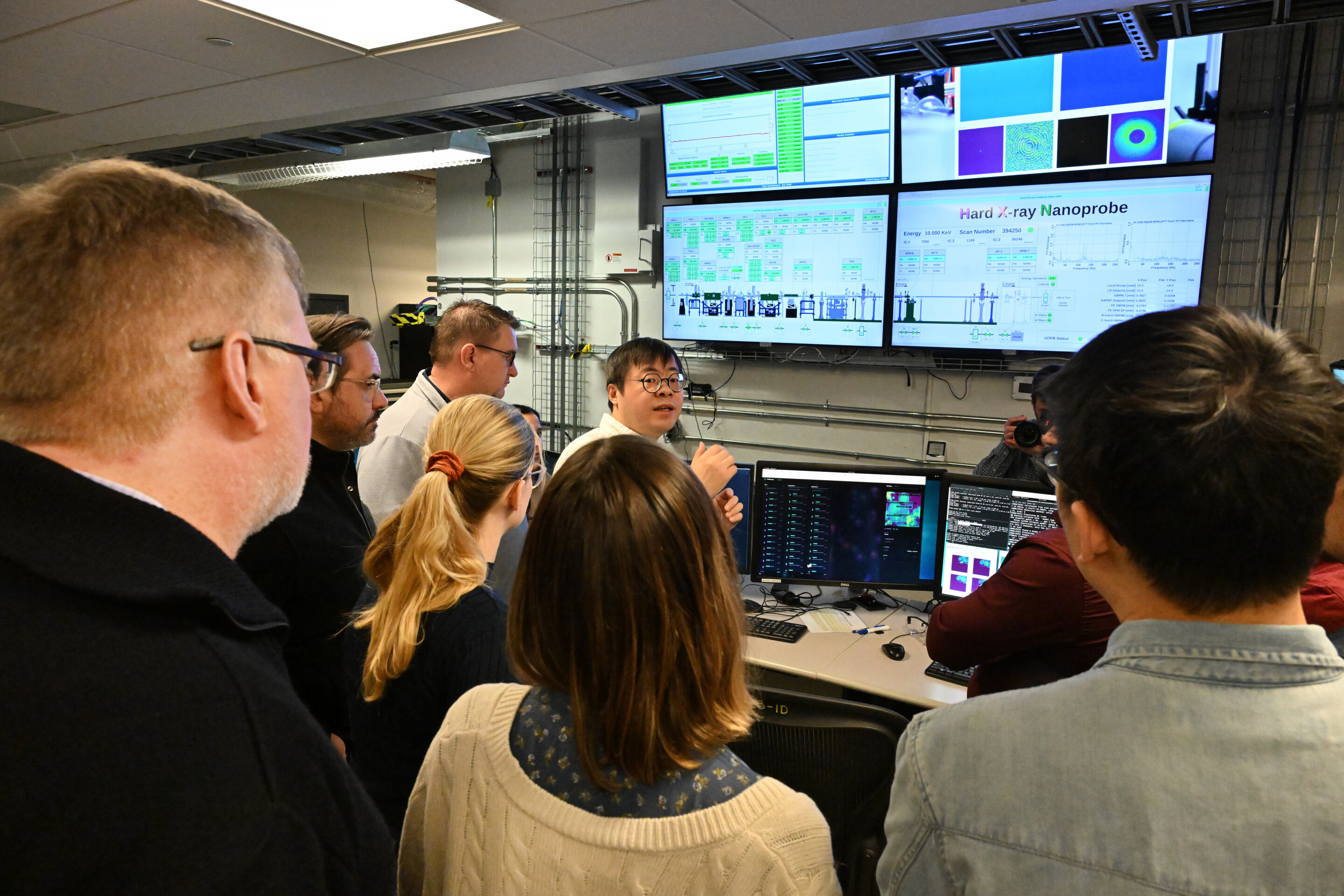
"We are already seeing ways that these advanced imaging workflows can help users make better use of their limited beam time," said Hanfei Yan, lead beamline scientist at the Hard X-ray Nanoprobe (HXN), a state-of-the-art X-ray microscope at NSLS-II for advanced 2D and 3D nanoscale imaging.
In the first SYNAPS-I demonstration at NSLS-II, a collaborative team led by Yan demonstrated an automated experiment that analyzed images as they were acquired, identified scientifically interesting regions within a complex sample and autonomously selected those areas for subsequent high-resolution measurements—without human intervention.
Source link