
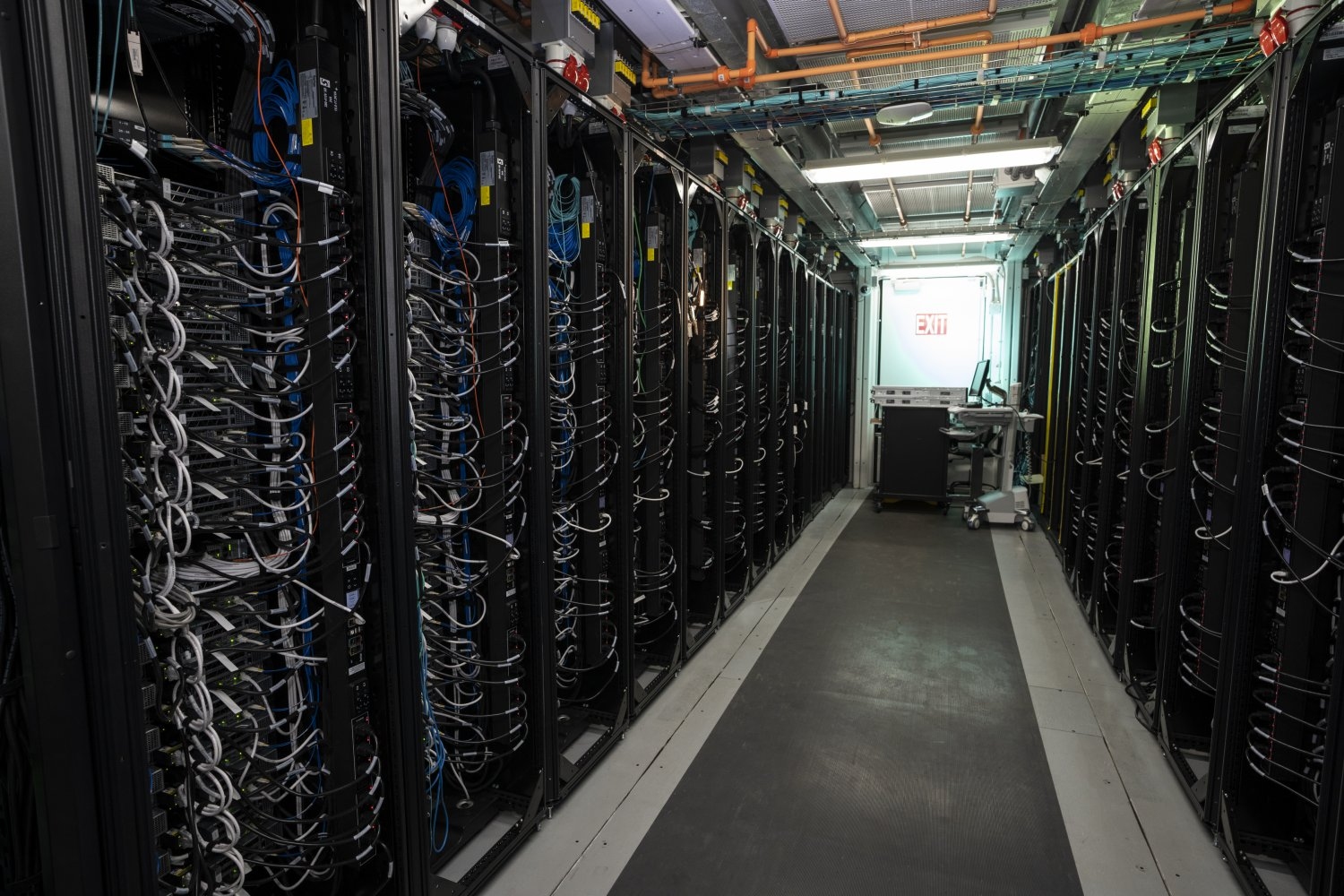
As artificial intelligence transforms industries and national security, understanding the latest hardware capabilities is important for maintainind technological advantage.
AI accelerators — specialized systems designed to speed up capabilities such as neural networks, deep learning, and machine learning — have been a major area of development for nearly a decade. Since 2018, team from the Lincoln Laboratory Supercomputing Center (LLSC) has been conducting the Lincoln AI Computing Survey (LAICS, pronounced "lace"). Six papers later, LAICS continues to summarize current commercial AI accelerators and compare their peak performance and peak power.
"About eight years ago, we saw a sharp rise in the number of research AI accelerators described in research papers and commercial accelerators being announced, and we started to get questions about them from government sponsors of the laboratory's work. That was motivation enough to start the survey," says Albert Reuther, a staff member at the LLSC, which operates and optimizes the high-performance computing systems used by thousands of laboratory research staff.
Although AI accelerators are frequently used for processes such as machine learning, they also can enable other parallel applications, such as modeling the functions of molecules and speeding up simulations of fluid dynamics — processes that are very computationally expensive.
AI accelerator technology can come in a number of forms: central processing units (CPUs), graphics processing units (GPUs), application-specific integrated circuits (ASICs), field-programmable gate arrays (FPGAs), and dataflow accelerators. Each type of accelerator has slightly different capabilities. CPUs can be used for general-purpose computing, while ASICs can perform only very specific tasks.
Source link





