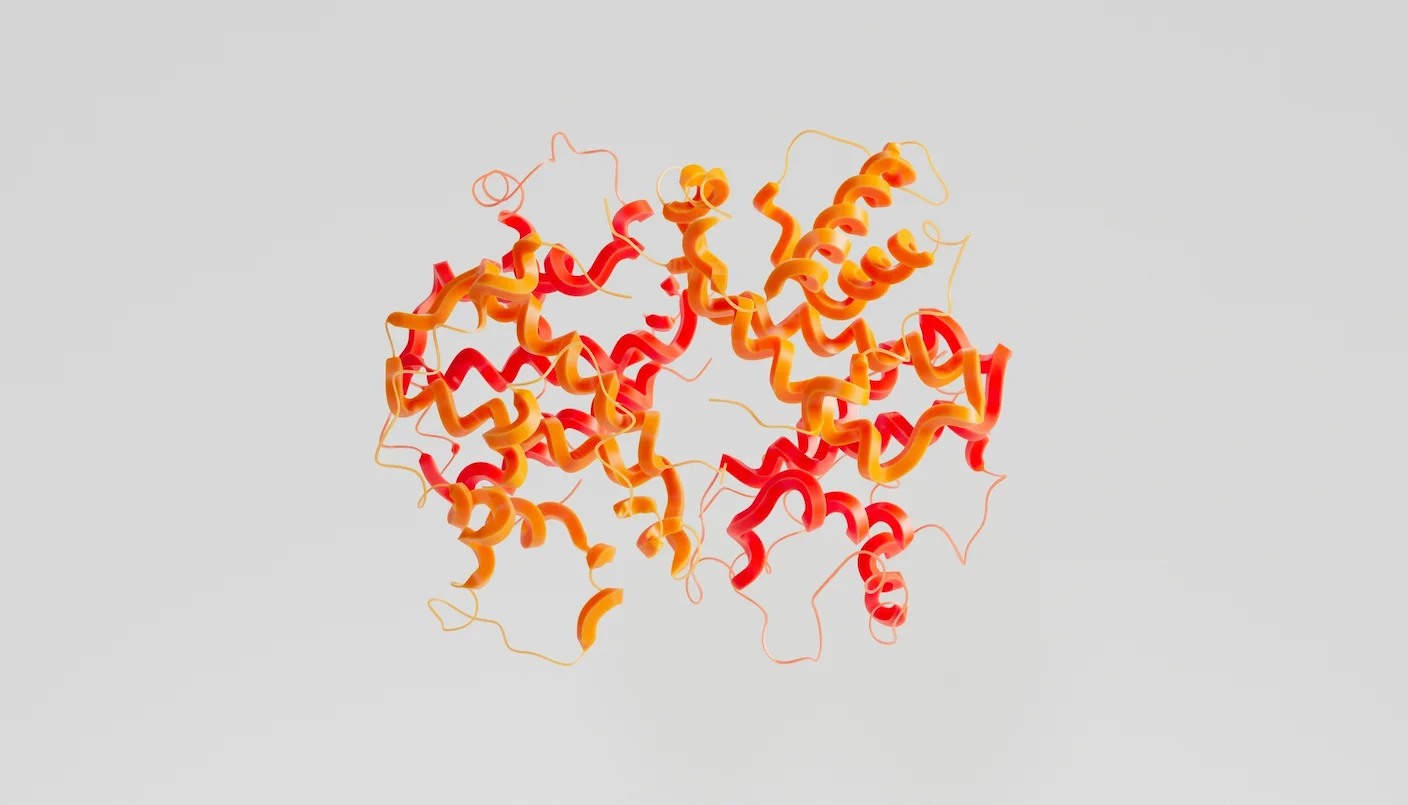
New AI tools could help more biologists experiment with problems once restricted to a handful of specialists.
Designing new proteins from scratch usually requires in-depth knowledge of their structures and chemistry, as well as familiarity with highly specialized software. But researchers have now developed an AI tool where users simply describe what they want a protein to do in plain language.
Since AlphaFold cracked protein folding in 2020, AI has revolutionized the field of structural biology. Since then, a wave of generative models have begun to work in the opposite direction, learning from vast collections of amino acid sequences, protein structures, and labels detailing their function to design proteins that do not exist in nature.
These tools remain difficult to use, however, as scientists have to guide them with formal technical specifications like structural constraints or instructions to mutate particular sites. That means trying to design something like a new plastic-degrading enzyme or a fluorescent imaging marker takes significant specialist expertise.
But in new research published inNature, scientists at Westlake University in China detail an AI system called Pinal that can generates protein sequences from natural-language prompts describing a desired protein function. And while the model outputs a lot of duds, lab tests showed that with enough tries, the system could reliably achieve a user’s goal.
“For decades, the field has largely required specialized expertise to translate desired functions into low-level structural or sequence constraints,” the authors write.
Source link