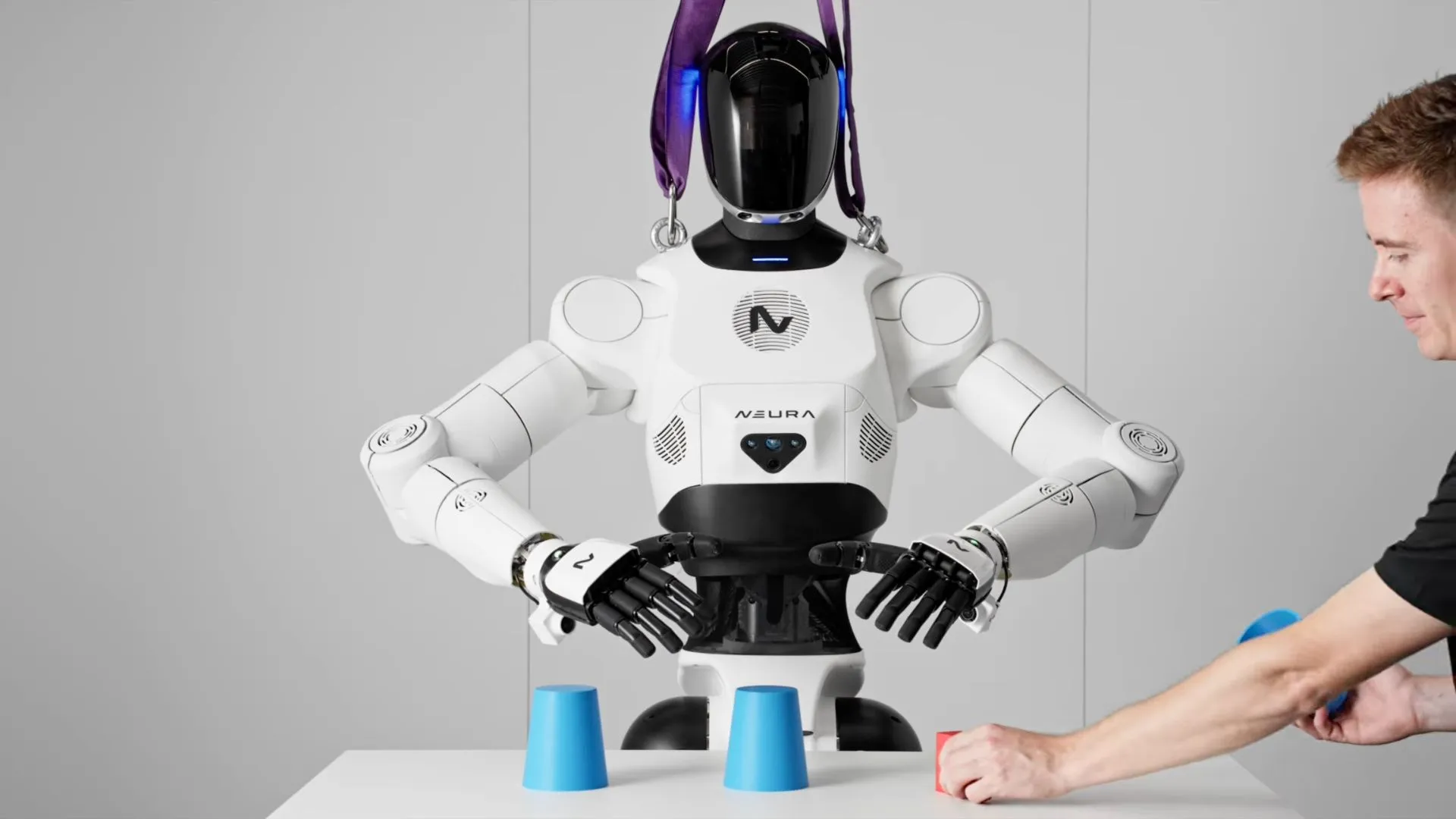
NEURA Robotics has introduced Neuron AI, a robot foundation model designed to help robots understand and interact with their surroundings using multiple sensory inputs. The system combines visual perception with touch, sound, language, robot-state information, and memory to support a range of tasks.
The German company aims to deploy the model across different robot platforms, allowing customers to adapt its capabilities to specific applications.
NEURA plans to demonstrate the technology through its humanoid robots, showcasing its approach to developing adaptable robotic systems for real-world environments.
Neuron AI is a robot foundation model designed to combine visual perception, touch, sound, language, and memory to help robots perform complex tasks.
The German robotics company described the system as a Perception-Language-Action (PLA) model that processes sensory information and translates it into physical actions. The architecture is designed to support multiple robot platforms, allowing skills to adapt to different applications rather than being developed separately for each machine.
Neuron AI integrates several information sources, including 3D vision, tactile and force measurements, audio, robot-state data, and language. According to NEURA, the model aligns these inputs over time to help robots interpret their surroundings and maintain context as tasks progress.
The inclusion of tactile and force data could help robots determine whether physical interactions have produced the intended results. For example, changes in contact forces could indicate whether a screw has engaged correctly, while audio cues could help identify when a mechanical latch has clicked into place. These examples illustrate the intended capabilities rather than independently verified performance results.
Source link