MIT students are going to office hours less often. They’re spending less time working through problem sets, and with one another. Those were among the findings of MIT’s recent report on artificial intelligence and education, and they are one reason a growing number of MIT faculty are concerned about how generative AI is both changing how people work and affecting how they think, learn, and relate to one another.
For the MIT Human Insight Collaborative (MITHIC), those questions have become a central focus, and MITHIC is working with collaborators across the Institute, including the Social and Ethical Responsibilities of Computing (SERC), to help MIT address them.
Launched in 2024 as a strategic initiative, MITHIC brings together scholars, artists, educators, and researchers to explore the human dimensions of the defining challenges of our time. Since its launch, MITHIC has supported 67 projects across 31 MIT units, offering a total of $5.5 million in funding.
Roughly a third of those projects are focused on AI, society, and humanity — a topic that MITHIC faculty co-lead Heather Paxson says has become an increasingly important part of the initiative.
“When we refer to AI and society, we’re not only speaking about individual ethical decision-making or how to retrain workers. We’re looking at how AI is reshaping sociality, how we relate to one another,” says Paxson, a professor of anthropology and the associate dean of the School of Humanities, Arts, and Social Sciences (SHASS).
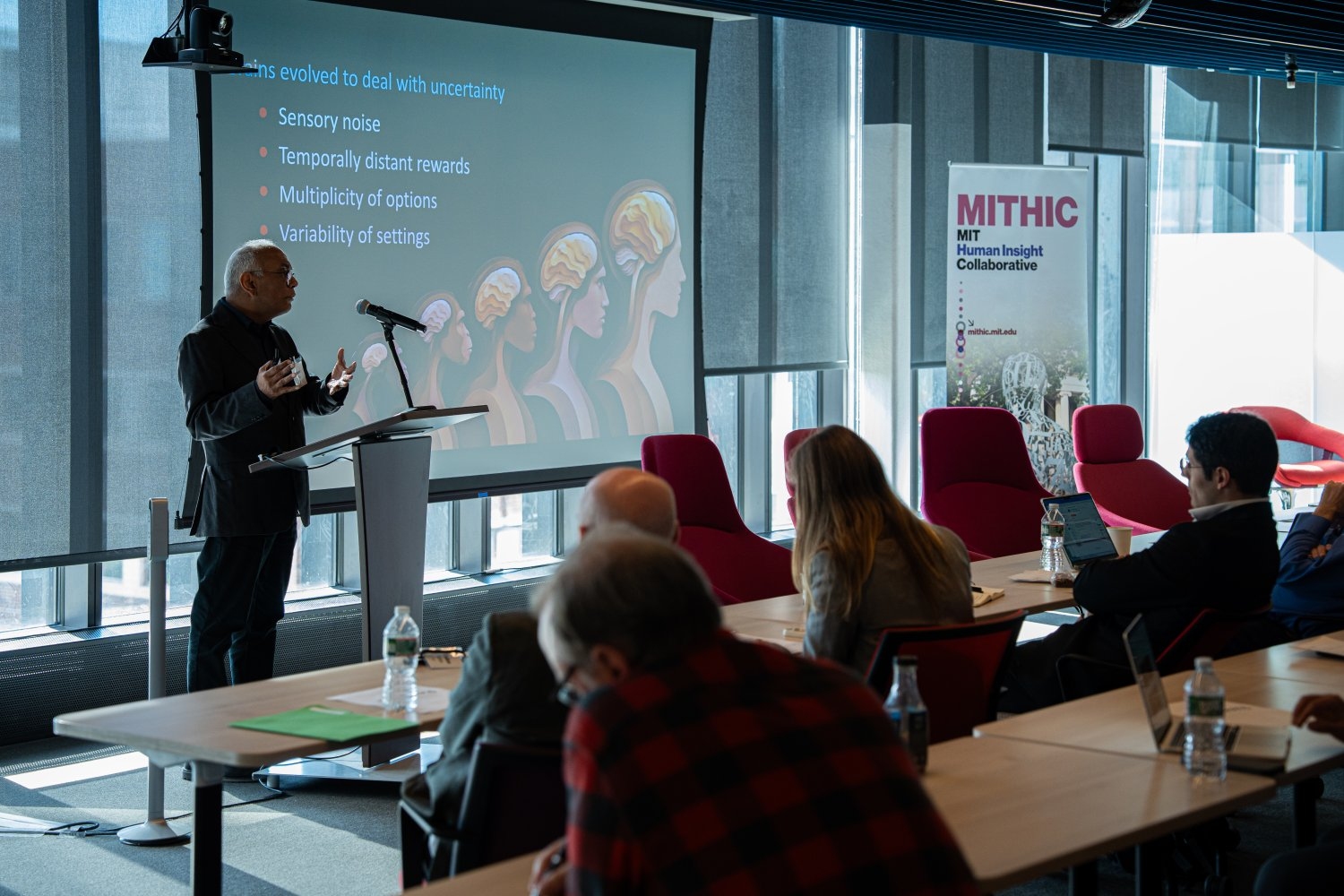
Building upon this focus, an AI and Society Forum took place on campus earlier this year.
Source link