Ask a frontier model for a slide deck and you'll get a good one. Ask for ten and they start to look alike: the same tasteful defaults, the same house style, a faint "AI-generated deck" look. That's fine until you want the deck to look like your template. Frontier models have their own house style, and no amount of prompting stops them drifting back to it. And sometimes the content is confidential and can't leave your systems at all.
Both of those point to a model you own: open weights, running on your own infrastructure, trained on your own design language. The catch is that small open models, the kind you'd actually self-host, are bad at this. Their decks come out broken: titles that vanish into the background, text running off the slide, shapes stacked on top of each other.
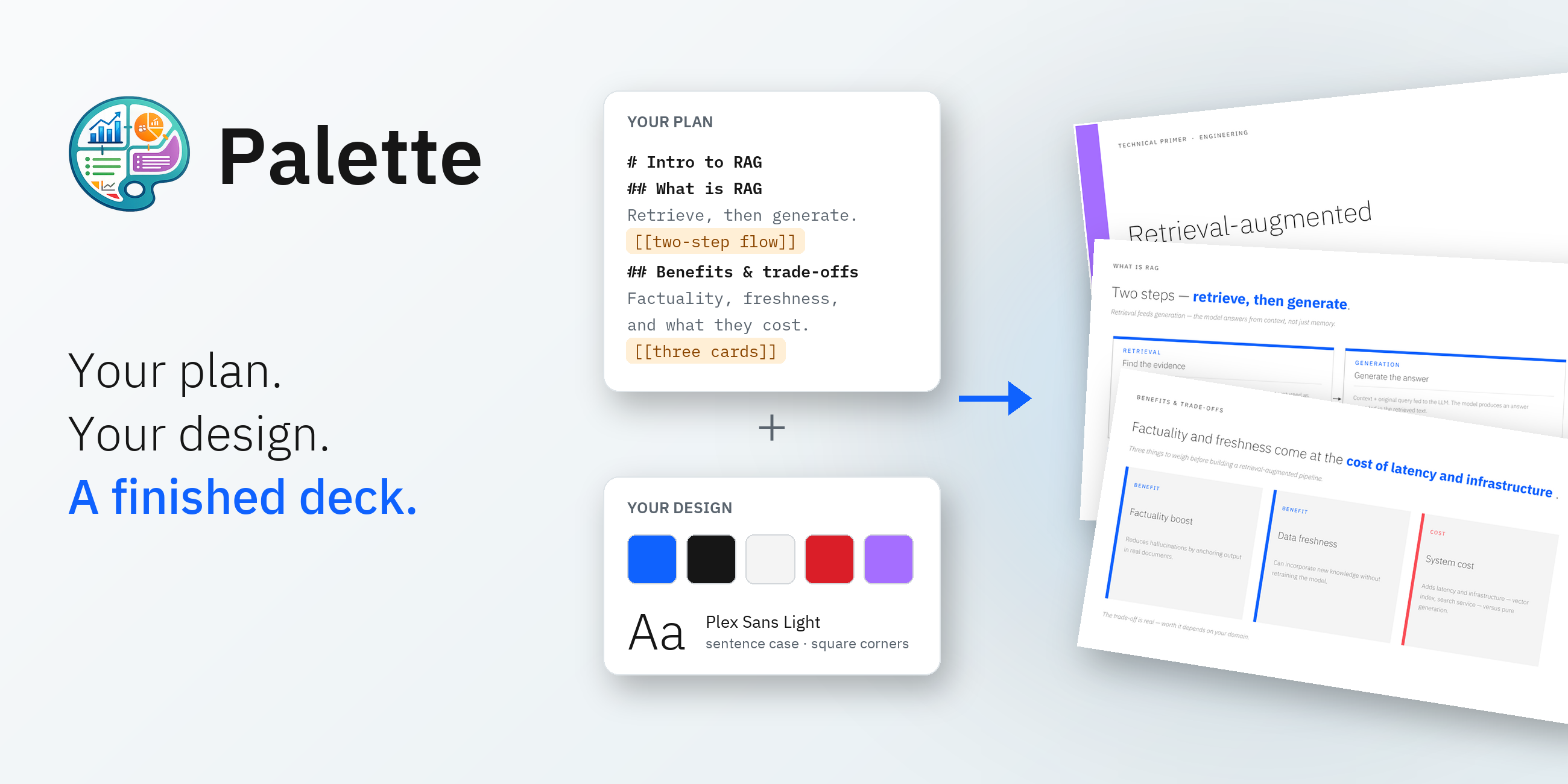
Palette tests one bet: that a small open-weight model, trained on synthetic data in your design language and checked by a harness, can compete with frontier systems while you keep ownership of the result. We fine-tuned a 20B model to build decks the way people do: a designer plans the deck and a coder draws each slide. Its training data follows the IBM Design Language, and on PresentBench it ranks first on two of the three domains we measured. This post covers how we synthesized the data, trained the model and built a harness around it.
A slide deck looks simple, but making one asks a model to do three things small models are bad at.
Source link