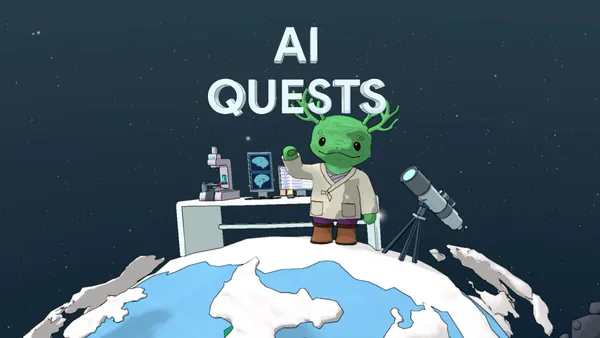
Our third lesson in our AI Quests series, “Polar Peaks,” teaches students key AI literacy skills while delving into neuroscience.
Google Research and the Stanford Accelerator for Learning just launched "Polar Peaks," an interactive quest that teaches students ages 11 to 14 how to map the human brain using artificial intelligence. This program helps students practice data cleaning and model testing while emphasizing the need for human oversight in technology. You can access new teacher training modules through the Google AI Educator Series to help bring these lessons into your classroom.
Google launched a new game called "Polar Peaks" that lets you act like a scientist to map the human brain using AI. You’ll learn how to solve real-world problems while discovering how to use AI responsibly. It’s a fun way to see how researchers use technology to make big scientific breakthroughs. Teachers even get special training to help you explore these challenges in class.
Today, we’re launching “Polar Peaks”, our third quest in the AI Quests series, created by Google Research and the Stanford Accelerator for Learning to teach students how AI works and how to use it responsibly. AI Quests invites students ages 11 to 14 to step into the shoes of Google researchers to tackle some of humanity’s biggest challenges.
More than 400,000 quests have been completed to date, localized to 10 languages. Alongside the new quest, we’re also releasing training modules for teachers.
In the first two quests, students tackle flood forecasting and eye disease detection, inspired by Google Research’s Flood Forecasting initiative and AI model for diabetic retinopathy screening.
Source link