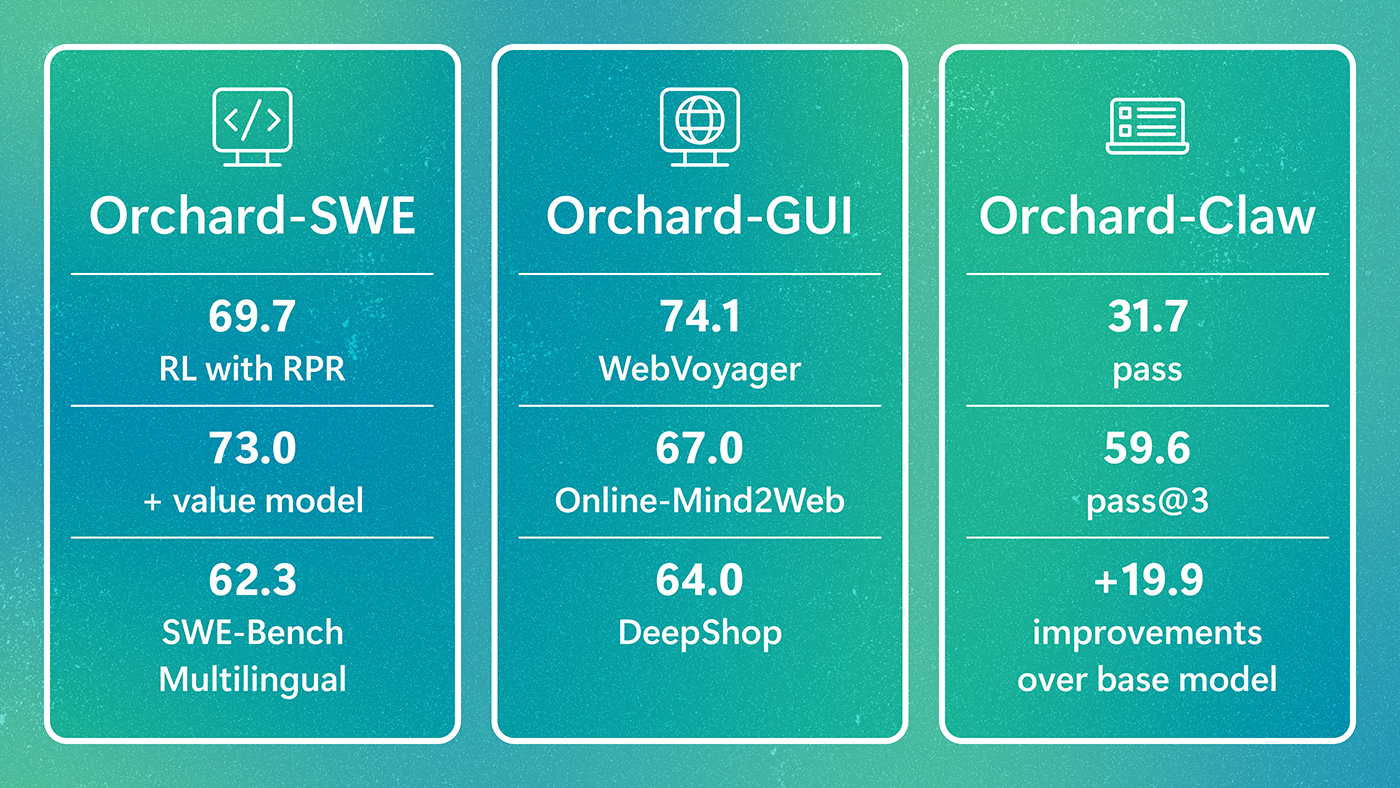
Alongside the models and workflows, the project releases training data and evaluation methods intended to help the broader research community build and study open agentic systems. Artificial intelligence is rapidly moving beyond static question-answering toward autonomous agents that can plan, reason, and act across complex, multistep environments. These systems can fix bugs in complex codebases, navigate the web on a user’s behalf, and manage workflows involving calendars and email.
While there is excitement around agentic AI’s capabilities, the research community faces a persistent bottleneck. Building state-of-the-art agentic systems often requires proprietary infrastructure, including custom sandboxes, closed training pipelines, and proprietary datasets that most researchers and practitioners cannot access or reproduce.
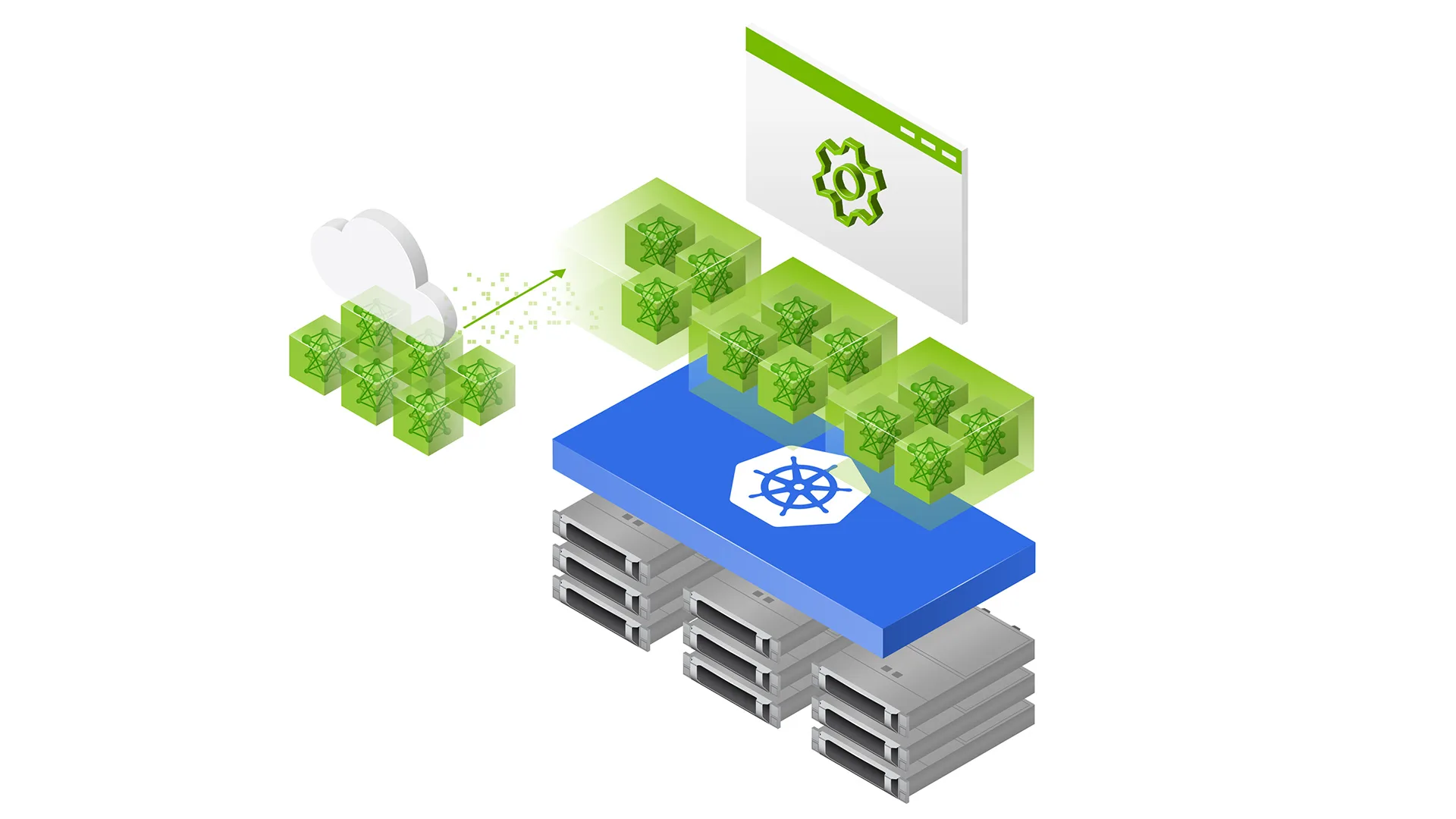
To address this gap, we introduce Orchard (opens in new tab), an open-source framework for scalable agentic modeling. At the center of Orchard is Orchard Env, a lightweight, Kubernetes environment that provides reusable isolated components for running and building agents at scale—from collecting training data to reinforcement learning rollouts and evaluation.
Unlike many existing frameworks, Orchard Env is designed to support different agent systems and task types without modification. The same service can support software-engineering agents, web-browsing agents, and personal-assistant agents across domains.
To demonstrate this approach, we are releasing three domain-specific training recipes—Orchard-SWE, Orchard-GUI, and Orchard-Claw. (opens in new tab) We are also releasing the training data and evaluation methods used to build them.
Listen as members of the research community at Microsoft discuss the beliefs that animate their research, the experiences and thinkers that inform it, and the positive human impact it targets.
Source link