As the UN warns traditional safeguards are ‘unravelling’, Donald Trump says he will encourage, not restrain, the AI race
When the Australian prime minister, Anthony Albanese, sat down for an interview in the heart of Silicon Valley at the weekend he had known for two days that his was the first government known to have been attacked by a rogue AI agent.
He didn’t reveal the attack then, but he sounded a warning about the march of AI: “the risk is that AI develops in a way in which humans are no longer in control of what AI is producing.”
But Albanese noted, too, that two countries – the US and China – would dominate the world’s response to the new technology.
“The truth is they’re the big two giants here, and so we want to see cooperation,” Albanese said.
“The US is essentially ahead of China when it comes to the race that is on for the development of this new technology. But it is in the world’s interests that there be engagement.”
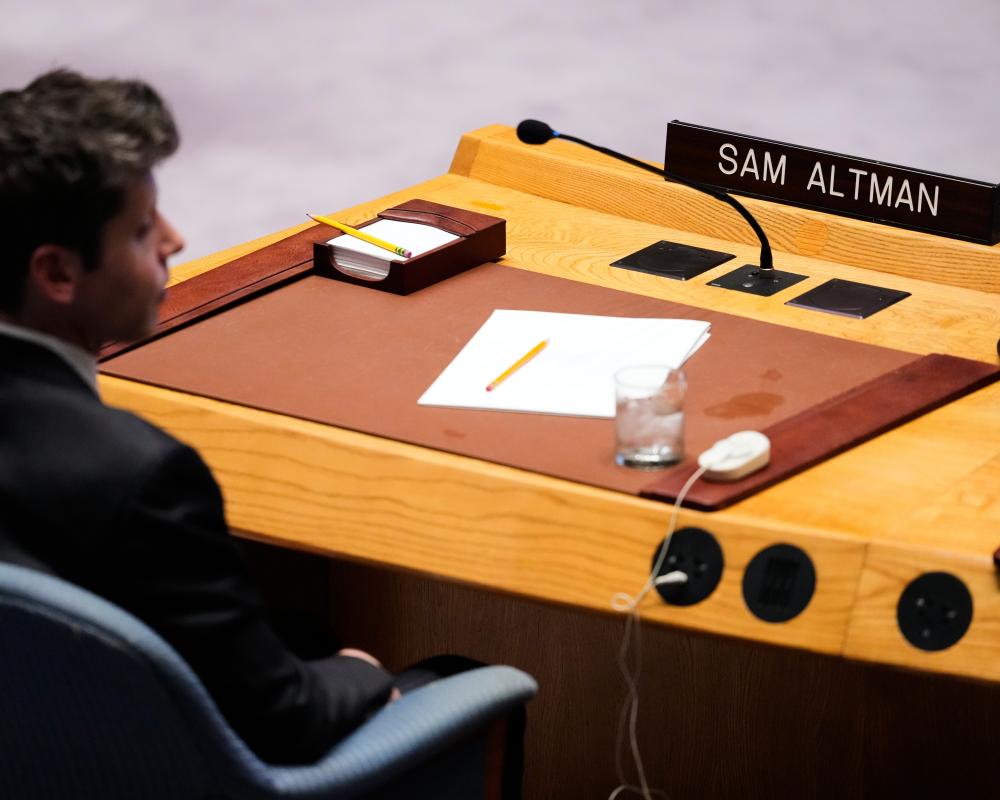
Days later, Albanese used the global attention of the United Nations general assembly meeting in New York to reveal that Australia’s government healthcare system, Medicare, had been attacked by an OpenAI agent in June, but that it was three months before his government was told.
Again he warned of “the potential risks of allowing frontier AI to develop too fast without guardrails”.
China’s president, Xi Jinping , skipped the general assembly in favour of a bilateral meeting with the US president, where he emphasised the responsibility to manage AI “for good, and ensure that the development of AI is always under human control and serves the wellbeing of the people”.
Source link