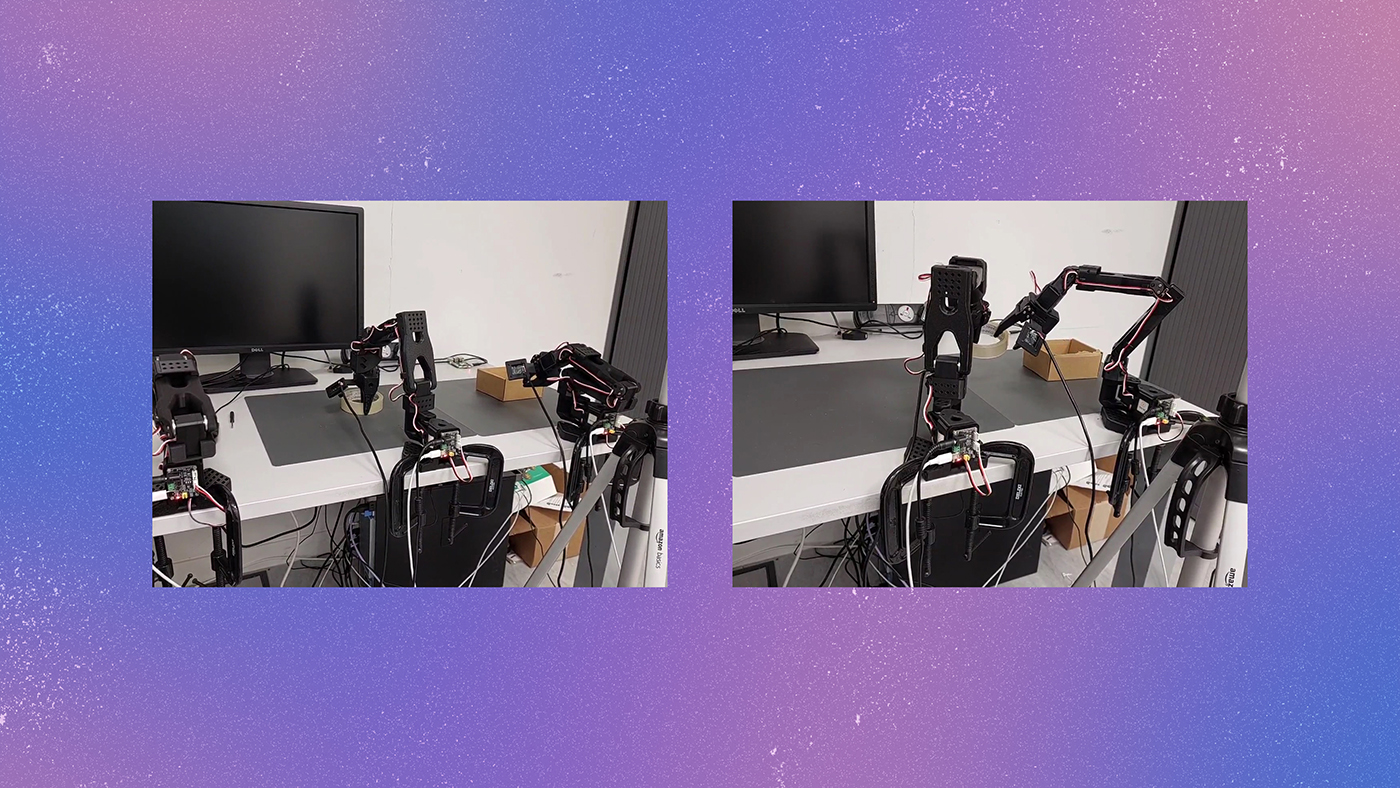
Readily-available physical AI, with robotics assisting users in manufacturing, home, and warehouses scenarios, holds immense potential to improve safety, productivity, and assistance across a wide range of tasks. In many ways, AI for the physical world represents a major frontier for AI . Physical AI must operate in open, unpredictable environments, interact with both other robots and people, and work with a diversity of embodiments. Realizing this vision requires advances along three dimensions: robot hardware, embodied AI models, and systems infrastructure for training and inference. While robot hardware and the AI models have advanced rapidly in recent years, we turn our focus on a relatively under-addressed aspect: inference infrastructure of physical AI. Enabling robots to effectively and safely operate in the physical world will require sophisticated systems to handle large volumes of distributed inference compute.
, by wiring a GPU to the robot. In this model, the robot’s inference will be confined to the onboard GPU, and provide the robot with the necessary chunks and sequence of actions for the execution of its tasks. While higher-level planning may be performed in the cloud, task execution typically remains tied to the robot itself. We challenge this assumption. As physical AI models grow in size and sophistication, the constraints of onboard compute become increasingly apparent. GPUs consume significant power, reduce battery life, add cost and weight, and can limit the ability to run the latest generation of AI models.
Source link