Robots are helping engineers tackle the complex cleanup of Japan’s Fukushima Daiichi Nuclear Power Station by inspecting damaged reactors and surveying radioactive deposits.
Hitachi has developed specialized robotic systems that can operate in confined spaces, underwater environments, and high-radiation areas, reducing the need for workers to enter hazardous locations.
One system, PMORPH, is a shape-changing crawler designed to inspect the reactor’s primary containment vessel and assess conditions inside.
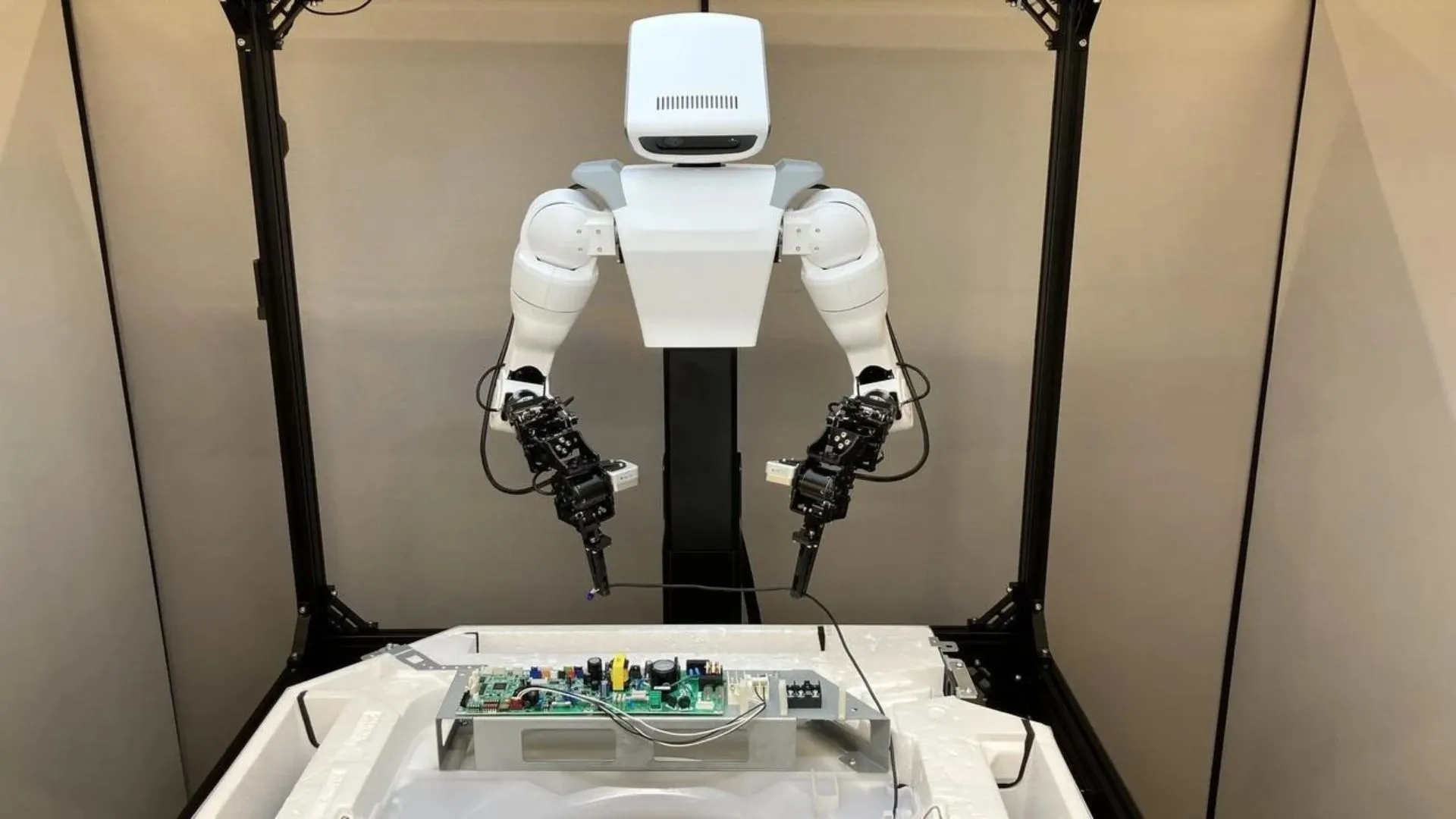
Another, HUMALT, uses flexible robotic arms to perform tasks in high-radiation environments, with potential applications in nuclear fuel debris retrieval.
Recent reports suggest that more than 53,000 Fukushima cleanup workers have exceeded an annual radiation exposure of 5 millisieverts since 2011, with 17 occupational illnesses recognized.
PMORPH passes through a pipe approximately 10 centimeters in diameter in an I-shaped configuration before transforming into a U-shape inside the vessel.
The first PMORPH unit entered the Unit 1 containment vessel in April 2015, using a camera, thermometer, and radiation dosimeter to examine conditions outside the reactor pedestal. A second version, deployed in March 2017, used a winch-lowered sensor unit to investigate submerged deposits and measure radiation levels on the basement floor.
To examine these deposits more closely, Hitachi developed six types of underwater remotely operated vehicles (ROVs). They create three-dimensional maps of deposit surfaces, measure deposit thickness and radiation levels, prevent cable entanglement, and collect physical samples. During an investigation from February 2022 to March 2023, the vehicles gathered information needed to develop a method for recovering deposits inside the Unit 1 containment vessel.
Source link