
This article has been reviewed according to Science X's editorial process and policies. Editors have highlighted the following attributes while ensuring the content's credibility:
Over the past few decades, electronics engineers have developed increasingly sophisticated implantable medical devices. Reliably powering some of these devices, however, can be challenging, particularly when they are based on stretchable materials that move along with the body.
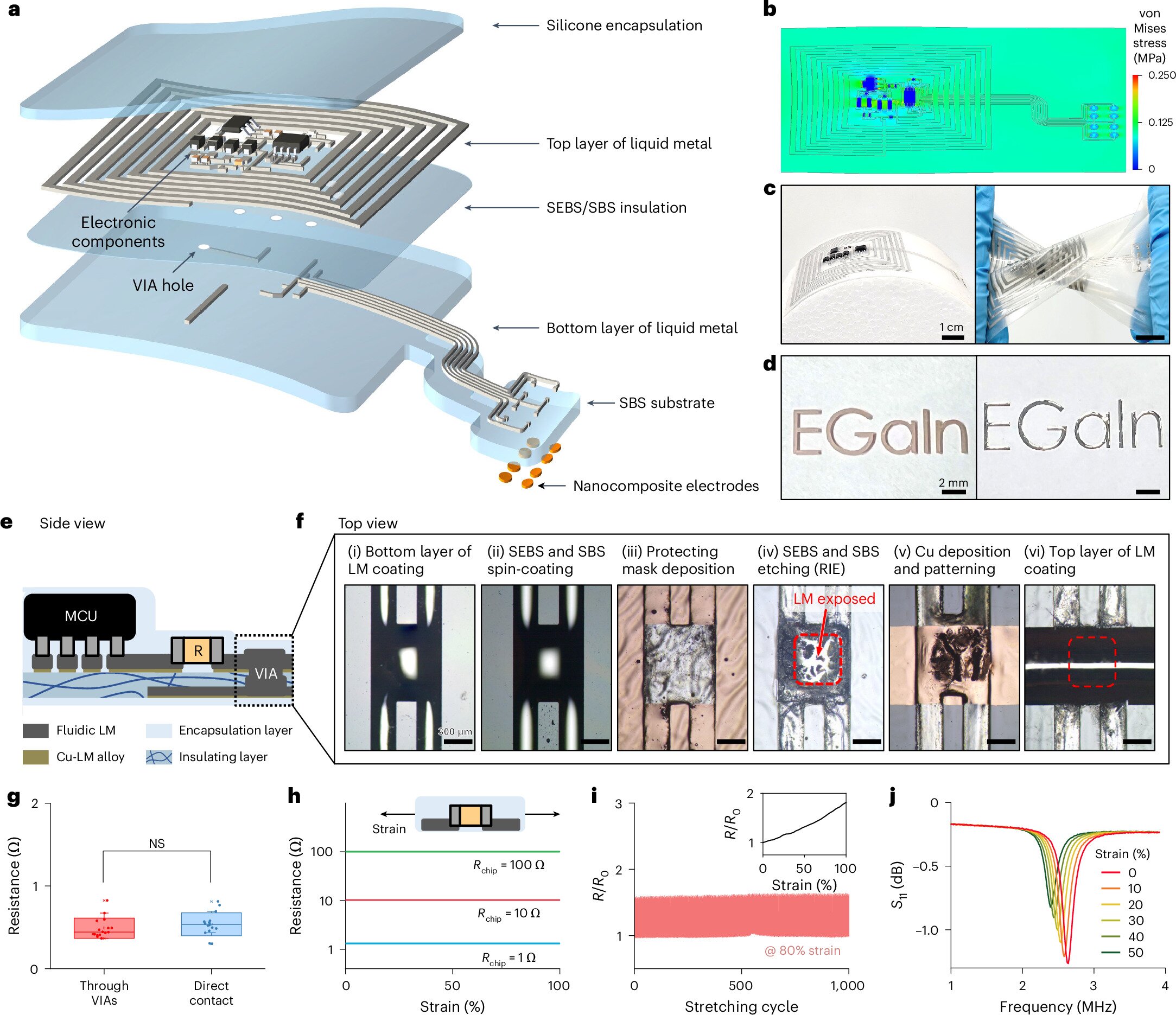
Researchers at the Institute for Basic Science (IBS), Seoul National University and other institutions in South Korea recently developed a new wireless power system that could provide energy to soft implantable devices, even when they are stretching or moving. The new system, introduced in a paper published in Nature Electronics, was initially used to develop a cardiac pacemaker, a medical device that uses electrical pulses to control heartbeats.
"This work began with a practical question: How can we reliably power a wireless implant in a body that is constantly moving?" Dae-Hyeong Kim, senior author of the paper, told Tech Xplore. "Advances in soft electronics have enabled implants to conform to living tissues and accommodate their natural motion, helping reduce mechanical stress and maintain stable contact. However, as these implants move and even stretch within the body, changes in their position and shape can disrupt wireless power delivery."
Kim and his colleagues wanted to overcome the limitations of some existing systems for remotely providing energy to medical implants. Their goal was to develop an adaptive wireless power system that could accommodate deformations and changes in shape, enabling the reliable operation of soft implants when they are inside the body and not in carefully controlled laboratory conditions.
Source link





