Accurate, up-to-date climate projections are essential for planning decisions that enhance the resilience of power grids, protect public health, maximize agricultural yields, and more.
Now, MIT researchers have developed a technique that streamlines the production of fast, trustworthy, and adaptable artificial intelligence models for climate prediction.
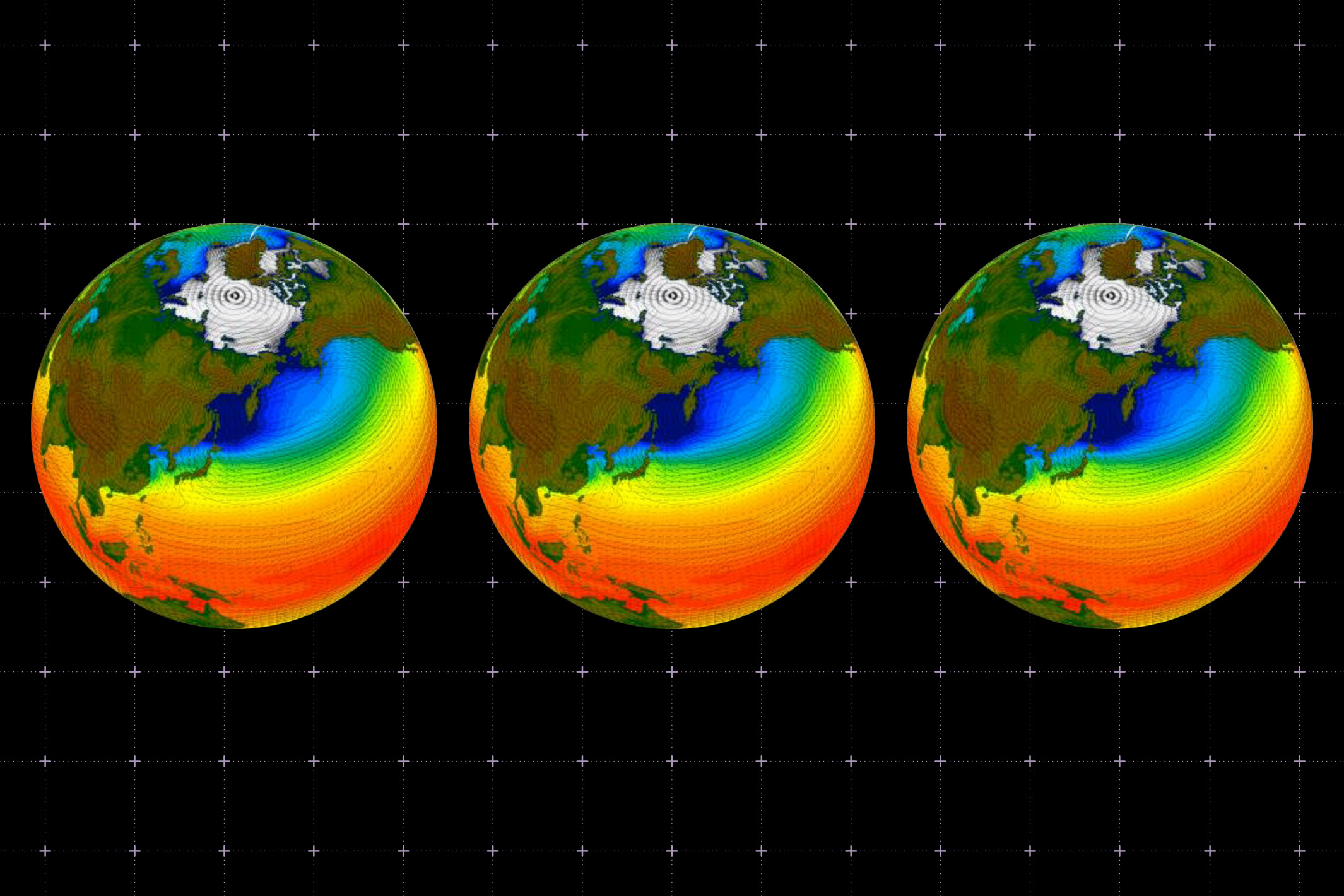
These specialized AI models, known as climate emulators, can rapidly simulate the effects of human activities onto a future climate, predicting impacts on temperatures or sea level, for example.
Because emulators run in a matter of seconds, scientists use them to efficiently test thousands of varied climate scenarios. This provides more reliable estimates and can identify unexpected outcomes of regional interventions.
The MIT researchers developed a training technique that boosts the performance and adaptability of a climate emulator while using only a fraction of the data typically required. This significantly cuts production time for these practical scientific tools.
They show that an emulator trained with a much smaller amount of carefully selected synthetic data accurately predicts outcomes of scenarios it did not see during training, while traditional emulators failed to adapt to new situations.
“Climate emulators are especially well-suited for modeling policy-relevant scenarios. By using our method to generate optimized training data for an emulator, we can speed up the production of much more reliable emulators, so we can better trust their outputs for making policy decisions,” says Christoher Womack PhD ’26, who is now a postdoc at ETH Zurich and lead author of a paper on this technique.
He is joined on the paper by Shahine Bouabid, a postdoc in the MIT Department of Earth, Atmospheric and Planetary Sciences (EAPS); Andrei Sokolov, a research scientist in MIT’s Center for Sustainability Science and Strategy (CS3); Popat Salunke, a postdoc in CS3; Glenn Flierl, a professor of oceanography in EAPS; Sebastian D.
Source link