This article has been reviewed according to Science X's editorial process and policies. Editors have highlighted the following attributes while ensuring the content's credibility:
A new approach to computing has quietly taken shape at Sandia National Laboratories, where researchers have developed a way to store information that could make future electronics more energy efficient.
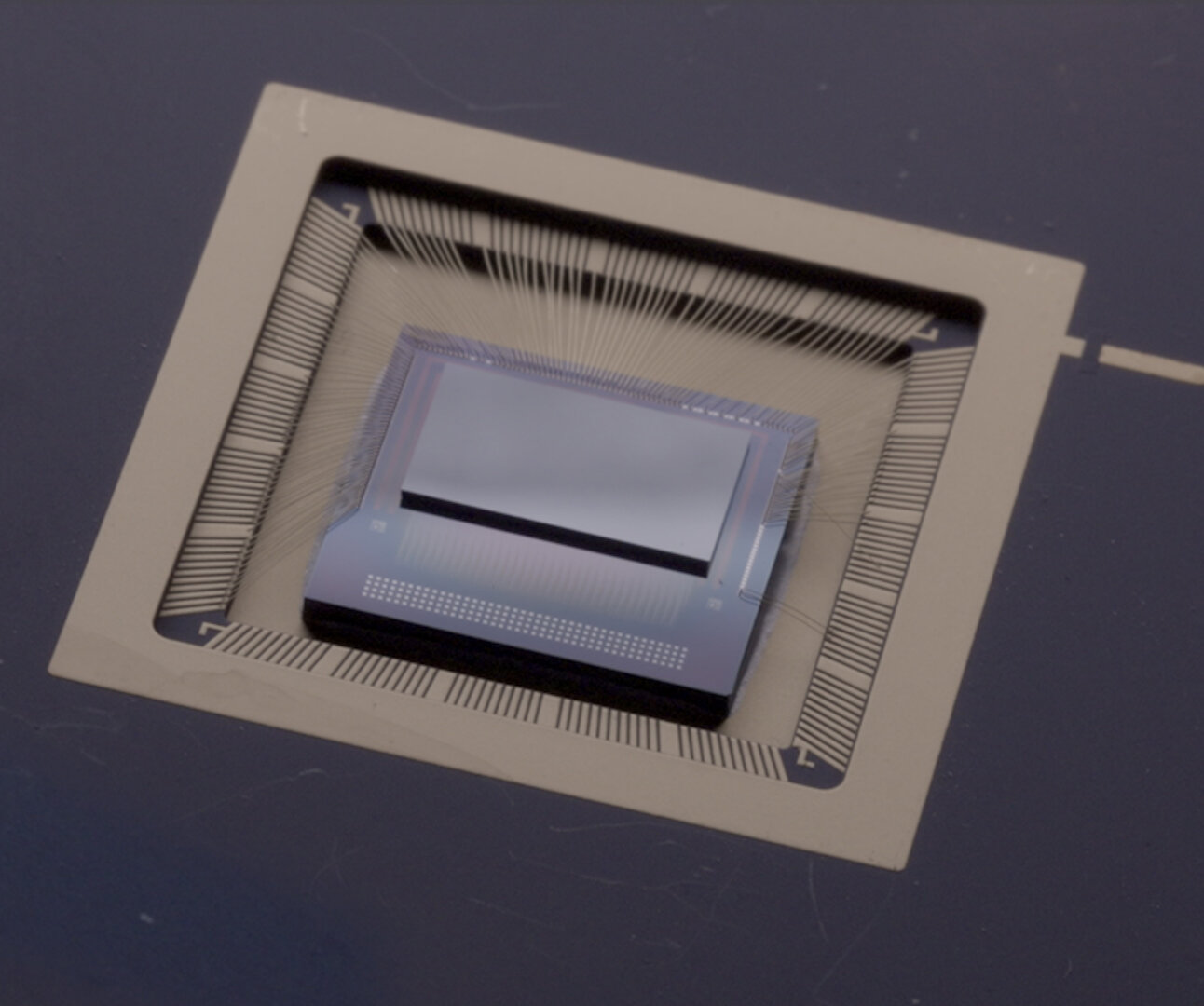
Electro-thermo-chemical random-access memory, or ETCRAM, works differently from conventional digital memory, which represents information as ones and zeros on silicon wafers. Instead of being limited to two values, ETCRAM can store a range of analog values by using localized heating and electrical pulses to change the properties of materials inside the device.
The team, led by Sandia researchers Elliot Fuller and Alec Talin, demonstrated the approach using tantalum and vanadium oxide materials. The result is a memory technology capable of storing information with far greater precision and dynamic range than existing analog memory technologies. Because the device can hold many distinct analog states rather than simply switching between zero and one, researchers are exploring whether it could perform some computing tasks with less energy.
"The technology that we've developed is designed to overcome a limitation of our existing computing technology to really improve energy efficiency," Fuller said. "ETCRAM is able to achieve 100 times higher precision than existing state-of-the-art technology—and at least three orders of magnitude greater dynamic range. That's the value of a number that you can store in analog."
That potential matters for the nation as the amount of energy required for computing continues to grow.
Source link