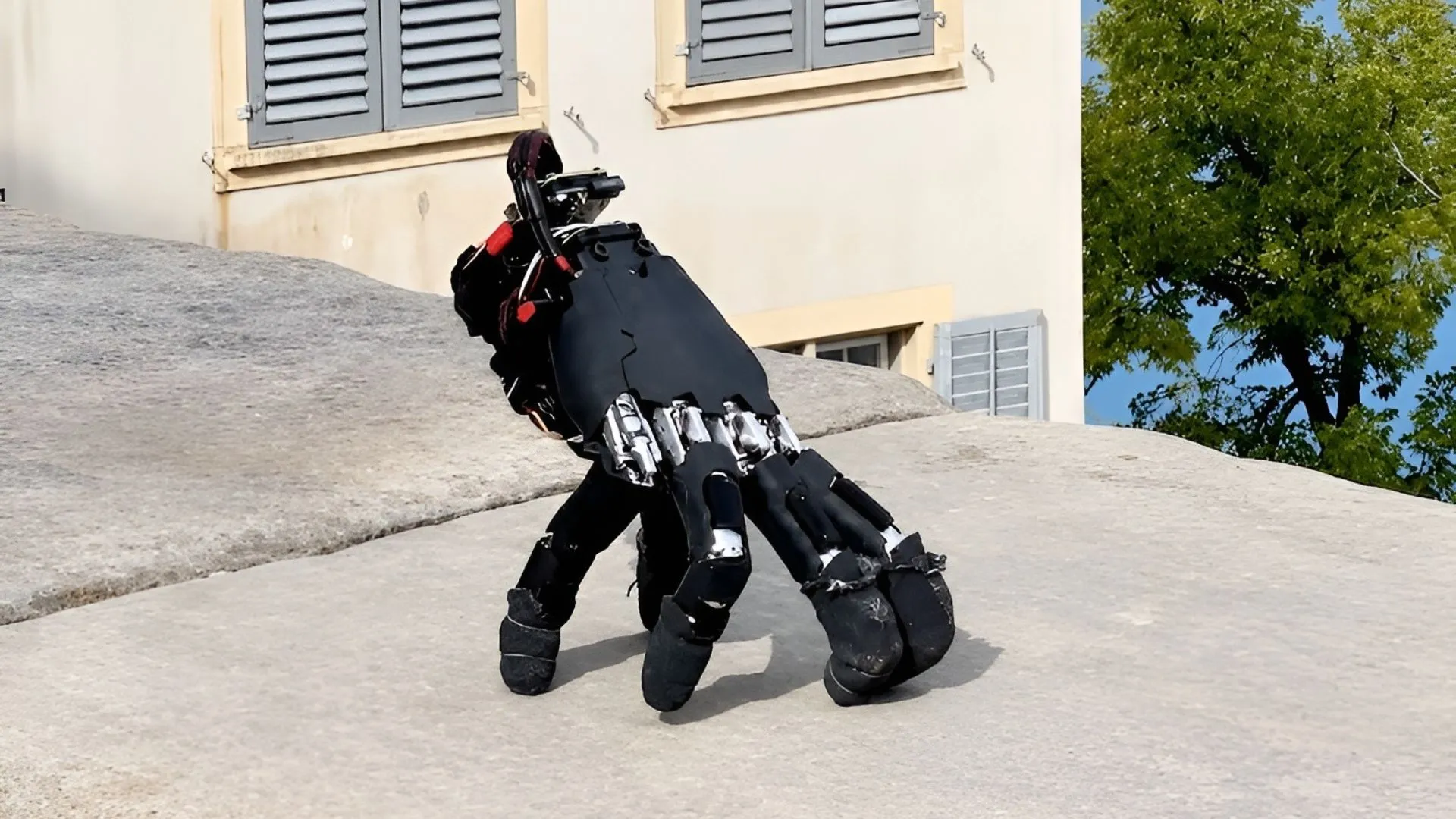
Researchers at the New Jersey Institute of Technology (NJIT) have developed a dexterous robotic hand designed to make advanced manipulation more accessible. The PHD Hand combines 3D-printed components with relatively simple mechanical systems. Its design aims to reduce manufacturing costs and maintenance without sacrificing functionality.
Associate Professor Cong Wang and doctoral student Neel Adwani developed the hand. Their research paper will appear at the IEEE Humanoids conference in December 2026. It examines the hand’s mechanical design, movement capabilities, and AI-assisted control.
Wang’s path toward the design began during a hospital stay in 2024. He spent that period without access to phones, computers, or other camera-equipped devices. A notebook and pen became his primary tools for developing ideas.
His experience also changed how he viewed robotic manipulation. Watching medical professionals perform routine tasks made him consider the limitations of existing robotic hands.
“Every small task can be a huge challenge for the robot hands today,” Wang said. He had already explored robotic manipulation through an earlier chopsticks project.
Wang also saw an opportunity to rethink the engineering behind commercial dexterous hands. He considered many existing models too expensive, fragile, and difficult to maintain. His goal became creating a simpler equivalent of the Ford Model T.
After returning to campus, Wang shared his concept with Adwani. Adwani subsequently led the development team. Research assistant Muhaiminul Akash, undergraduate Saffia Ouali, and high school student Ethan Liu also contributed.
Most industrial robotic hands rely on tendon-driven mechanisms. These systems offer considerable dexterity but often require expensive components and regular maintenance.
Source link