Hewlett Packard Enterprise (HPE) plans to run what it describes as the first high-performance computing benchmarks on the Moon’s surface, using a compact system designed to support autonomous navigation, data processing, and advanced computing during a mission scheduled for late 2026.
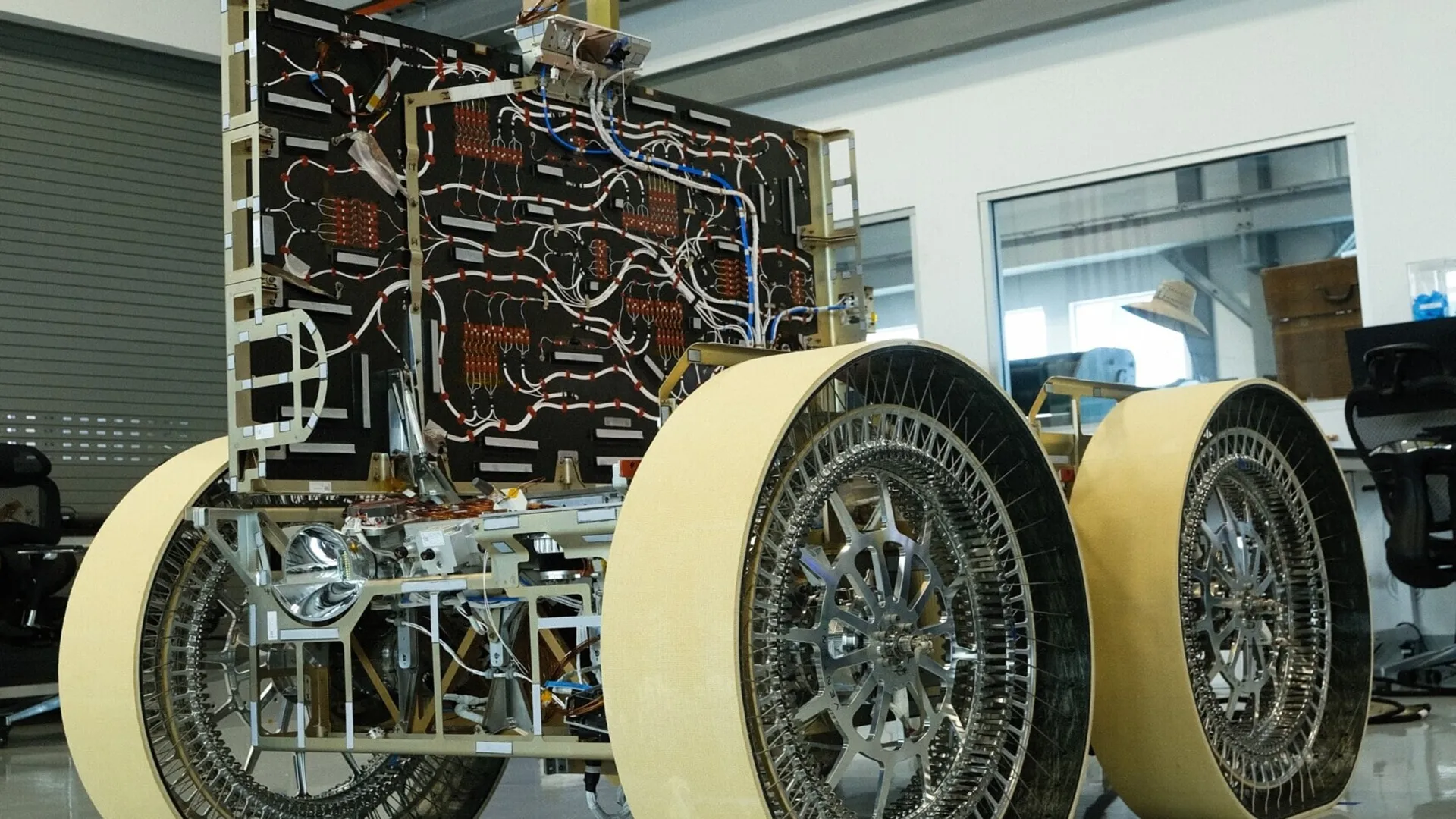
The company announced HPE Spaceborne Computer-4 on October 20. The system will travel aboard Astrolab’s FLIP rover as part of a mission under NASA’s Commercial Lunar Payload Services (CLPS) initiative.
The spacecraft is expected to land near the Moon’s south pole, where the computer will undergo tests to determine whether advanced computing systems can operate reliably in the lunar environment. The experiments will include language models, image analysis, and laser-based mapping.
The project aims to address a major challenge for future lunar missions: processing information close to where it is collected rather than relying entirely on computing resources on Earth. Local processing could help rovers analyze terrain, interpret sensor readings, and support decisions without sending every piece of data back to Earth.
HPE Spaceborne Computer-4 is a lightweight, self-contained module equipped with a low-power central processing unit (CPU) and graphics processing unit (GPU).
The system uses a fanless design intended for the Moon’s harsh conditions. It also incorporates solid-state drives using flash memory from Japanese storage manufacturer Kioxia.
During the mission, the computer will run high-performance computing benchmarks to evaluate its capabilities under lunar conditions. These tests will measure how effectively the hardware handles demanding workloads, although HPE has not disclosed specific processing speeds or expected benchmark results.
The system will also test large language models using retrieval-augmented generation, a technique that allows models to retrieve information from documents before generating responses.
Source link