The crack of a bat accompanied by a roar from the crowd can capture a baseball fan’s attention, even if they miss seeing the home run. Humans may be visual creatures, but we also perceive the world around us by listening to it.
To improve artificial perception, MIT Professor Paris Smaragdis SM ’97, PhD ’01 seeks to make machines that can hear and understand sound even better than humans.
A machine with super-human hearing could rapidly pinpoint the location of a traffic accident by listening for squealing tires and crunching metal, or identify when an industrial drill might break while it is boring through dense bedrock to dig a geothermal well.
“I like to say that I do the same thing the computer vision folks do, but instead I do it for hearing,” says Smaragdis, a professor with joint appointments in the Music and Theatre Arts program of the School of Humanities, Arts, and Social Sciences, and the Department of Electrical Engineering and Computer Science in the School of Engineering and the MIT Schwarzman College of Computing.
His research group explores areas like machine learning for sound source separation, smart devices that can augment the audio surroundings of humans, and better tools to help people understand, manipulate, analyze, and create music.
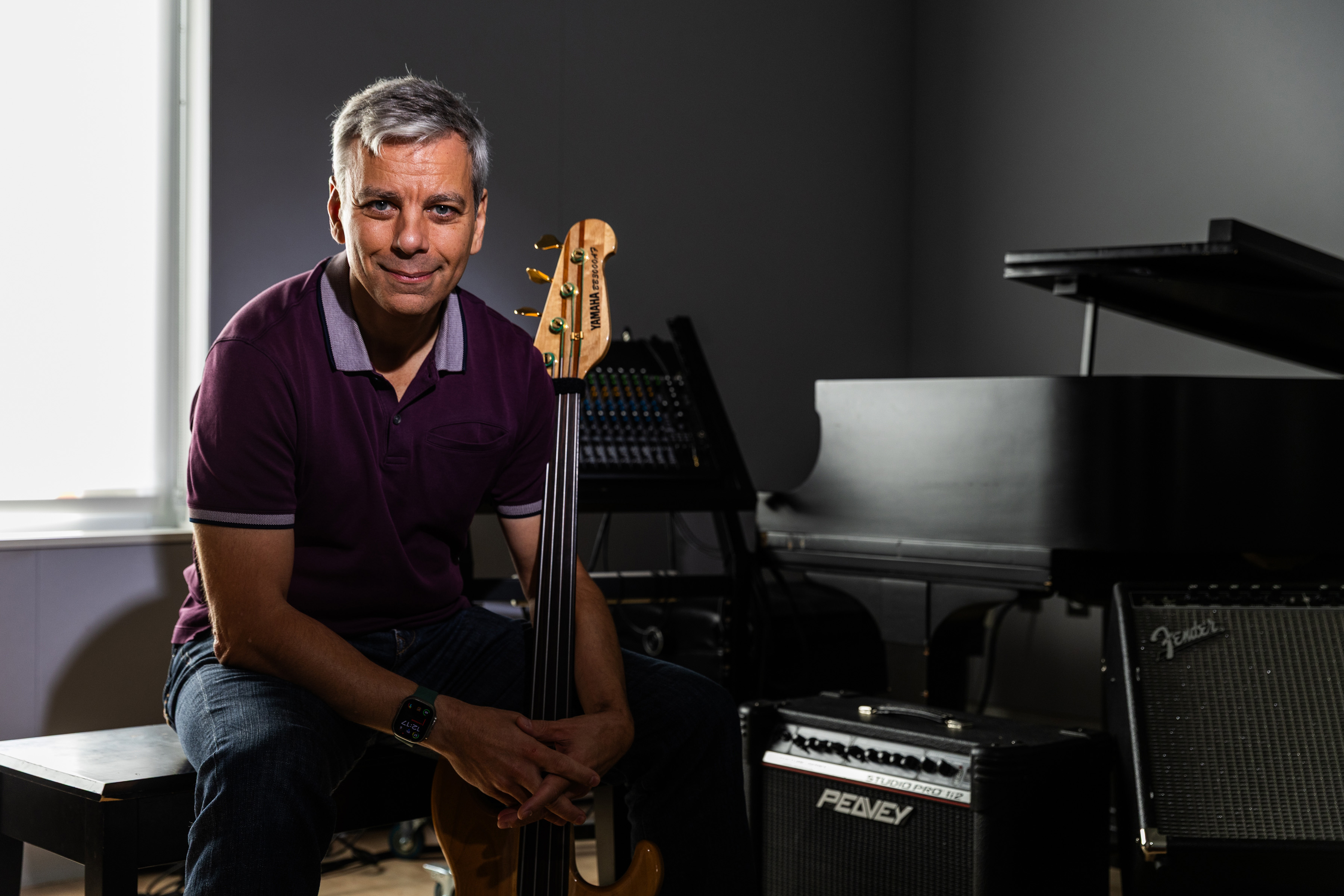
“Having had a musical background, I’ve been interested in examining these ideas. What does it take to make machines understand sound? There is a huge domain of applications for machines that can listen,” says Smaragdis, who joined MIT in 2025.
Source link