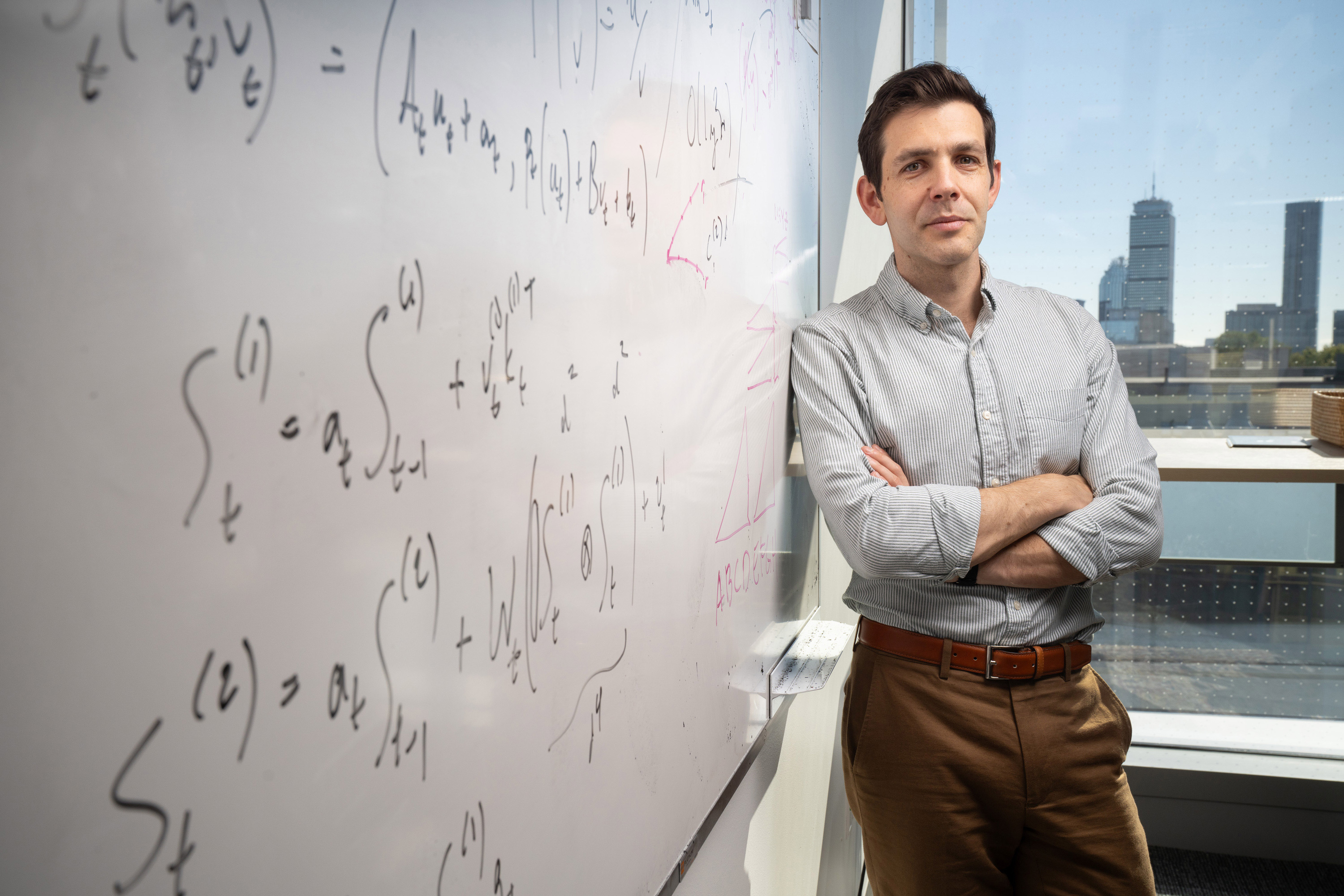
When deploying deep learning models in high-stakes scenarios, researchers would like to understand how they work. Today, this requires unraveling an enormously complex network of internal processing nodes to understand what the model knows and how it will likely behave in practice.
The newly tenured associate professor develops techniques that enable artificial intelligence models to communicate accurately about what they learned from their training data, in language humans can understand.
“Rather than needing to use all these external tools to try and understand what is going on under the hood, maybe we can train models to talk about themselves in a way that is accurate,” says Andreas, an associate professor in the Department of Electrical Engineering and Computer Science (EECS) and a member of the Computer Science and Artificial Intelligence Laboratory (CSAIL).
By studying how machines come to understand language, Andreas and his group work toward building intelligent systems that can learn about the world from human guidance and communicate effectively with human collaborators. They develop methods to make the training process more natural and efficient, so AI models learn in a way that is more like human learning.
Ultimately, he and his group want to help people design more accurate and robust deep-learning models that are better suited for their intended application.
“We used to debug systems just by looking at their parameters and figuring out whether they make sense or not. Now, we need ‘mind-reading tools’ that can take this really complicated neural computation and translate it for us because it is just not in a language that we, as humans, know how to speak,” he says.
Source link