
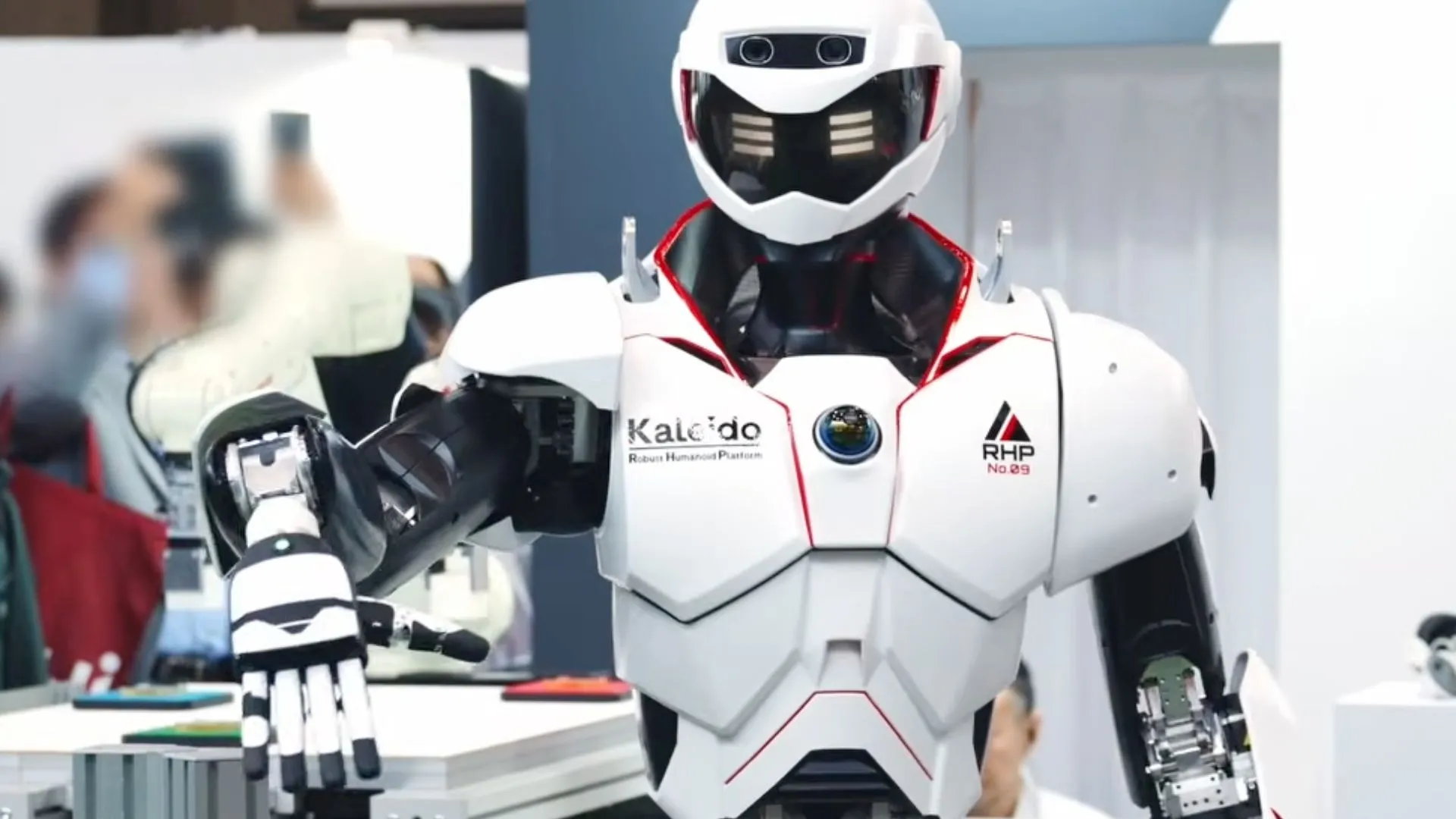
Kawasaki plans to integrate Japanese physical AI developer Noetra’s physical AI platform into its Kaleido humanoid robot.
The move would make Kaleido the first planned adopter of Noetra’s physical AI technology, according to Nikkei Asia.
Kawasaki is expected to initially use a combination of remote human control and AI as the system develops toward greater autonomy.
The company’s plans reflect a gradual expansion of humanoid robots into industrial operations, beginning with relatively simple tasks before potentially moving to more complex work such as assembly and other manufacturing activities.
Kawasaki Heavy Industries is set to add Noetra’s platform into its Kaleido humanoid robot, with deployment targeted as early as 2030.
Kaleido has been under development since 2015 and is being positioned for industrial applications. Kawasaki’s initial plans focus on relatively simple tasks such as facility patrols and transporting parts in factories and warehouses. The company is also discussing the robot with potential customers in the automotive and semiconductor industries.
The transition to autonomous operation is expected to happen in stages. Early deployments would combine remote human control with AI, allowing operators to supervise or control the robot while Noetra’s physical AI capabilities handle an increasing share of tasks. As the underlying AI develops, Kawasaki aims to reduce the need for human intervention and eventually achieve fully autonomous operation, reports Humanoids Daily.
The approach reflects a technical challenge facing humanoid robots in industrial settings. Performing a predefined movement in a controlled environment is considerably different from operating autonomously around people, equipment and changing surroundings.
Source link





