This article has been reviewed according to Science X's editorial process and policies. Editors have highlighted the following attributes while ensuring the content's credibility:
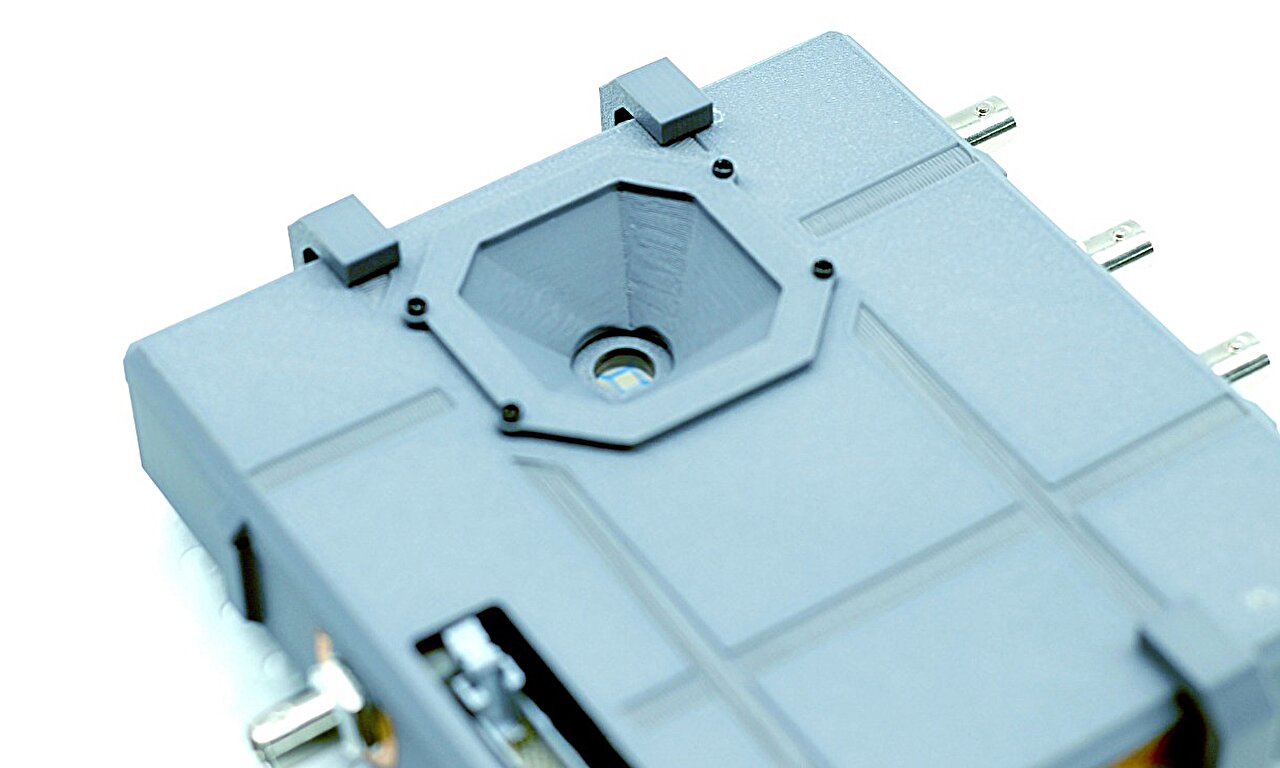
A working prototype that can see, remember and interact with the world like the human brain could one day underpin smart bionic eyes while using far less energy than today's technologies. The invention from RMIT University combines sensing, memory and information processing within the same system, reducing the need to constantly move data between separate sensors, memory banks and processors.
While still an early-stage research demonstration, the neuromorphic vision innovation could dramatically reduce the amount of data and energy required to perform complex visual tasks.
RMIT has an international patent application filed under the Patent Cooperation Treaty (PCT) for the invention.
Led by Professor Sumeet Walia at RMIT's Centre for Opto-electronic Materials and Sensors (COMAS), the work builds on previous research involving super-thin semiconductor materials that could underpin advanced robotics and low-energy AI systems.
"Nature has already solved many of the challenges we're trying to address in electronics," Walia said.
"The human eye and brain work together incredibly efficiently, processing vast amounts of information using remarkably little energy. Our research is helping lay the foundations for technologies that work in a more similar way."
Unlike a conventional camera, which captures every frame and sends large amounts of information elsewhere for processing, the RMIT prototype is designed to perform much of that work where the information is collected.
The prototype is built on a series of advances using the atom-thin semiconductor molybdenum disulfide (MoS₂).
Source link