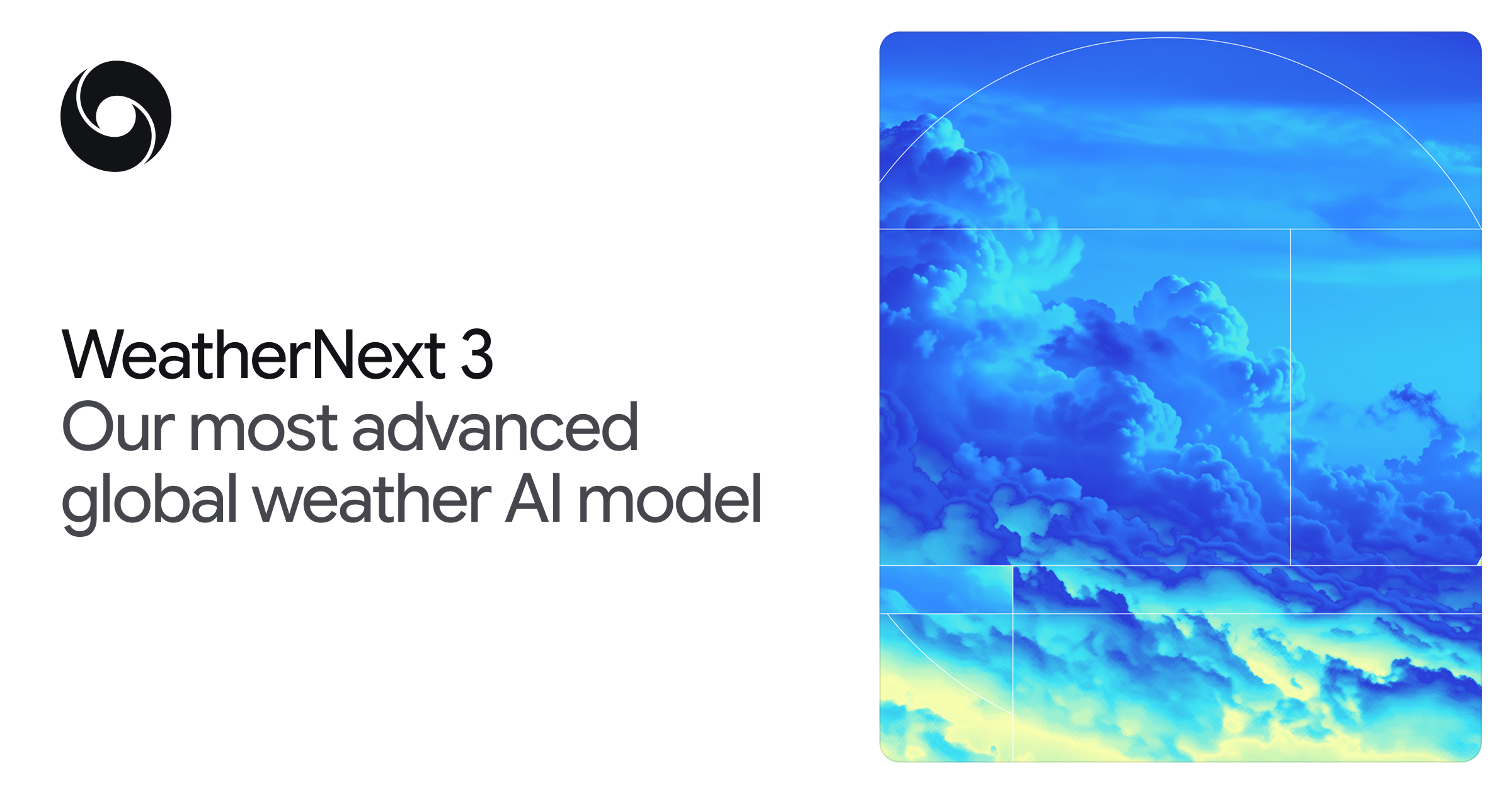
Our flagship AI weather forecasting model now includes real-time satellite data, hourly refreshes, higher resolution, precise precipitation forecasting, and clean energy variables. It’s now integrated across Search, Gemini, Maps, Google Maps Platform, and Cloud.
Google has launched WeatherNext 3, an advanced AI model that provides more accurate, high-resolution weather forecasts by using real-time satellite data instead of traditional physics simulations. This update delivers hourly, localized predictions that are five times sharper than previous versions, offering significant improvements for agriculture, renewable energy, and daily planning. You can now access these enhanced forecasts directly through Google Search, Maps, and Gemini, or integrate the data into your own projects via Google Cloud.
Google just released WeatherNext 3, an AI model that makes weather forecasts much faster and more accurate. It uses live satellite data to update every hour, giving you a much sharper picture of what’s happening outside. This helps people plan better for things like storms or sunny days. It’s now powering the weather info you see in Google Search and Maps.
Every day, the weather influences billions of decisions. Some are as simple as grabbing an umbrella before heading out the door, but others are far more consequential. Wind, rain, and extreme weather events, like heatwaves and droughts, have cascading impacts across agriculture, global supply chains, clean energy production, and national economies.
In recent years, AI has revolutionized weather forecasting, using historical records to make faster and more accurate predictions than traditional methods. Yet predicting highly local and rapidly changing weather has remained a challenge.
Source link