Efficiency highlights
Compared to other open omni models with the same interactivity, Nemotron 3 Nano Omni delivers 7.4x higher system efficiency for multi-document use cases and 9.2x higher system efficiency for video use cases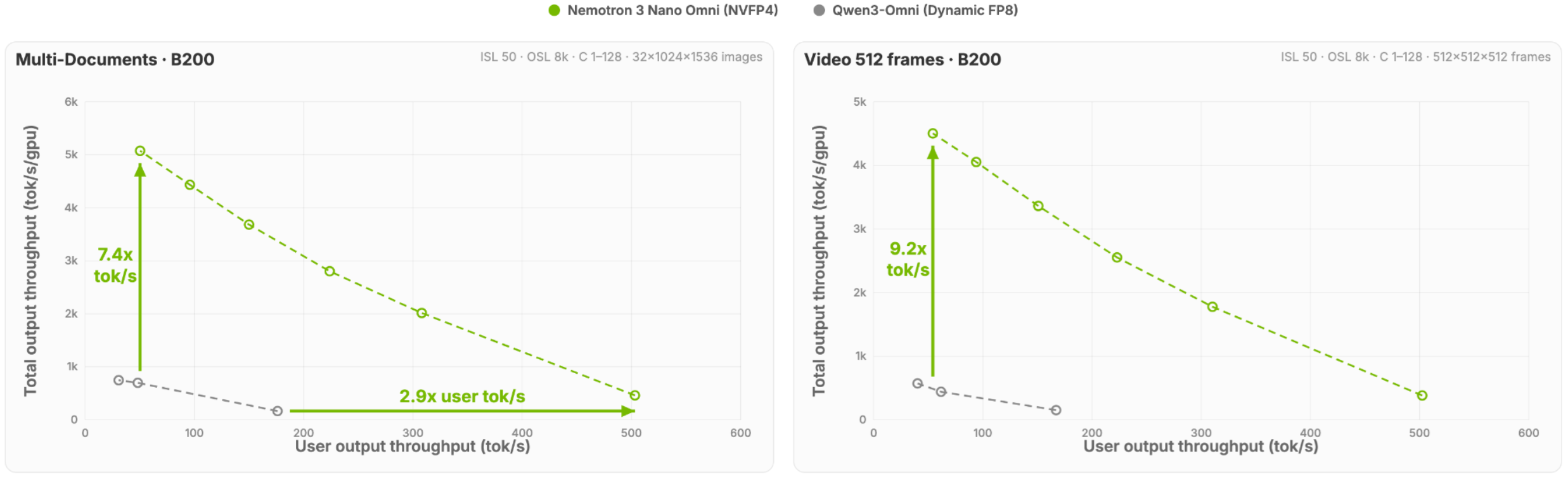 Figure 1. Total system throughput for multi-document and video use cases sustained by each model at a fixed per‑user interactivity threshold (tokens/sec/user)
At a high level, Nemotron 3 Nano Omni is aimed at five classes of workloads:
This is not only about OCR. The model is positioned for long, messy, high-value documents where understanding depends on layout, tables, figures, formulas, section structure, and cross-page references. Think contracts, technical papers, reports, manuals, multi-page forms, or compliance packets. The model can handle 100+ page documents.
Nemotron 3 Nano Omni includes strong speech understanding capabilities that enable high-quality transcription across diverse audio conditions. It handles long-form audio with varying speakers, accents, and background noise. These capabilities can be integrated into broader workflows, allowing spoken content to be transcribed, analyzed, and combined with other modalities for tasks like summarization, question answering, and cross-modal reasoning.
Many enterprise and developer workflows depend on mixed audio and visual evidence: screen recordings with narration, training videos, meetings with slides, tutorials, product demos, customer support captures, and long-form video archives. Nemotron 3 Nano Omni is built to reason over those inputs jointly.
The Nemotron 3 Nano Omni model is specifically trained for agentic computer use, enabling it to assist with tasks in graphical user interface (GUI) environments. Its capabilities include interpreting screenshots, monitoring the state of the user interface, grounding its reasoning in on-screen visuals, and helping with action selection or workflow automation.
Source link