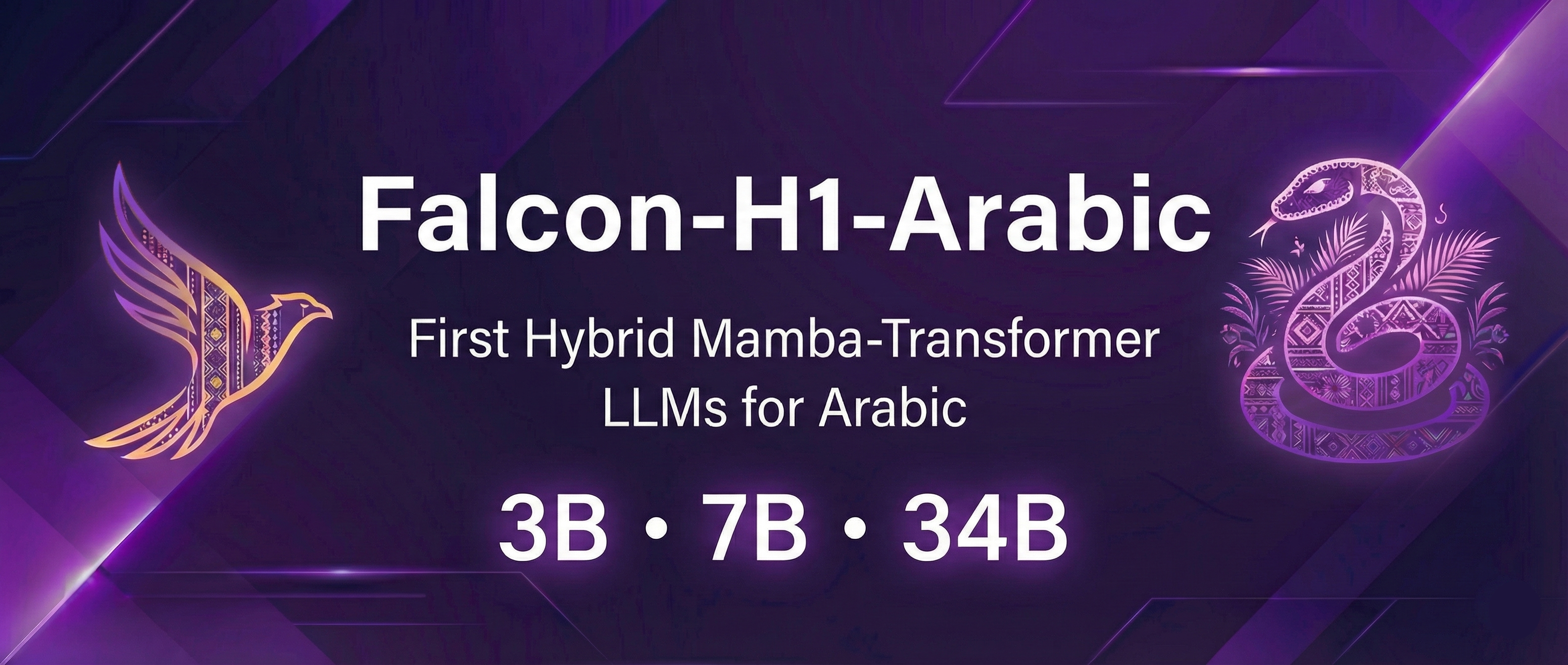
The journey of building world-class Arabic language models has been one of continuous learning and iteration. Today, we're excited to announce Falcon-H1-Arabic, our most advanced Arabic language model family to date, representing a significant leap forward in both architecture and capabilities. This release embodies months of research, community feedback, and technical innovation, culminating in three powerful models that set new standards for Arabic natural language processing.
When we launched Falcon-Arabic a few months ago, the response from the community was both humbling and enlightening. Developers, researchers and students across the Arab world used the model for real use cases, pushing them to its limits and providing invaluable feedback. We learned where the model excelled and, more importantly, where it struggled. Long-context understanding, dialectal variations, mathematical reasoning, and domain-specific knowledge emerged as key areas requiring deeper attention.
We didn't just want to make incremental improvements, we wanted to fundamentally rethink our approach. The result is Falcon-H1-Arabic, a model family that addresses every piece of feedback we received while introducing architectural innovations that were previously unexplored in Arabic language modeling.
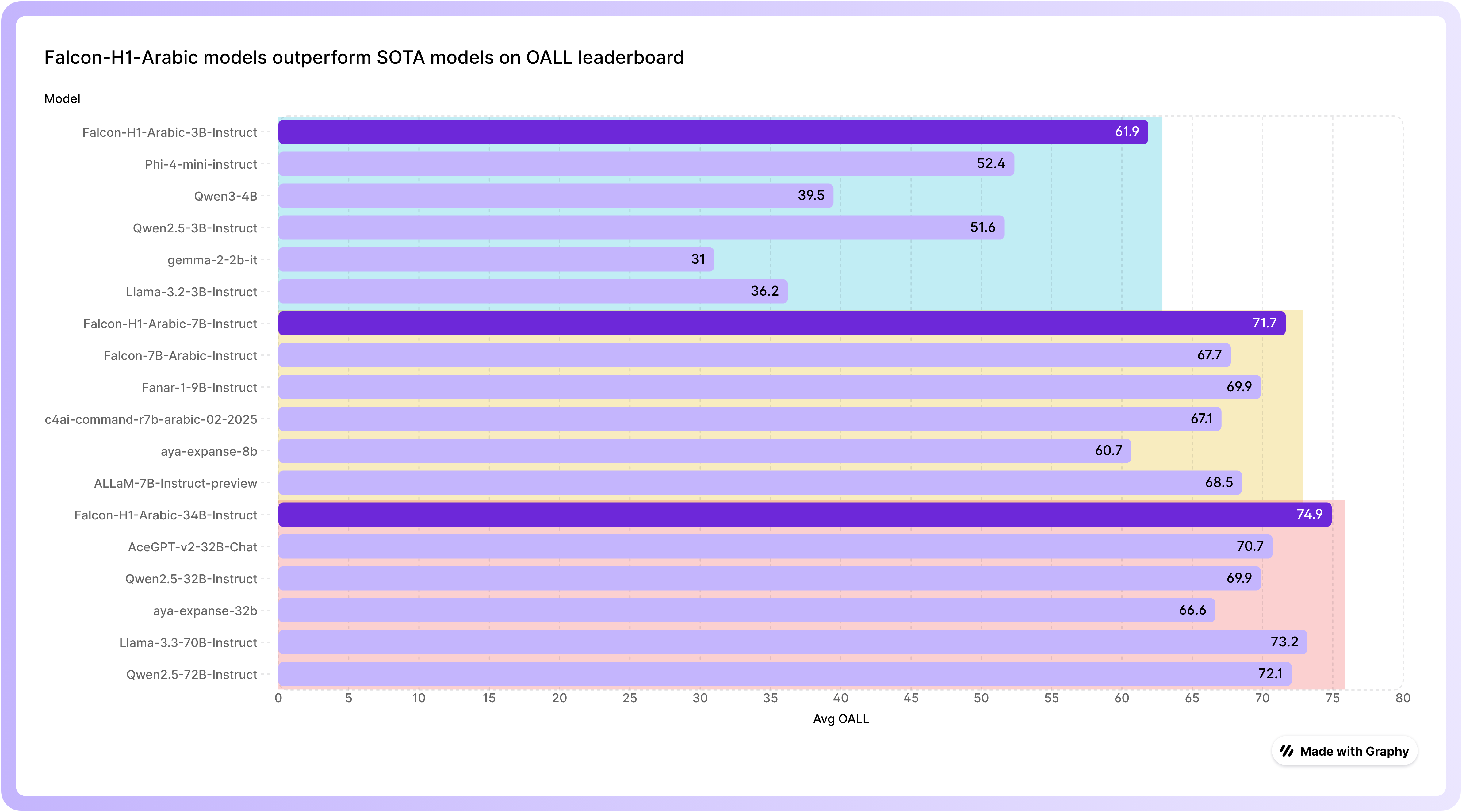
Falcon-H1-Arabic 3B, 7B, 34B models outperforming all SOTA models of similar sizes and sometimes bigger.
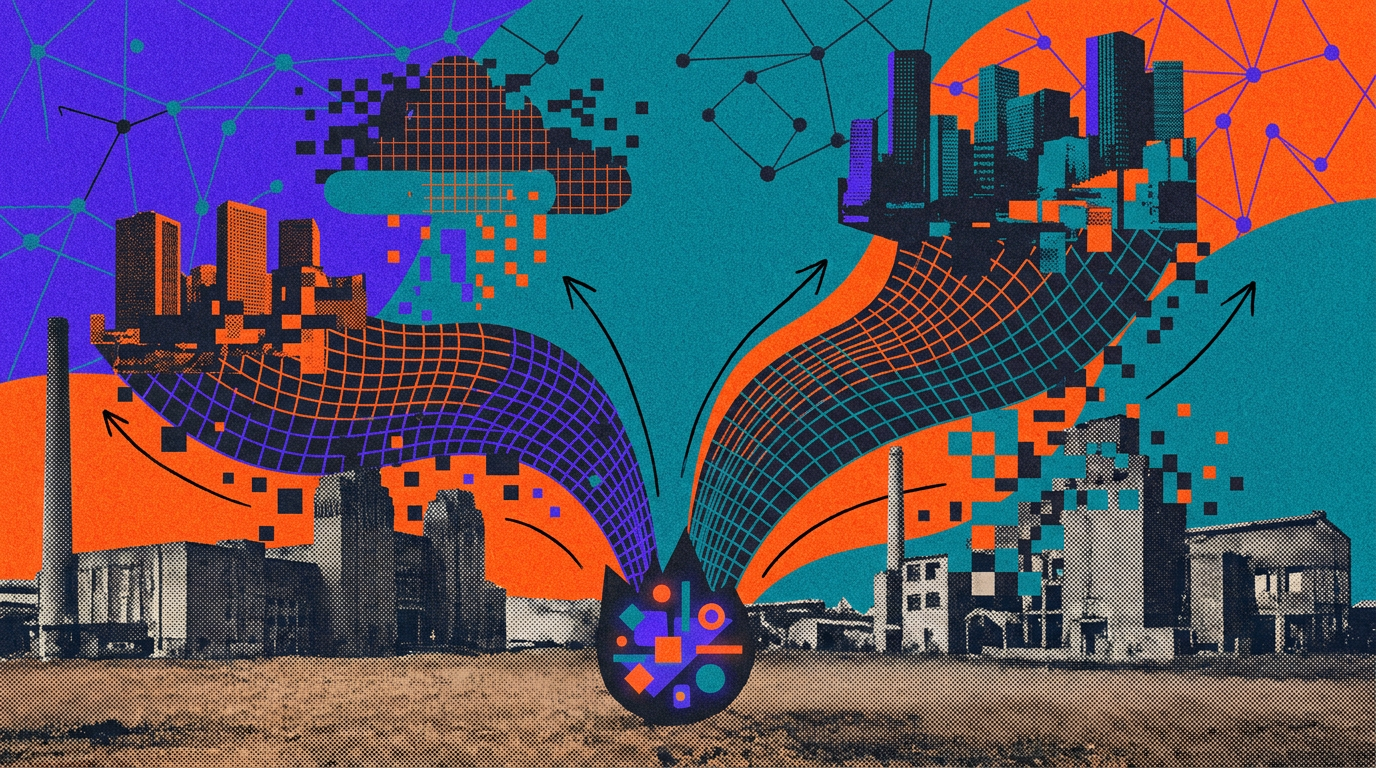
Falcon-H1-Arabic is built on the Falcon-H1 hybrid architecture, which integrates State Space Models (Mamba) and Transformer attention within every block. Both components run in parallel and their representations are fused before the block’s output projection. This design provides the linear-time scalability of Mamba for extremely long sequences while preserving the precise long-range modeling capabilities of attention.
Source link