If you've built AI applications that combine multiple models or processing steps, you know the pain: chaining API calls, debugging pipelines, and losing track of intermediate results. When something goes wrong in step 5 of a 10-step workflow, you often have to re-run everything just to see what happened.
Most developers either build fragile scripts that are hard to debug or turn to heavy orchestration platforms designed for production pipelines—not rapid experimentation.
We've been working on Daggr to solve problems we kept running into when building AI demos and workflows:
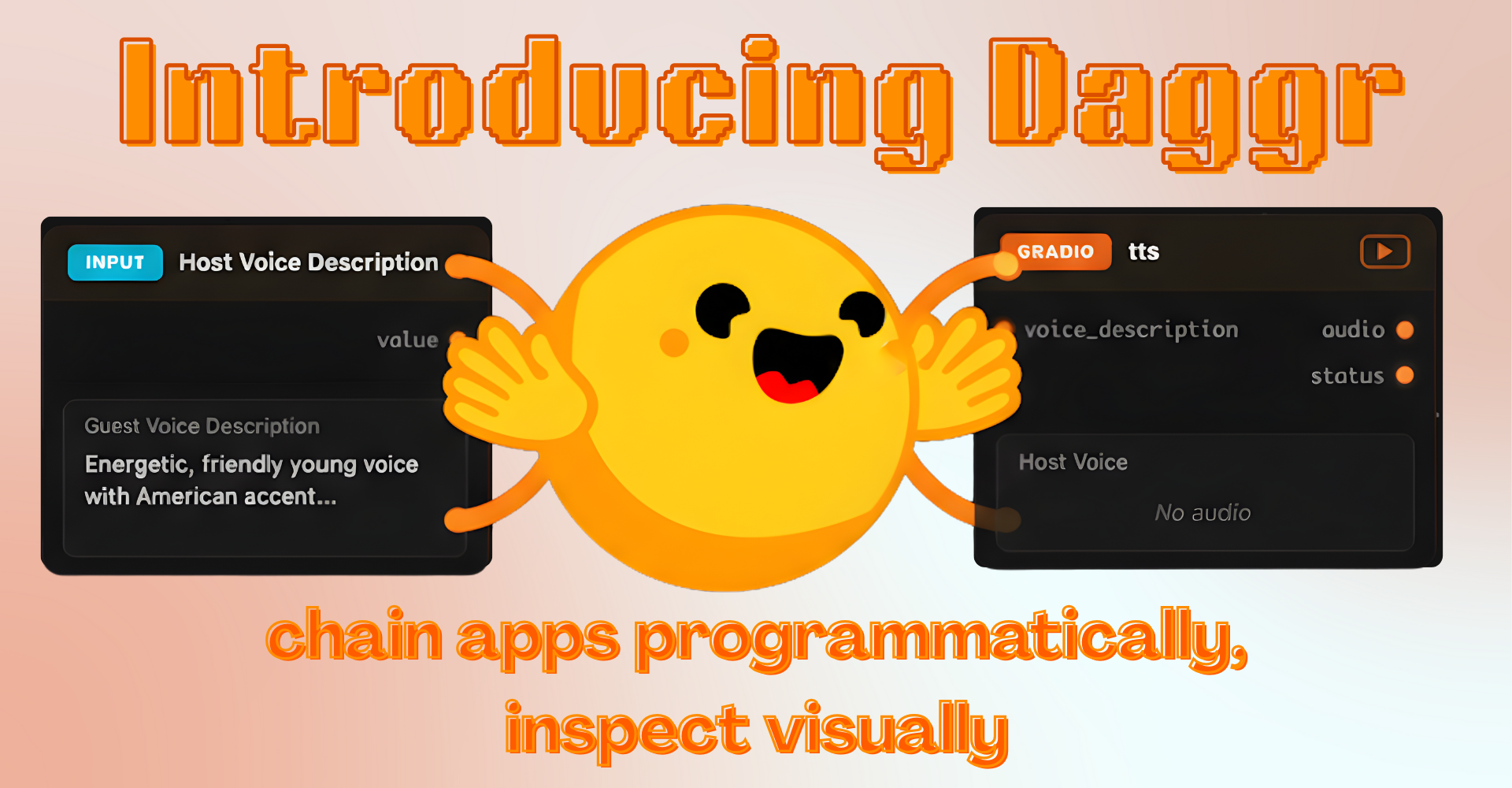
Visualize your code flow: Unlike node-based GUI editors, where you drag and connect nodes visually, Daggr takes a code-first approach. You define workflows in Python, and a visual canvas is generated automatically. This means you get the best of both worlds: version-controllable code and visual inspection of intermediate outputs.
Inspect and Rerun Any Step: The visual canvas isn't just for show. You can inspect the output of any node, modify inputs, and rerun individual steps without executing the entire pipeline. This is invaluable when you're debugging a 10-step workflow and only step 7 is misbehaving. You can even provide “backup nodes” – replacing one model or Space with another – to build resilient workflows.
First-Class Gradio Integration : Since Daggr is built by the Gradio team, it works seamlessly with Gradio Spaces. Point to any public (or private) Space and you can use it as a node in your workflow. No adapters, no wrappers—just reference the Space name and API endpoint.
Source link