Research Note: CARE-X is a research model and not a Microsoft product offering or medical device. It has not been cleared or approved by any regulatory authority and is not intended for clinical diagnosis, screening, or patient care. The results described below are retrospective research findings and do not establish the safety, effectiveness, or suitability of CARE-X for any clinical use. References to potential workflows describe areas for future research, not currently available capabilities or recommended uses.
A clinically useful radiology AI system must support a wide range of tasks, adapt to different workflows, and produce outputs that are medically accurate.
Radiologists and other clinicians use chest X-rays for many different purposes. A clinically useful AI system must be able to support that range of tasks. It may be asked to generate detailed findings and concise impressions for a report, answer questions about the presence, absence, or location of a finding, identify medical devices and assess their placement, or pinpoint exactly where an abnormality appears in an image.
These tasks also require different kinds of outputs, from narrative reports to calibrated diagnostic scores. And above all, they require clinical accuracy. A report could ostensibly be perfectly written yet clinically wrong if it misses a finding, reverses a negation, or misidentifies a location. Certain findings could be trivial in one context and vital to identify in another.
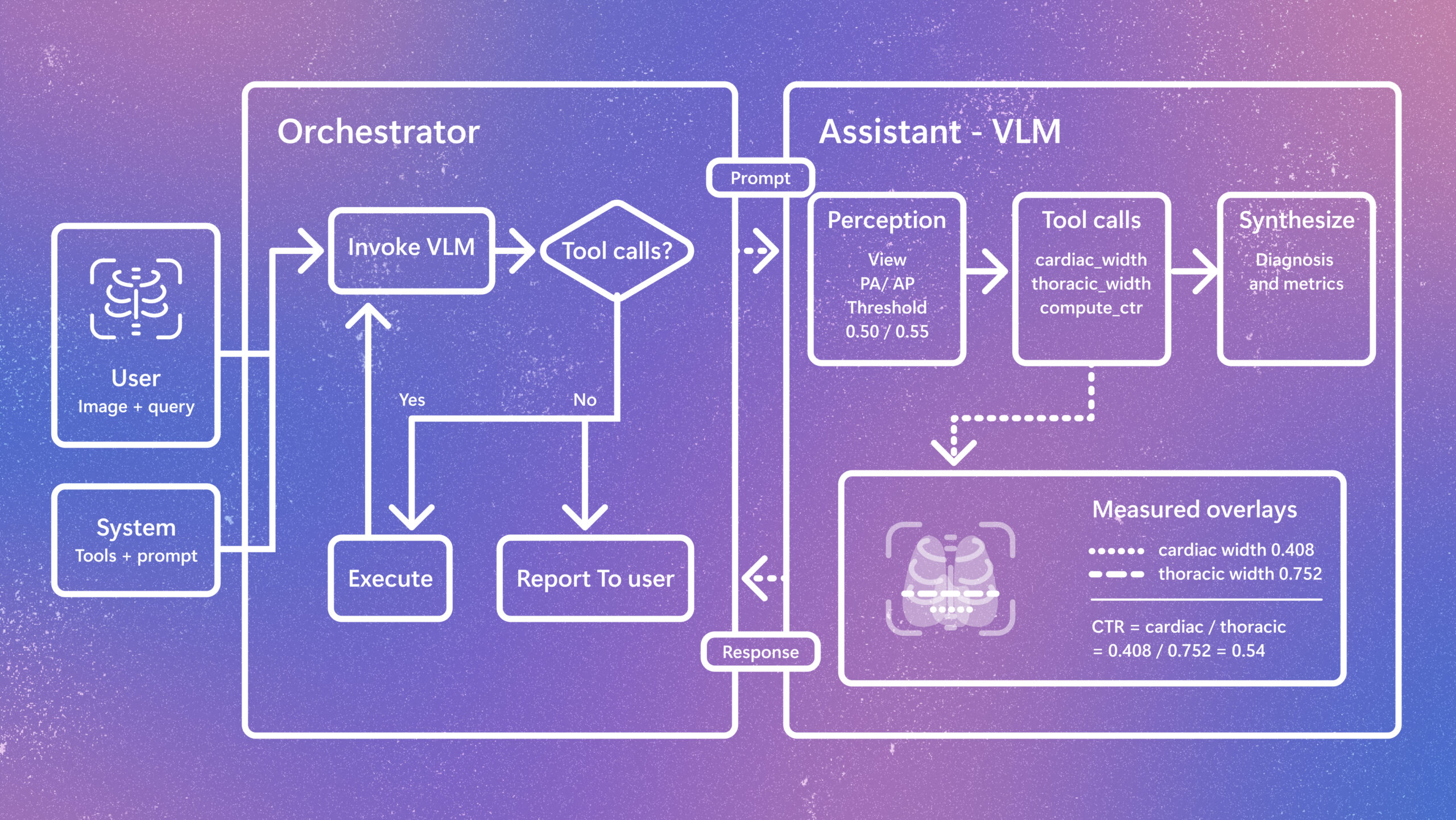
CARE-X was developed as a research model to explore how a unified approach can address these diverse demands. The system combines generative and discriminative capabilities, clinically aligned optimization, and tool-based reasoning to support a broader range of radiology workflows while maintaining clinical fidelity.
Source link