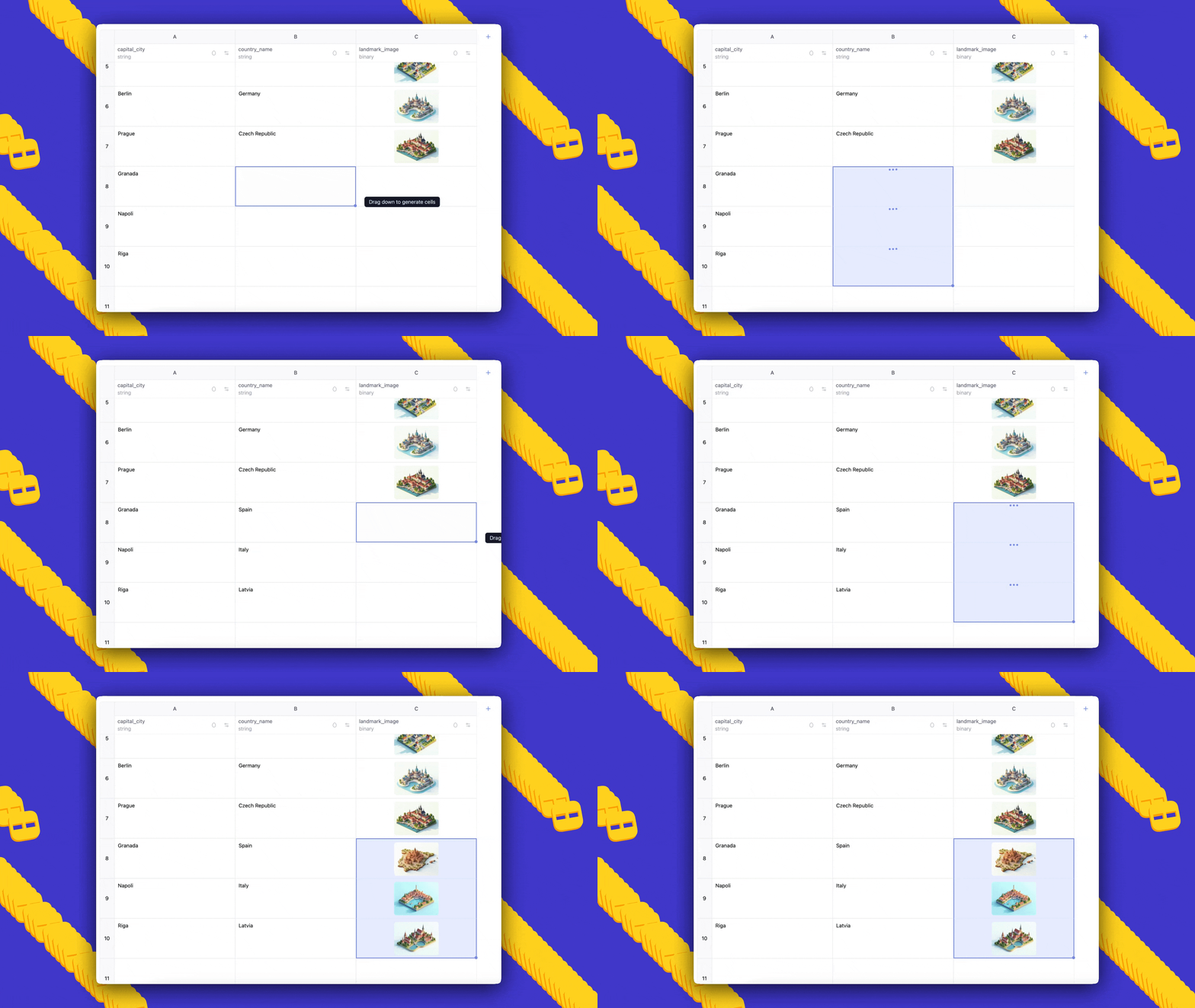
Hugging Face AI Sheets is a new, open-source tool for building, enriching, and transforming datasets using AI models with no code. The tool can be deployed locally or on the Hub. It lets you use thousands of open models from the Hugging Face Hub via Inference Providers or local models, including gpt-oss from OpenAI!
Try the tool for free (no installation required): https://huggingface.co/spaces/aisheets/sheets
Install and run locally: https://github.com/huggingface/sheets
AI Sheets is a no-code tool for building, transforming, and enriching datasets using (open) AI models. It’s tightly integrated with the Hub and the open-source AI ecosystem.
AI Sheets uses an easy-to-learn user interface, similar to a spreadsheet. The tool is built around quick experimentation, starting with small datasets before running long/costly data generation pipelines.
In AI Sheets, new columns are created by writing prompts, and you can iterate as many times as you need and edit the cells/validate cells to teach the model what you want. But more on this later!
Compare and vibe test models. Imagine you want to test the latest models on your data. You can import a dataset with prompts/questions, and create several columns (one per model) with a prompt like this: Answer the following: {{prompt}} , where prompt is a column in your dataset. You can validate the results manually or create a new column with an LLM as a judge prompt like this: Evaluate the responses to the following question: {{prompt}}. Response 1: {{model1}}. Response 2: {{model2}} , where model1 and model2 are columns in your dataset with different model responses.
Source link