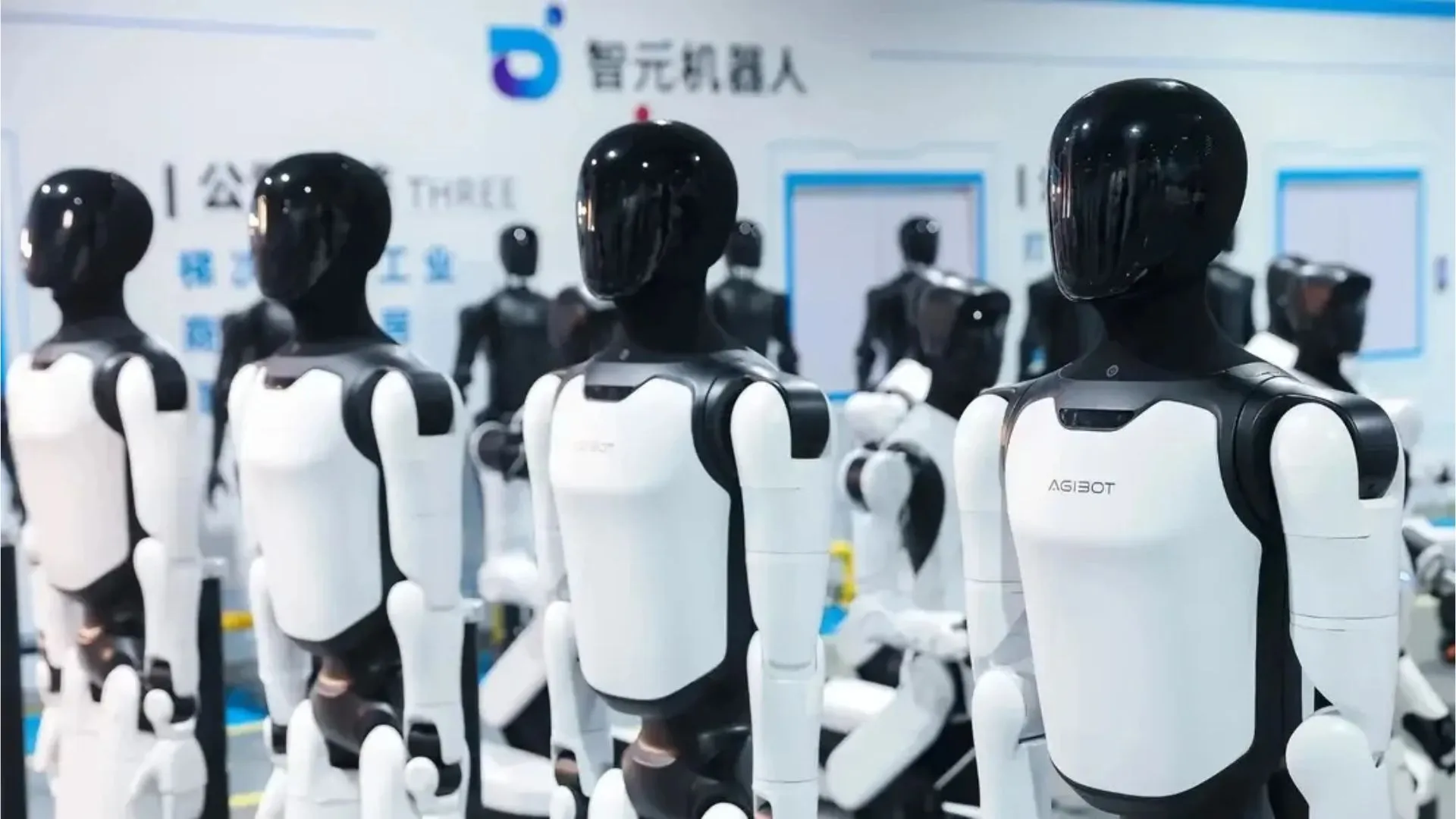
Chinese robotics company AGIBOT has unveiled GO-3 Preview, an embodied AI model designed to help robots continuously learn and improve their capabilities.
The model uses a World Reasoning Action Model (WRAM) architecture to connect task reasoning, outcome prediction, and action generation.
According to AGIBOT, GO-3 Preview has secured first place on three embodied AI benchmarks: RoboDojo, RoboTwin, and RoboColiseum.
The company plans to open-source the full model by the end of 2026, allowing wider access to its technology.
GO-3 Preview is a model designed to help robots acquire new skills, adapt to unfamiliar tasks, and improve through real-world experience. The model uses a World Reasoning Action Model (WRAM) architecture that connects reasoning, prediction and physical action, allowing robots to interpret instructions, anticipate outcomes and translate decisions into movements.
Launched on October 29, GO-3 Preview is designed to support continuous learning across three stages: pre-training, post-training and deployment. AgiBot says the model has secured first place on three embodied AI leaderboards: RoboDojo, RoboTwin and RoboColiseum. The company plans to release the complete model as open source by the end of 2026.
The underlying approach combines two types of training data. First-person human videos provide examples of how people interact with objects and perform everyday activities, while robot trajectories connect visual observations with physical actions and their outcomes. By increasing the model’s learning capacity, AgiBot aims to turn these different sources of experience into transferable skills that robots can apply to tasks they have not encountered before.
During pre-training, GO-3 Preview is designed to perform unfamiliar tasks in different environments, including homes, kitchens and multi-robot settings.
Source link