This article has been reviewed according to Science X's editorial process and policies. Editors have highlighted the following attributes while ensuring the content's credibility:
The growth of artificial intelligence has increased demand for more efficient data storage. Instead of adding bulk to satiate this appetite, researchers at Washington University in St. Louis are working to increase memory capacity by manipulating materials' characteristics at the atomic level.
Rohan Mishra, an associate professor of mechanical engineering and materials science at the McKelvey School of Engineering, and his team of researchers have been pursuing this challenge. Through computational modeling, advanced microscopy and experimental collaboration with researchers at the University of Nebraska-Lincoln, Georgia Institute of Technology (Georgia Tech) and other institutions, Mishra and his team have gained exciting insights into material behavior.
One of Mishra's research areas focuses on hafnia (HfO₂), which makes up the thin, insulating layer in silicon-based transistors.
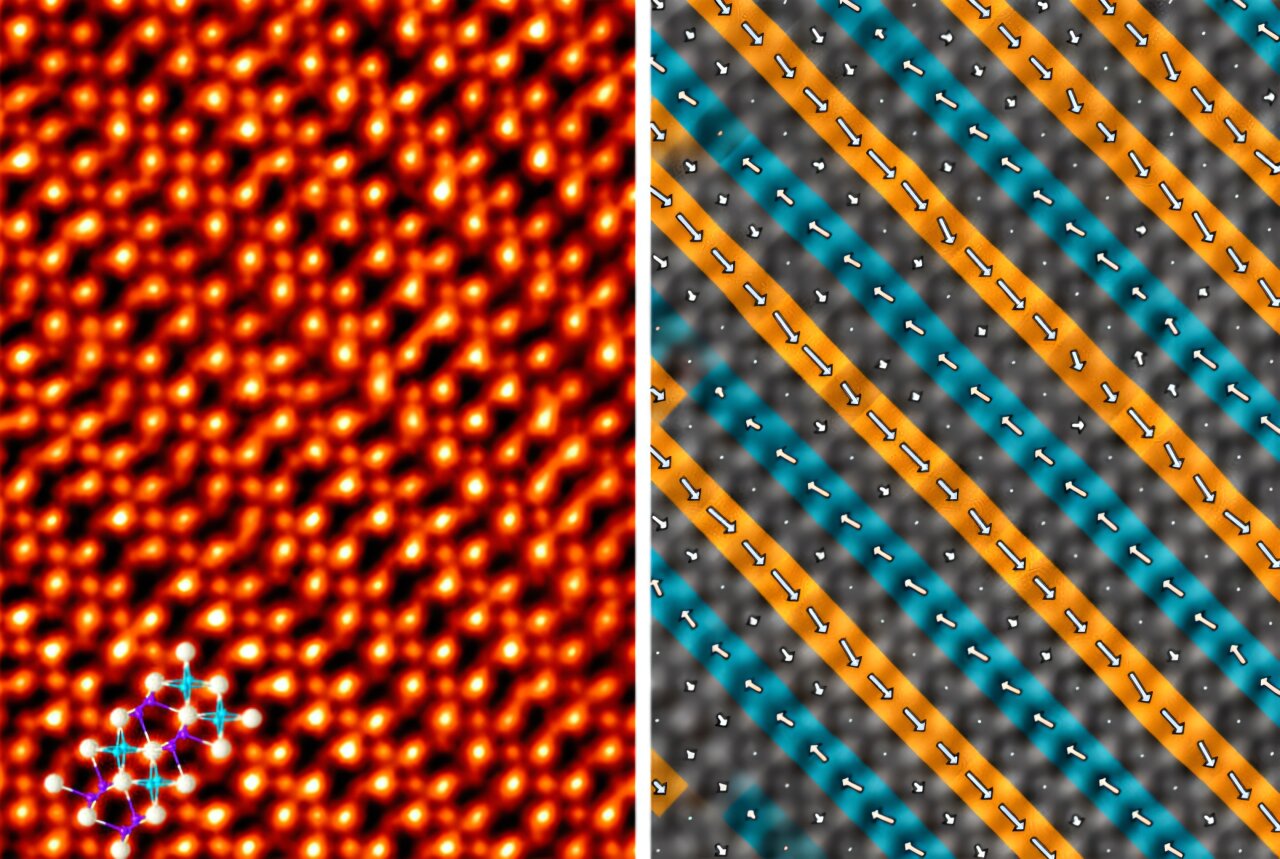
If the material were ferroelectric, it would maintain an electrical polarization that can reverse direction when an electric field is applied. More important, the material would remember which direction its polarization points, even after the electric field is removed. This feature would make hafnia a good candidate for memory storage.
The problem is that most materials lose their ferroelectric behavior when they are extremely thin (less than 10 nanometers; for reference, a human hair is about 80,000 nanometers wide). But a group of researchers in Germany found that hafnia does not. They showed that extremely thin hafnia demonstrates ferroelectric behavior.
It was head-scratching behavior: Hafnia, a material otherwise not ferroelectric, suddenly becomes ferroelectric when extremely thin.
Source link