Robot learning has a supply problem. We have capable policy architectures (transformer-based VLAs, diffusion and flow-matching policies, and even world models) and the GPUs to train them. What we lack is large, diverse, real-world manipulation data.
Teleoperating a robot to collect it can be expensive and demanding: first of all, it requires a robot. And depending on the teleoperation method, data collection can be tedious for the user if it takes hours and involve significant hardware and logistical challenges. That is difficult to scale with the wide variety of tasks and environnements required.
But you don't need a robot to collect robot data. Just a human hand, a gripper, a camera, and a way to recover the 6-DoF trajectory of what the hand did. Capture the demonstration and you have data a robot can learn from.
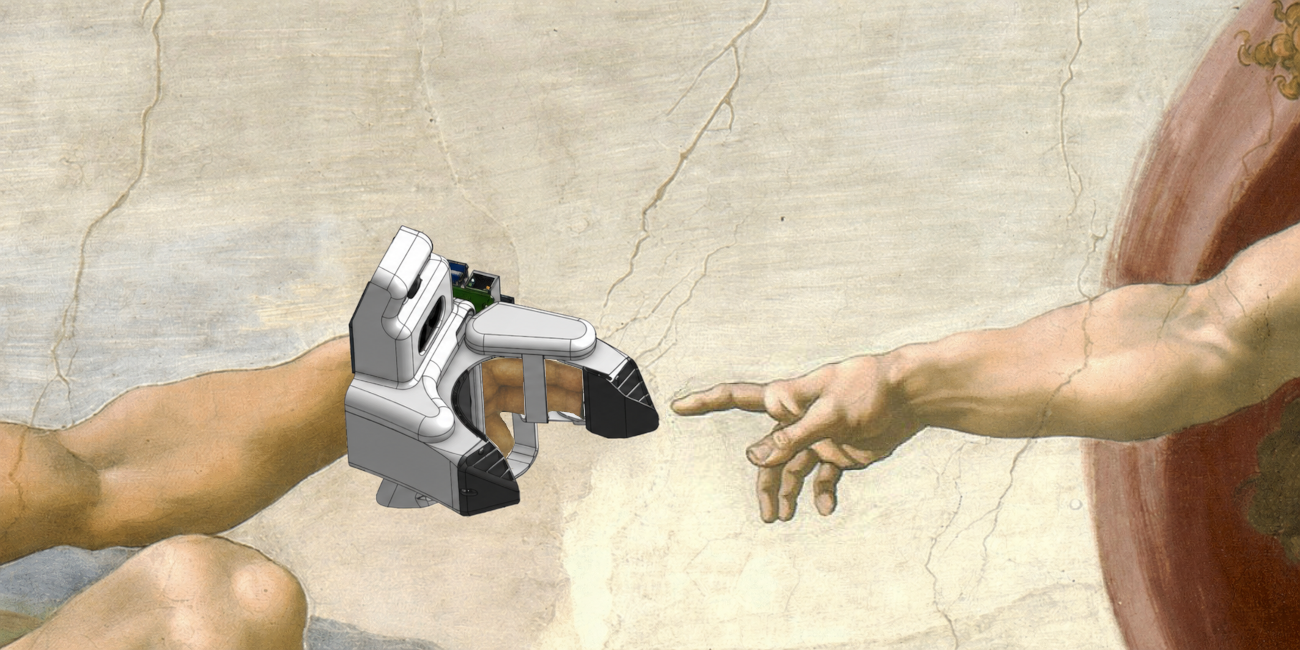
That's what we're releasing today: Grabette, an open, low-cost system for recording manipulation data. Pick it up, record a task with your own hand, and get back a clean, robot-ready dataset. No robot, no lab, no teleop rig.
And that's the bigger goal: if recording a demonstration is as easy as shooting a video, anyone can contribute. We want Grabette to seed a large, open, collaborative manipulation dataset. One no single lab could ever build alone.
Grabette is directly inspired by the Universal Manipulation Interface (UMI) from Stanford: a handheld gripper with a fisheye camera that records demonstrations "in the wild", recovers camera trajectories with SLAM, and trains visuomotor policies from them.
Source link